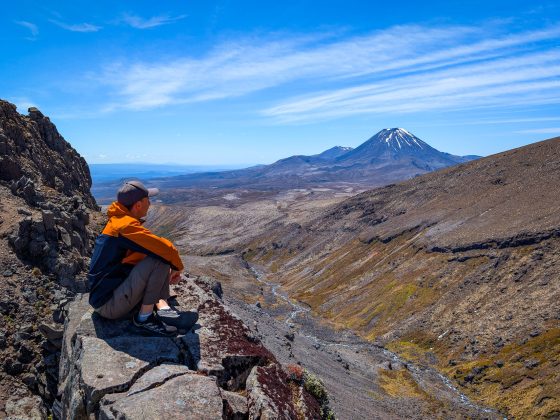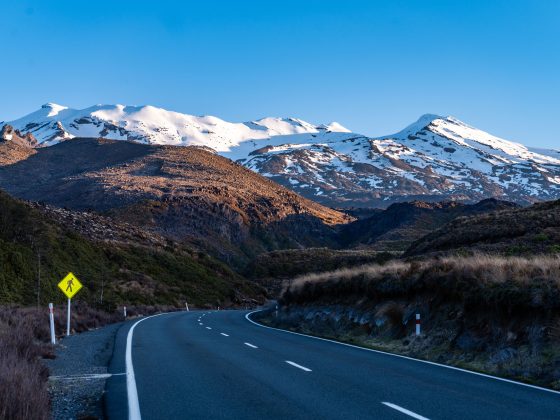
It’s easy to forget, when you’re in the middle of Auckland, that one of New Zealand’s most dramatic coastlines is less than an hour’s drive west.
From black sand beaches to cascading waterfalls, this stretch of coastline delivers some of the North Island’s most diverse scenery in just a few stops.
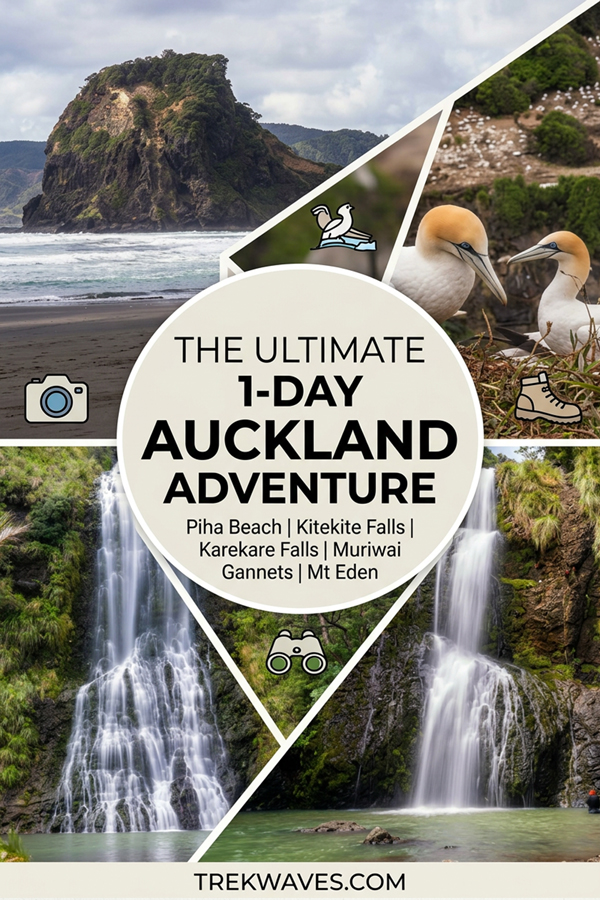
This itinerary takes you through the highlights of the wild west coast—from the famous Piha Beach to hidden gems like Kitekite Falls and Karekare Falls—all in a single, well-paced day.
Planning a bigger North Island adventure?
Pair this itinerary with my 25 Best Hikes in North New Zealand guide to uncover more coastal walks, volcanic landscapes, and hidden gems.
Stop 1: Muriwai Gannet Colony (Early Morning)
Start your day with a scenic 40–45 minute drive from Auckland to Muriwai Beach.
This windswept west coast beach is known for its black volcanic sand and dramatic cliffs — but the real highlight is the nearby Muriwai Gannet Colony.
From the car park, a short walking track leads to two viewing platforms positioned right above the main colony.
Around 1,200 pairs of Australasian gannets nest here each year, and their nests are just centimetres apart. It’s a spectacle unlike anything you’d expect so close to a major city.
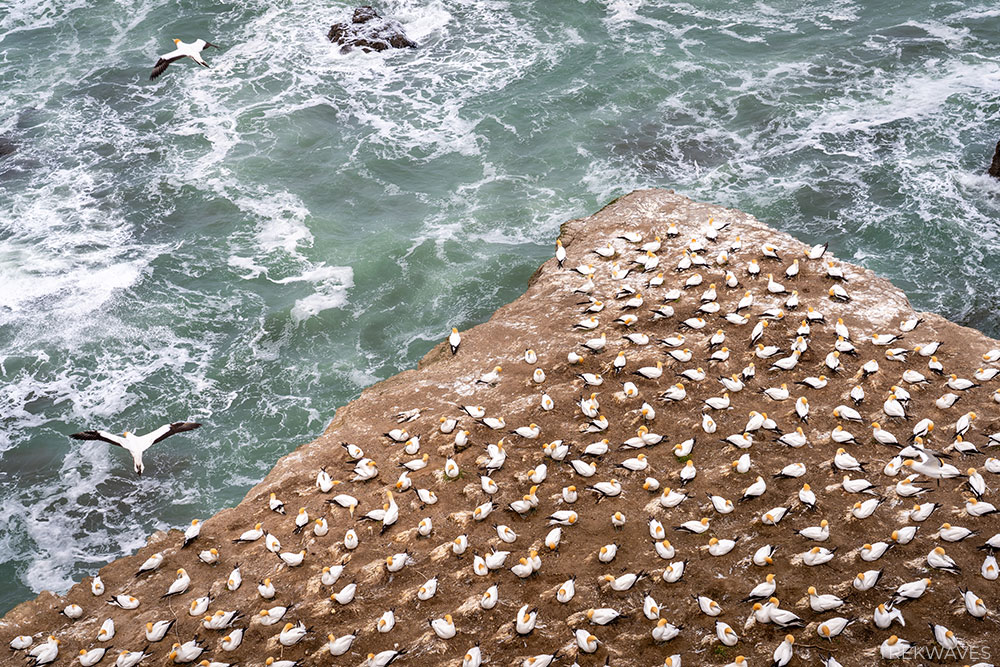
The best time to visit is between August and March, when the colony is active, with peak nesting happening from October to February. Outside this window, most birds are out at sea near Australia.
What makes gannets so compelling to watch is their behaviour. Pairs stay together year after year, and each season they reunite with an elaborate greeting ritual — lifting their wings, tapping beaks, and calling loudly to reaffirm the bond.
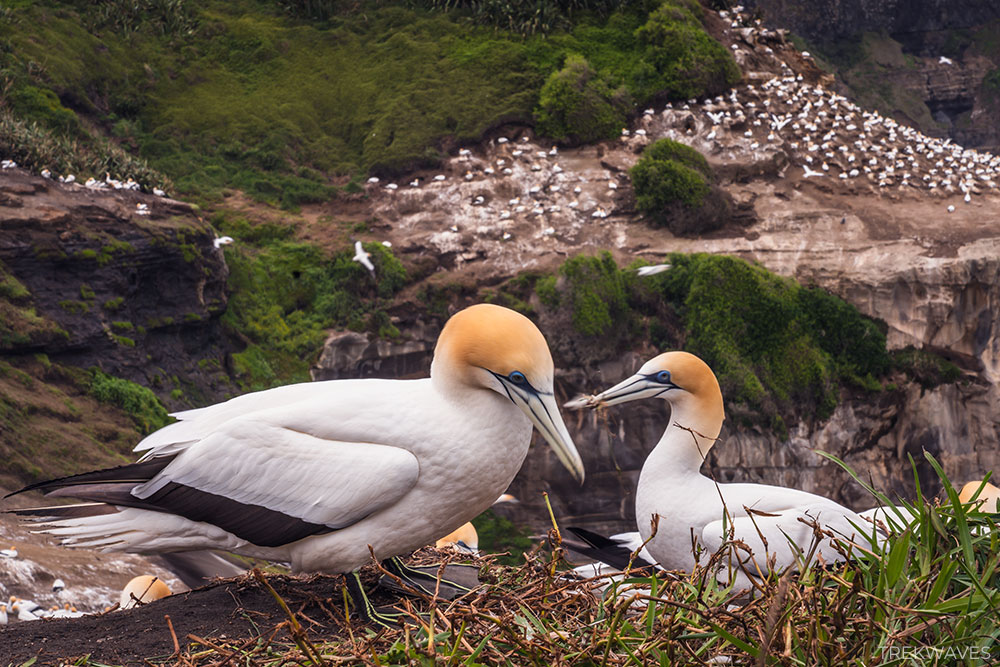
They’re also remarkable hunters: diving from heights of up to 30 metres, they hit the water at extraordinary speed, their bodies built for the impact with reinforced necks, shock-absorbing air sacs, and eyes adapted for underwater vision.
Stop 2: Kitekite Falls, Waitākere Ranges (Late Morning)
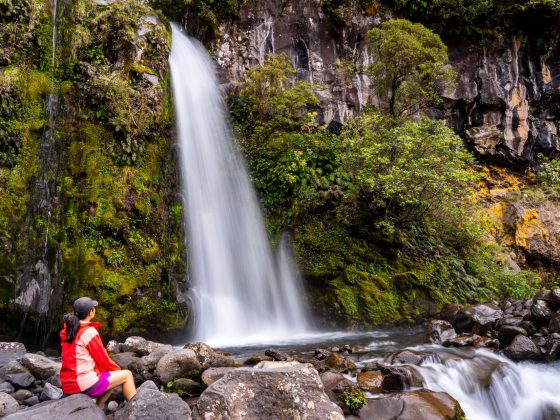
Next, head south into the lush rainforest of the Waitākere Ranges Regional Park for a short hike to Kitekite Falls.
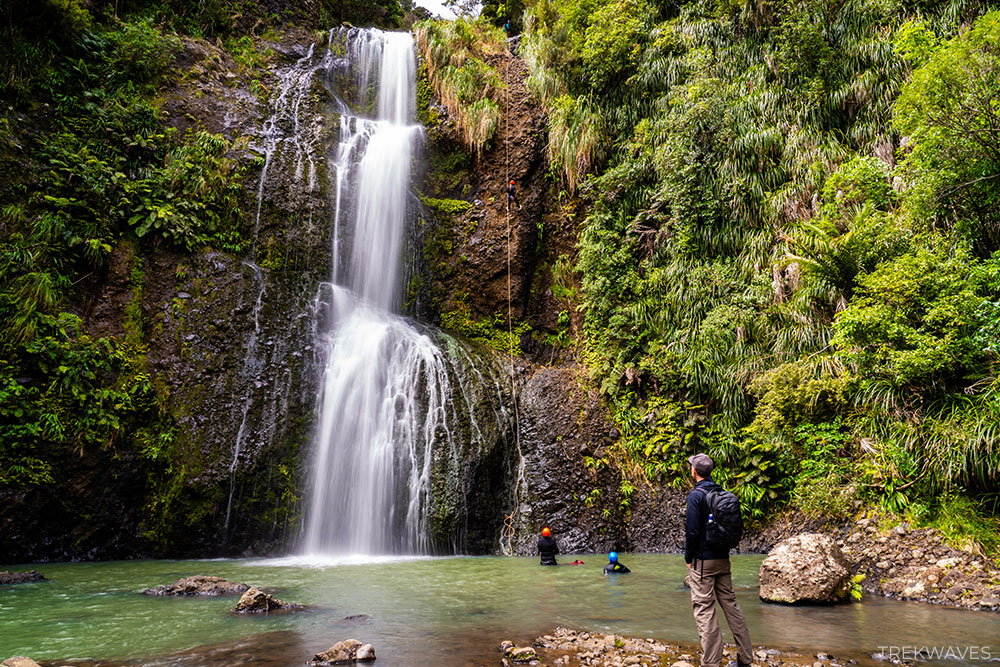
The track is 2.8 km return, gains around 77 metres of elevation, and takes most people 45 minutes to an hour. It follows Glen Esk Stream through dense native bush, with boardwalks and formed gravel paths protecting the forest floor.
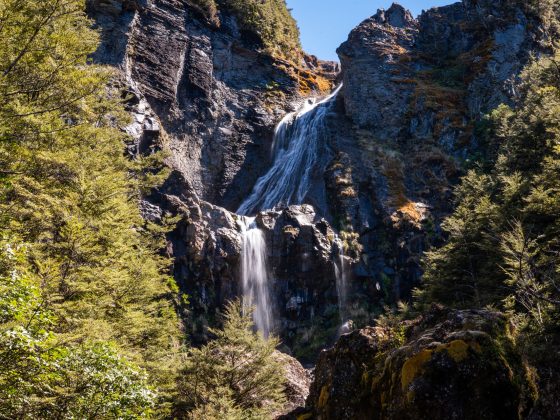
The final stretch involves a steep climb and a minor stream crossing before you emerge at the base of a spectacular three-tiered, 40-metre waterfall.
Stop 3: Lunch at Piha Beach (Midday)
After the hike, it’s time to eat. Piha Beach is just minutes from the Kitekite trailhead and has a handful of places to refuel.
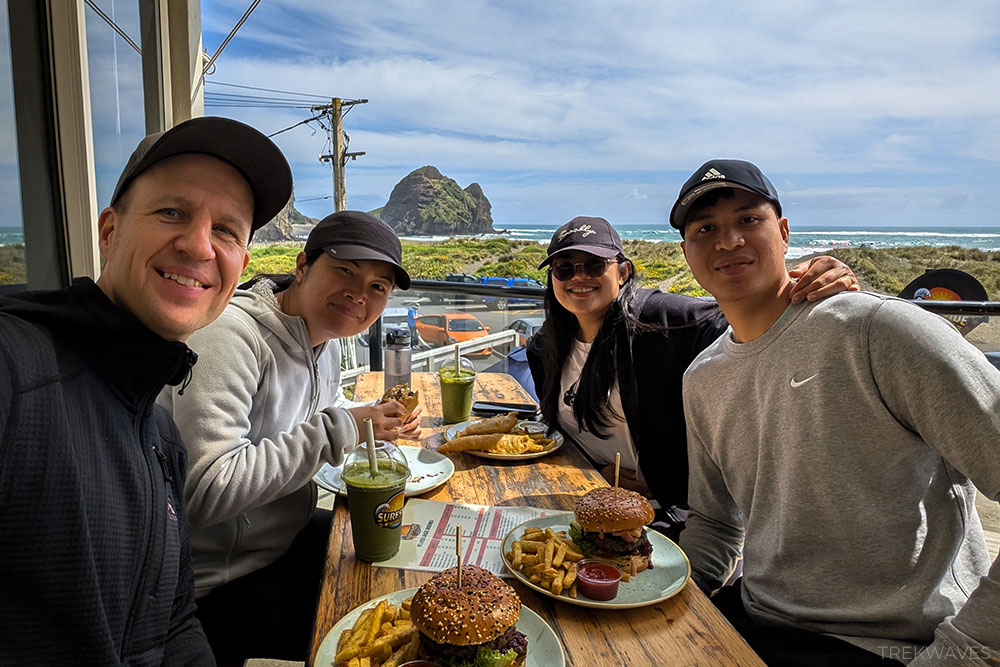
Surfside Bites & Brew is a standout — a relaxed spot with an unbeatable view over the beach and Lion Rock, serving tacos, fish and chips, burgers, and salads. After a morning of hiking and wildlife watching, it’s exactly what you want.
Stop 4: Piha Beach & Keyhole Tunnel
Piha itself is one of New Zealand’s most iconic surf beaches and well worth a wander after lunch.
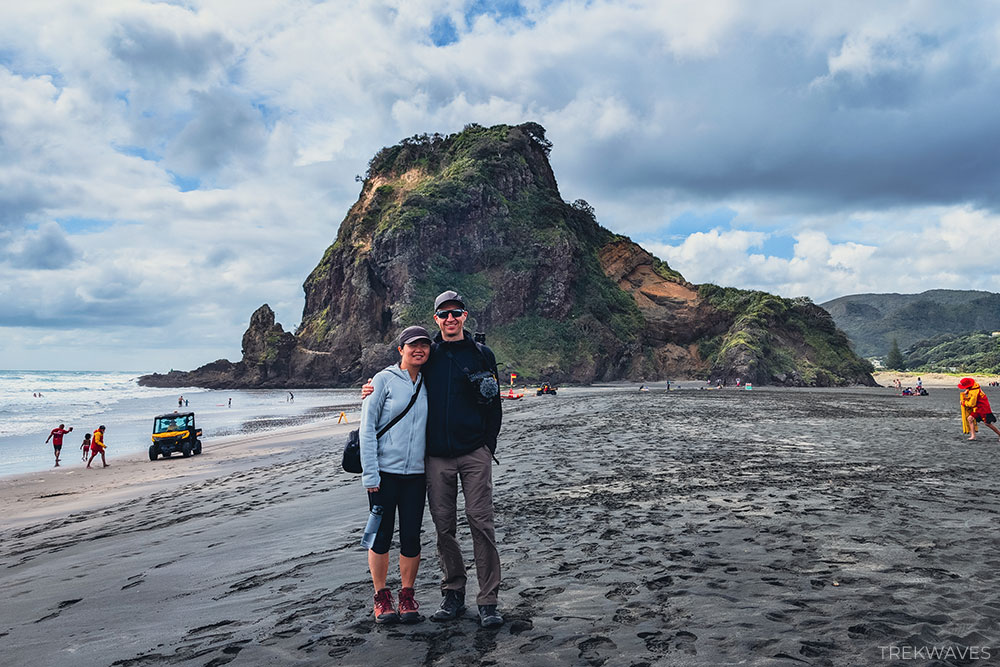
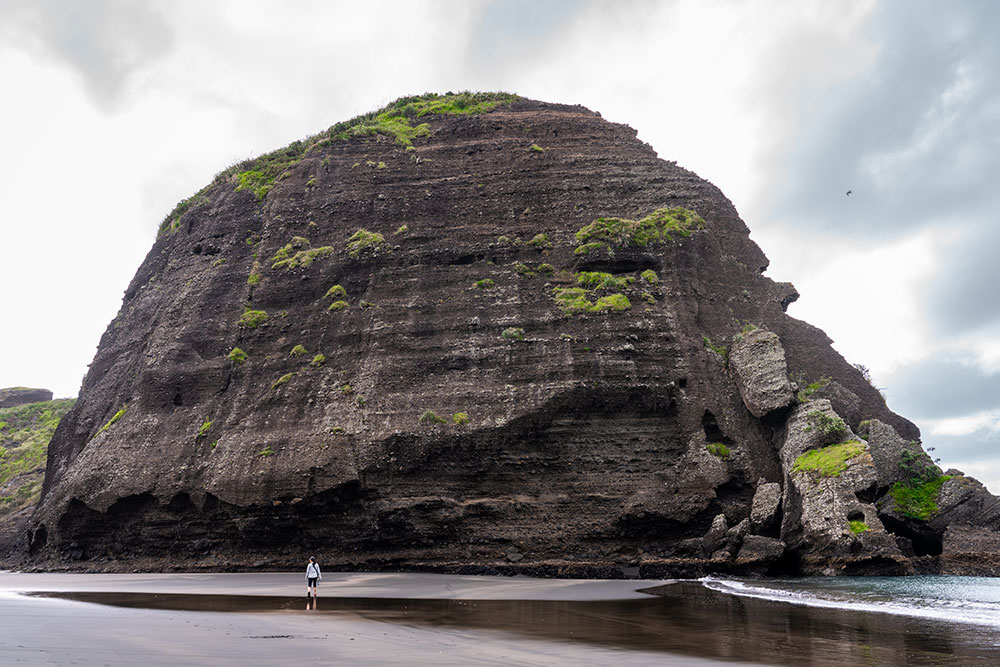
Dominating the middle of the beach is Lion Rock (Te Piha), a 16-million-year-old volcanic neck that splits the beach into its northern and southern halves.
Head to the southern end of the beach and make your way across the rocks beneath the cliffs, where the coastline quickly becomes more dramatic.
You’ll pass Taitomo Rock rising from the shoreline, then continue on to the Keyhole Tunnel — a narrow arch carved by the Tasman Sea, where waves often surge through the opening.
Depending on the conditions, you may be able to step through, but more often you’ll find water moving through the tunnel, making it just as impressive to view from the entrance.
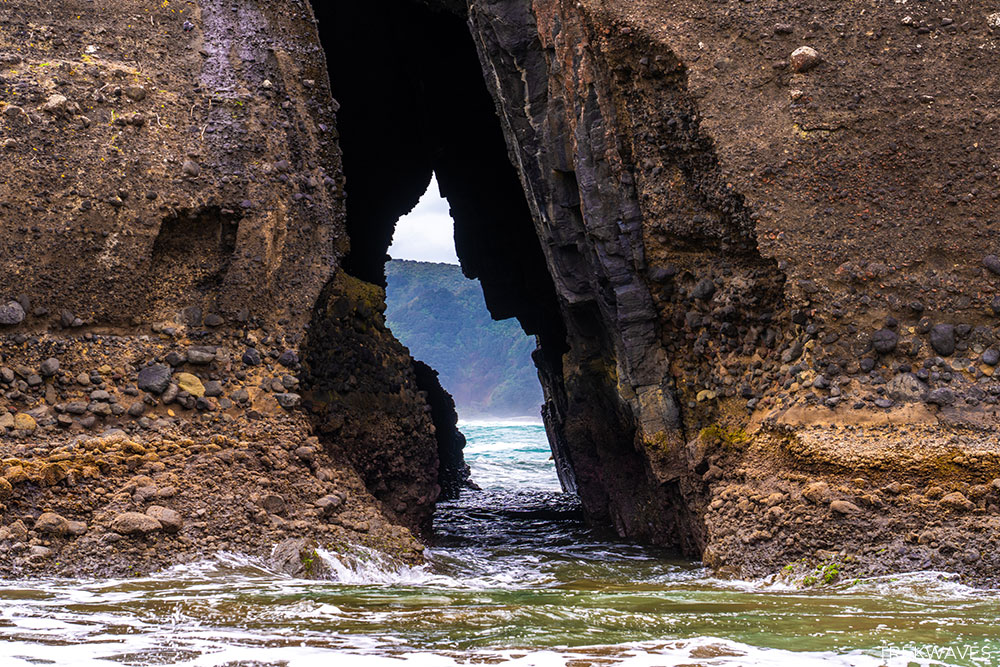
Time this section around low tide. At high tide, waves push up against the cliffs and block the route entirely, while the rocks become slippery and unsafe.
Check the tide chart before you go and aim to arrive with a couple of hours of low tide ahead of you, giving yourself enough time to explore without rushing back.
Stop 5: Karekare Falls (Afternoon)
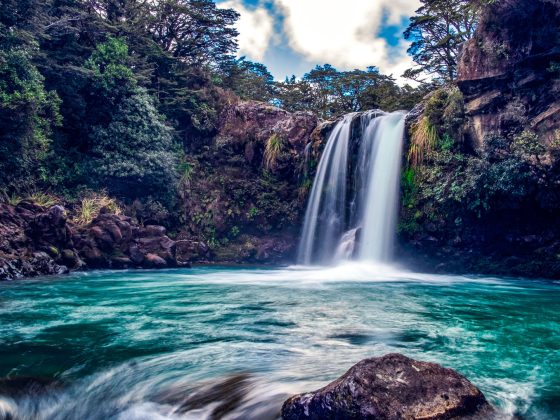
Just a short drive south of Piha — down a narrow, winding road through the bush — is Karekare, one of Auckland’s most beautiful and least crowded spots.
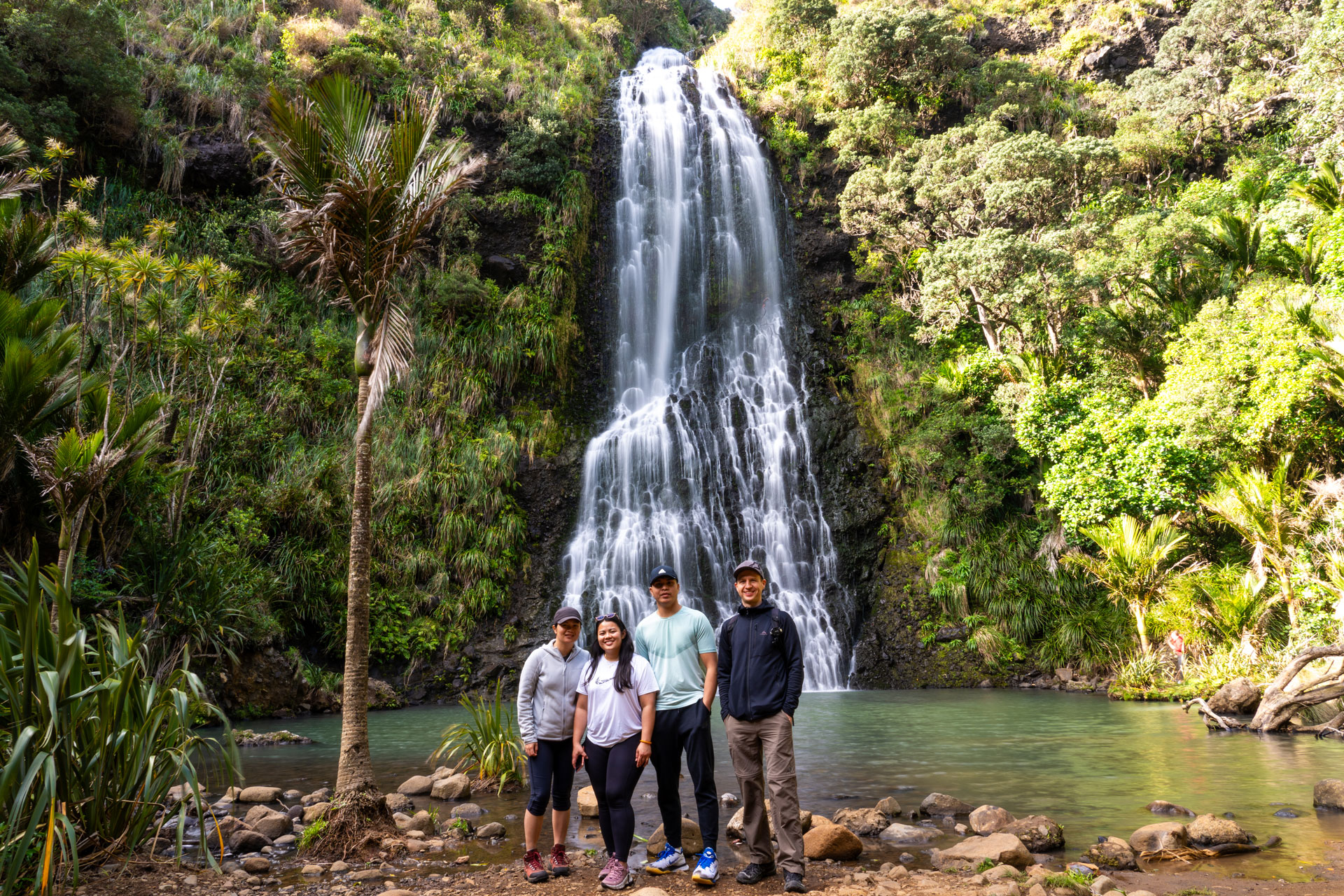
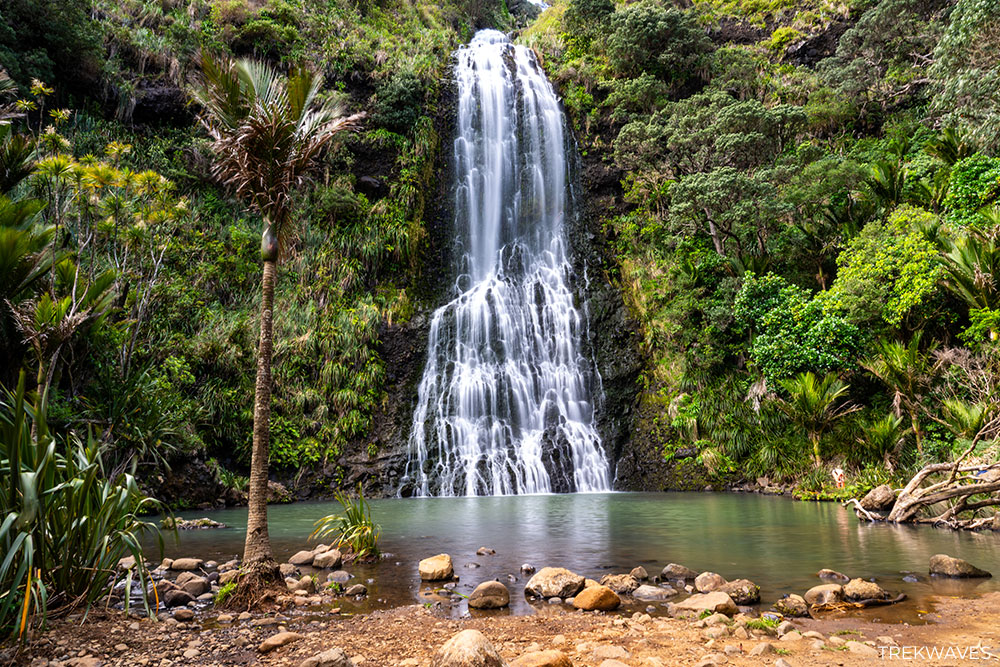
The walk to Karekare Falls is just 600 metres return from the car park — about 10 minutes each way — making it one of the easiest waterfalls to reach in the region.
The falls plunge around 30 metres into a sheltered pool, and out of every waterfall we visited during our 20-day North Island trip, this one stood out as the most beautiful.
Final Stop: Sunset at Mount Eden
Head back to Auckland and end the day at Mount Eden (Maungawhau). The walk from the base car park to the crater rim takes around 15–20 minutes on a sealed, well-maintained path.
Note that vehicles can no longer drive to the summit — park near Mountain Road or Summit Road and walk up.
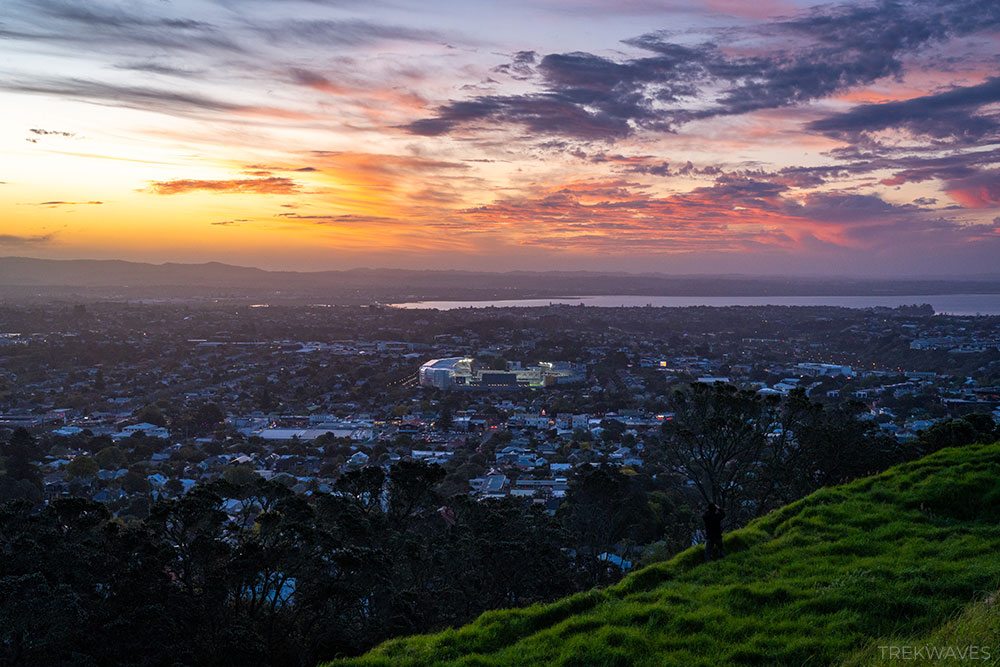
At 196 metres, Mt Eden is Auckland’s highest volcanic cone, and its summit delivers a full 360-degree panorama: the Waitematā Harbour, the Sky Tower, Rangitoto Island in the gulf, the Manukau Harbour to the south, and — on a clear evening — the silhouette of the Waitākere Ranges you’ve just explored to the west.
Long before Auckland existed, Maungawhau was a fortified Māori pā (settlement). The terraced slopes and storage pits carved into the hillside are still visible today.
The crater — known as Te Ipu-a-Mataaho, or “the food bowl of Mataaho,” named for a powerful deity associated with volcanic activity — is protected as wāhi tapu (sacred ground).
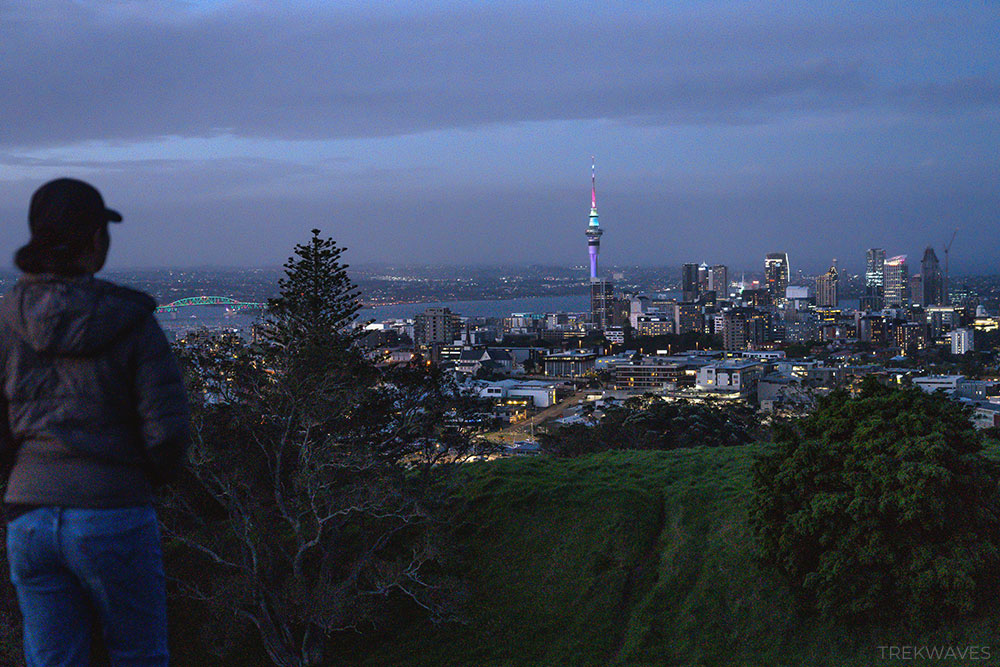
Sunset from the rim is genuinely spectacular. The city lights begin to come alive as the sky turns, and it makes for a fittingly dramatic close to an already extraordinary day.
Practical Tips
- Car is essential. There’s no practical public transport to Muriwai, Piha, or Karekare. Rent a car or join a guided tour.
- Start early. Gannet colony in the morning, waterfalls midday, beach in the afternoon, and sunset at Mount Eden in the evening — the order matters.
- Check tide times. Both Piha’s keyhole and Karekare beach can be significantly affected by tides.
- Check trail closures. The kauri dieback disease has led to closures across the Waitākere Ranges. Visit Auckland Council’s website before you go.
- Best season: November to April for warmest weather, calmest seas, and swimming conditions. The gannet colony is most active October to February.
- Bring layers. Auckland’s west coast weather changes quickly — sunshine and rain in the same afternoon is normal.
Found it Helpful? Pin it for Later!