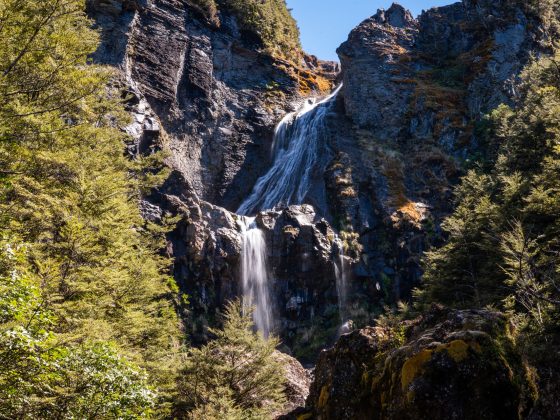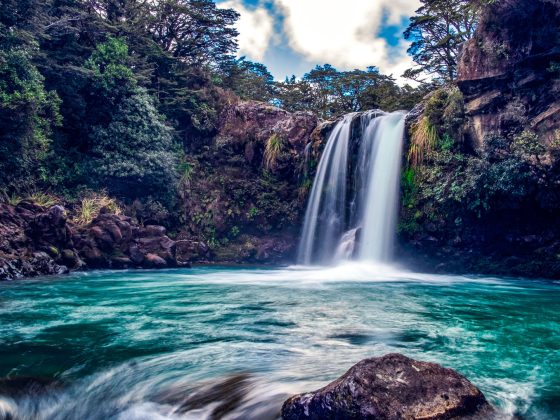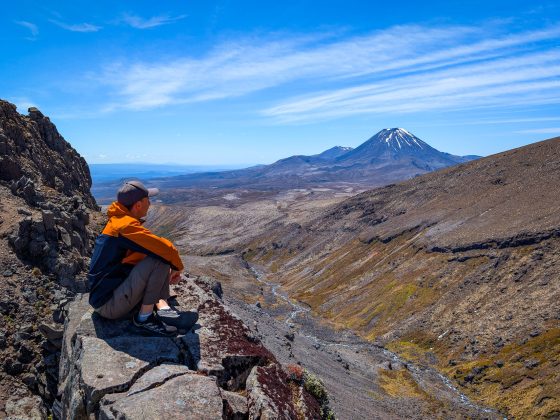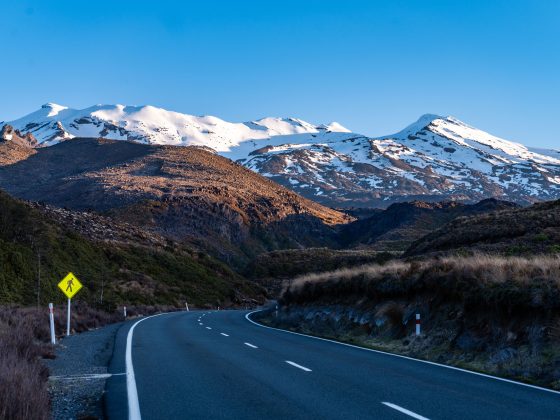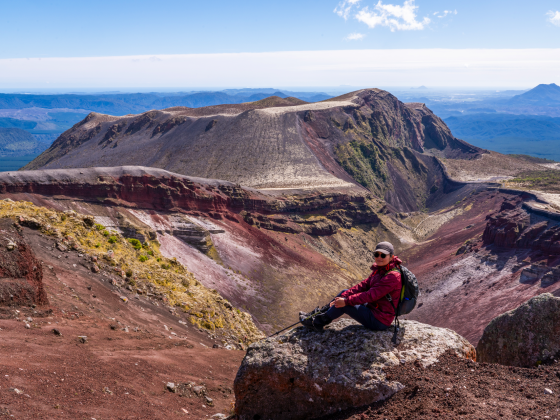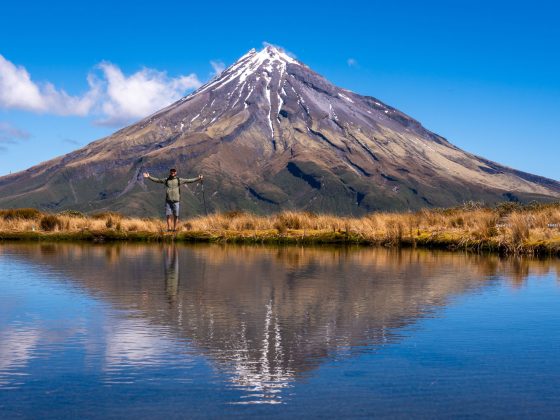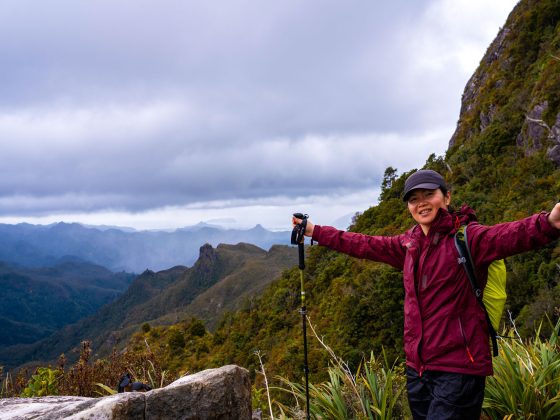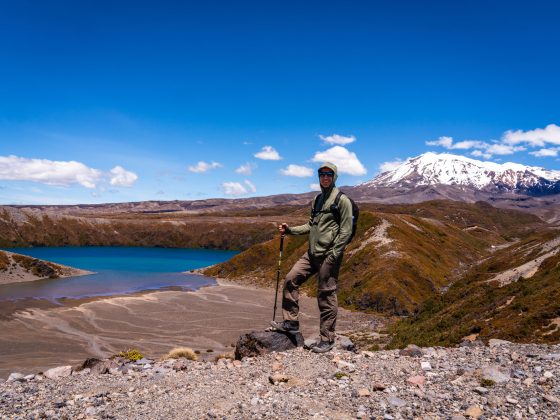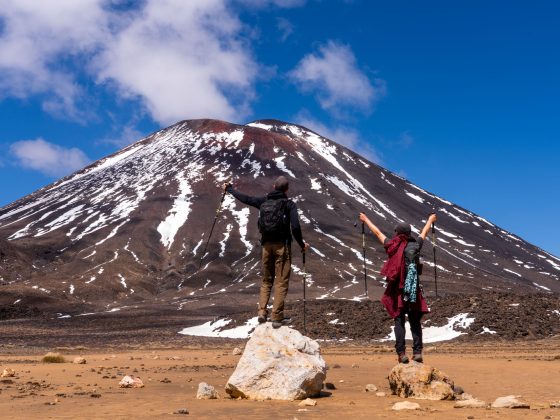
North New Zealand is an absolute dream for hikers, and after spending almost 3 weeks on the road exploring the region, I can confidently say it has some of the most diverse and rewarding day hikes anywhere in the country.
Between Tongariro’s raw volcanic landscapes, Taranaki’s mysterious kamahi forests, and those unreal black sand beaches — the North Island kept surprising me at every turn.
This guide brings together the 25 best day hikes in North New Zealand, all based on my own experience, including detailed trail highlights, on-the-ground tips, and the views you can expect along the way.
If you are planning a road trip around the North Island, this list will make your life a lot easier and save you hours of guessing which hikes are worth it.
So, let’s jump into the 25 best day hikes we explored across Northern New Zealand.
How to Use This New Zealand Hiking Guide
This list features the 25 best day hikes we completed during our Northern New Zealand campervan road trip, from short waterfall walks to full-on volcanic epics.
Of course, there are plenty more incredible tracks out there, but these are the ones we personally explored and can genuinely recommend.
To make this guide as practical as possible, everything is grouped by region rather than ranked. It’s not a “best to worst” list — though I’ll admit my favourite parts of the island naturally fell toward the end, so it’s worth reading right through.
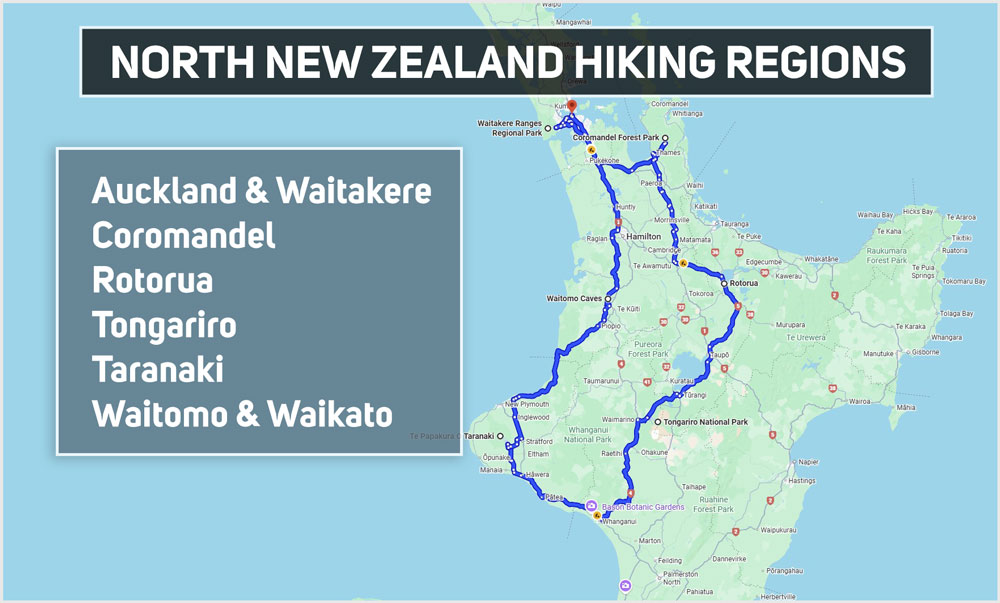
Just below, you’ll also find a map of our road trip route, which ties all these regions together and gives a clear overview of the landscapes you’ll see throughout this guide.
REGION 1: Auckland & Waitākere Ranges
Auckland and the Waitākere Ranges make the perfect starting point for any North Island hiking adventure.
Within minutes of leaving the city, you’ll find yourself surrounded by lush native forest, dramatic cliffs, and some of the most iconic coastal scenery in New Zealand.
The hikes here are easy to reach but packed with character — from urban volcanic cones to waterfall tracks and stunning black sand beaches.
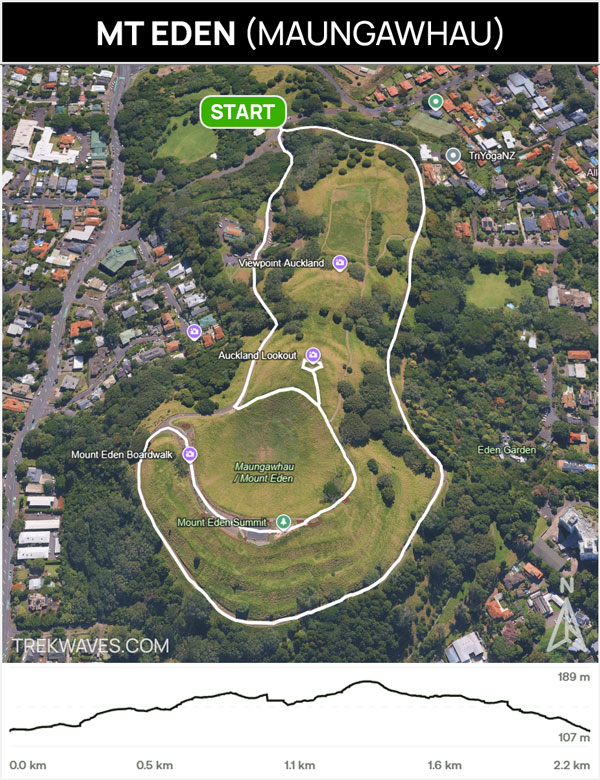
#25 – Mount Eden (Maungawhau)
- Start & Finish: Puhi Huia Rd
- Distance: 2.1 km loop
- Elevation Gain: 76m
- Time: 1h
- Difficulty: Easy
Mount Eden was our first stop in Auckland — we headed there straight after our friends picked us up from the airport.
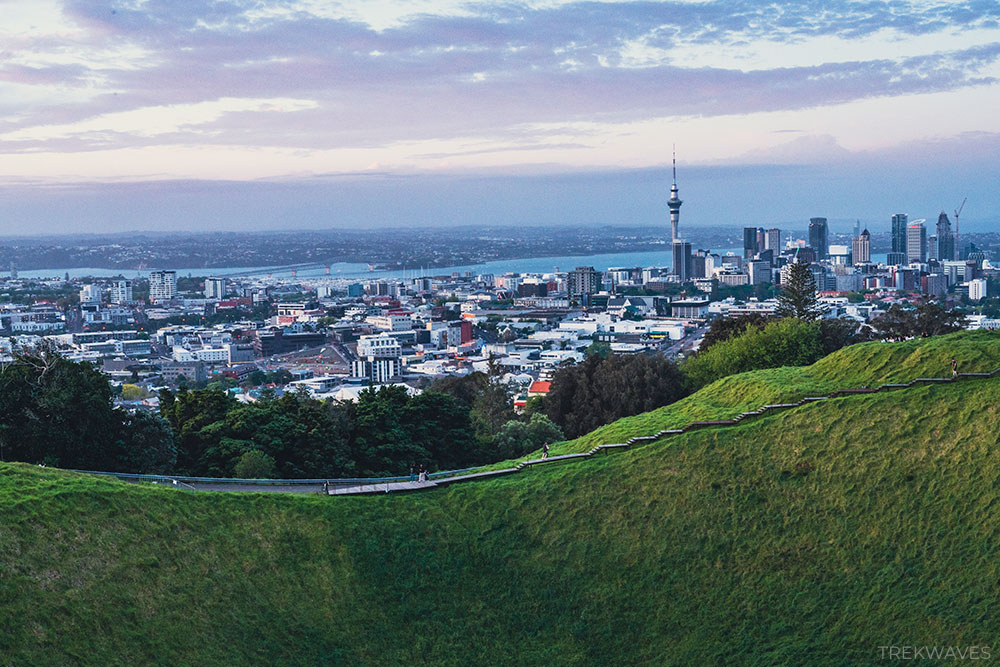
At just 196 metres high, it’s the tallest of the city’s volcanic cones, and the short walk to the summit (about 10–15 minutes from the car park) makes it an easy first outing.
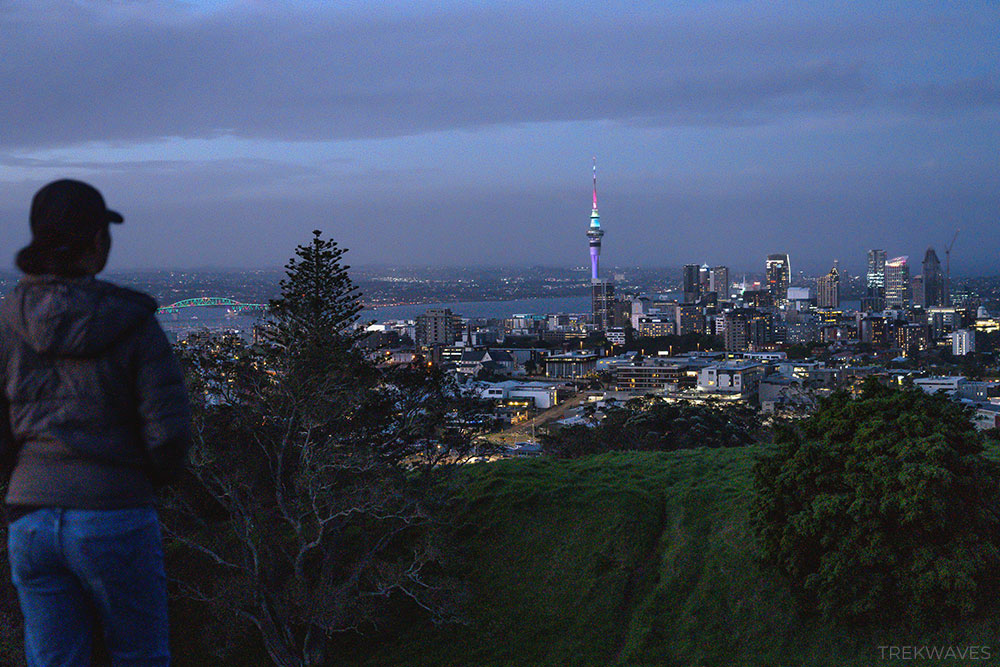
From the top, you can peer into the 50-metre-deep crater and enjoy sweeping views across Auckland’s skyline, making it an ideal introduction to the region.
Long before Europeans arrived,this mountain was a fortified pā for Tāmaki Māori, a citadel built for thousands of inhabitants full of terraced earthworks and storage pits.
The crater even has a name: Te Ipu kai a Mataaho, meaning “the food bowl of Mataaho,” a powerful deity in Māori tradition.
Today, there’s a boardwalk around the summit rim so you can walk over those ancient terraces.

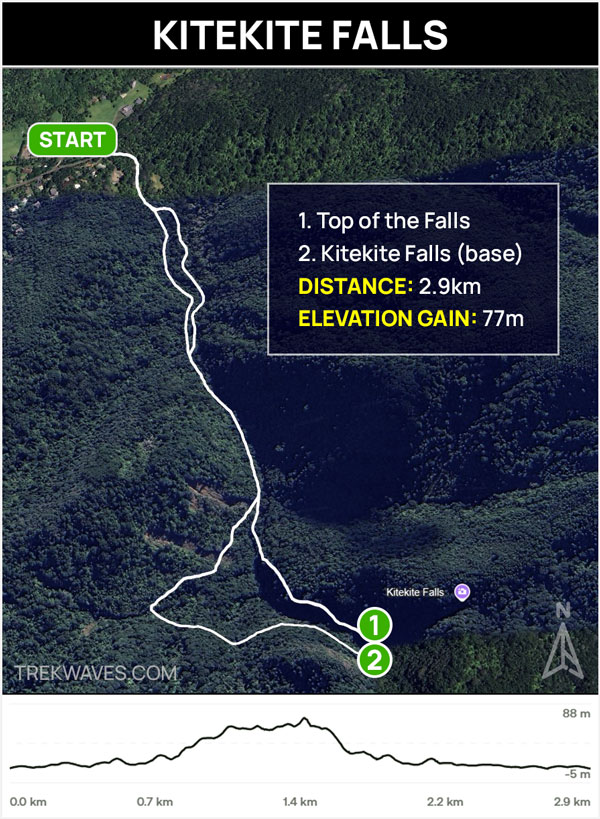
#24 – Kitekite Falls
- Start & Finish: Kitekite Falls Carpark
- Distance: 2.9 km return
- Elevation Gain: 77m
- Time: 1h
- Difficulty: Easy
This is an easy, enjoyable 2.9km return walk, but it still offers that feeling of stepping deep into the bush.
The trail winds beneath kauri trees and nīkau palms, with regenerating forest closing in around you as soon as you leave the car park.
The route is well built — a combination of gravel sections, raised boardwalks, and a few sets of steps.
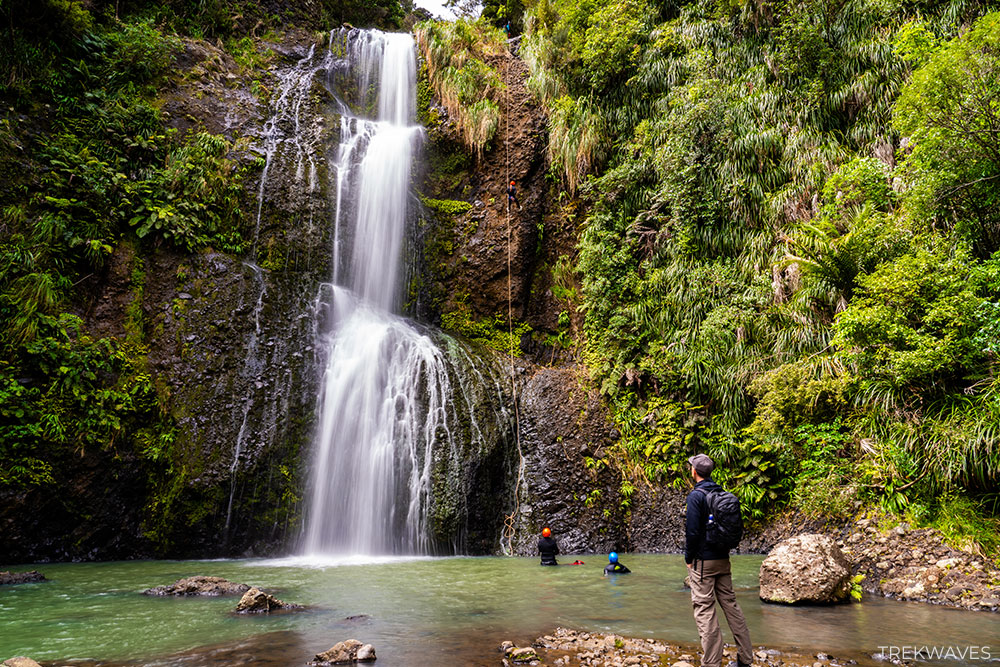
At the end, the forest opens to reveal Kitekite Falls — a spectacular three-tier cascade that drops about 40 metres.
The area has a long history of kauri logging. In the early 1900s, a dam above the falls was used to help move kauri logs downstream.
Today, the forest is slowly regenerating, and the walk is managed carefully to protect the remaining kauri trees.
Boardwalks and mandatory shoe-cleaning stations are all part of preventing the spread of kauri dieback and preserving this special place.
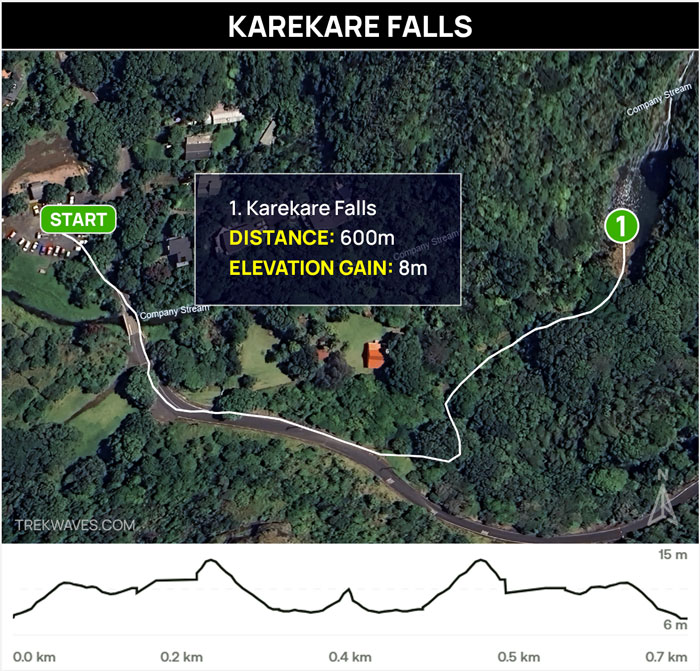
#23 – Karekare Falls
- Start & Finish: Karekare Falls Carpark
- Distance: 600m return
- Elevation Gain: 8m
- Time: 15-30min
- Difficulty: Easy
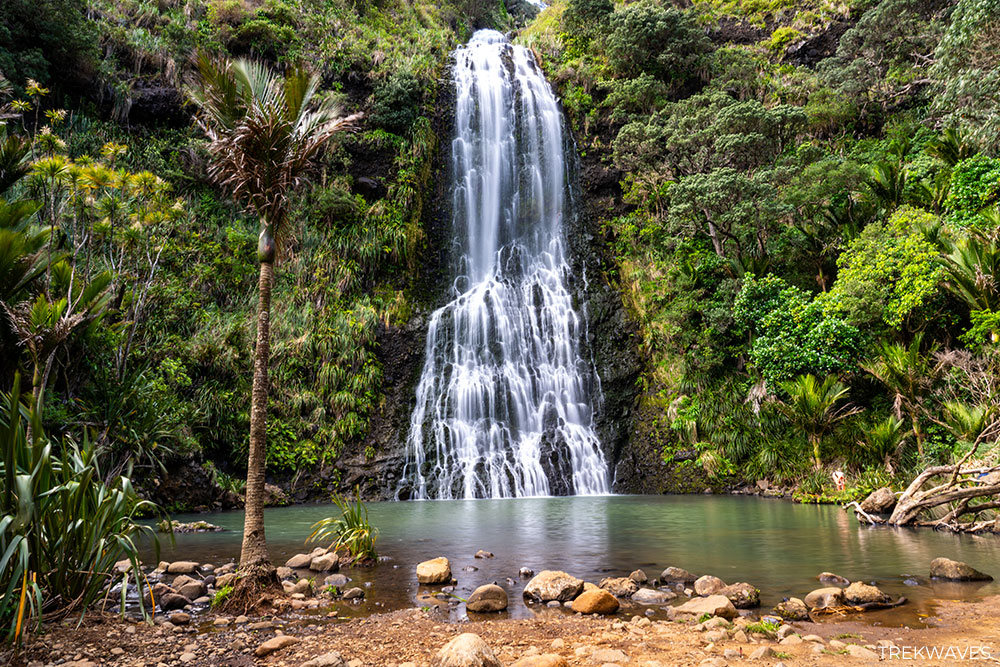
During our 3-week road trip around the North Island of New Zealand, we saw many waterfalls, but none left a stronger impression than Karekare Falls. It quickly became my favourite.
The walk is extremely short and easy, but it still feels like you’ve stepped into a hidden corner of the forest.
Nīkau palms arch overhead, tall trees frame the valley, and the sound of falling water builds as you move closer.
The waterfall cascades around 30 metres into a clear pool, creating a peaceful, almost meditative setting.
It’s easy to see why the surrounding Karekare landscape has been used in films like The Piano — the whole area has a moody and cinematic feel.
If you’re spending time in the Waitākere Ranges, this is an easy and rewarding walk that absolutely deserves a place on any North Island itinerary.
BONUS Stop #1 – Piha Beach
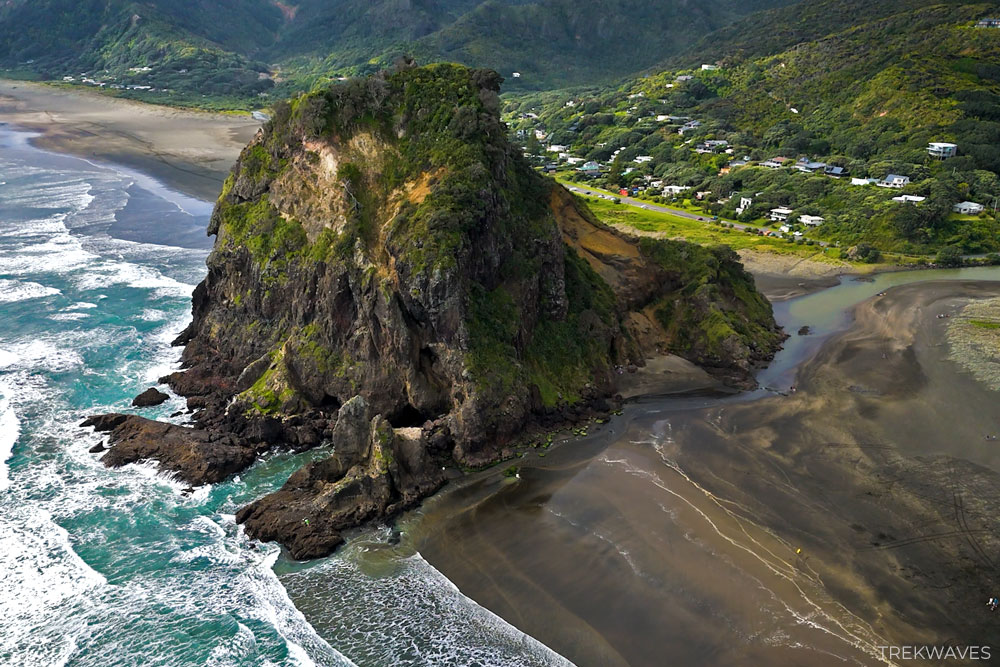
After exploring the waterfalls, finishing the day at the legendary Piha Beach is the perfect way to round out your time in the Waitākere Ranges.
We headed there afterward, and instantly understood why it’s considered one of New Zealand’s most iconic beaches.
With its dark sand, strong surf and the towering Lion Rock rising from the centre, the whole beach feels wild and cinematic.
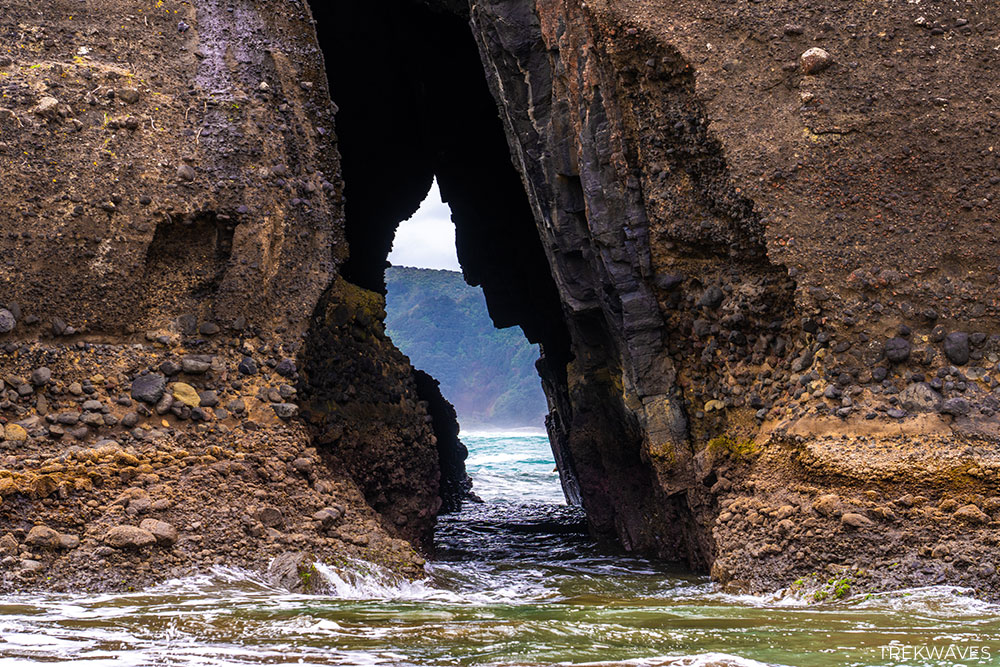
If you walk far enough down the beach you will reach the Keyhole Tunnel, a fun detour with great views of the unique cliffs around you.
If you are already out this way, Piha is an absolute must-see spot.
BONUS Stop #2 – Muriwai Gannet Colony
If you are already exploring the west coast, make sure to also stop at the Muriwai Gannet Colony. This place completely surprised me.
A short, easy coastal path leads you to a series of viewpoints perched above the cliffs — and suddenly you are standing above hundreds of gannets nesting on the cliffs with the waves crashing below.
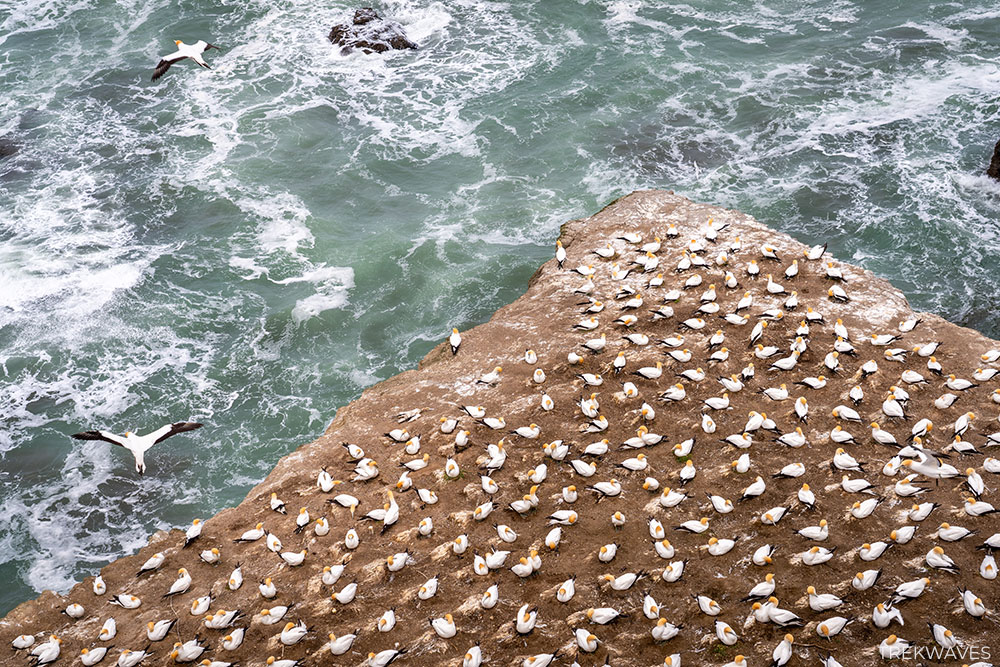
It’s one of those places where you expect to stay for a quick look but end up lingering much longer, simply because there’s so much happening.
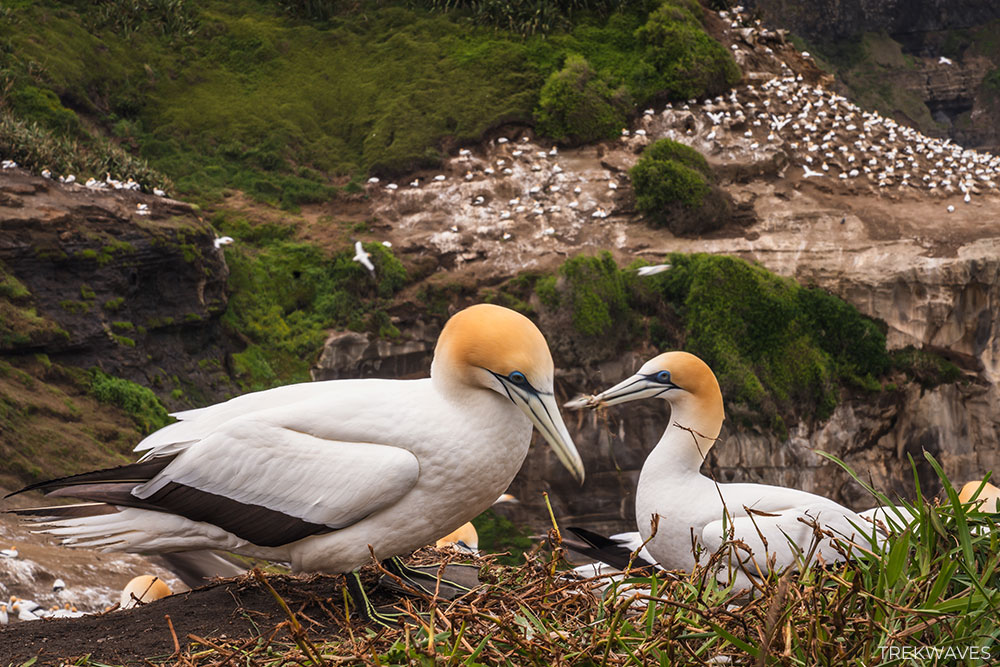
Up close, the Muriwai gannets are just extraordinary. You can stand there for ages watching them glide, nest, and interact — it’s such a special sight.
REGION 2: Waitomo & western Waikato
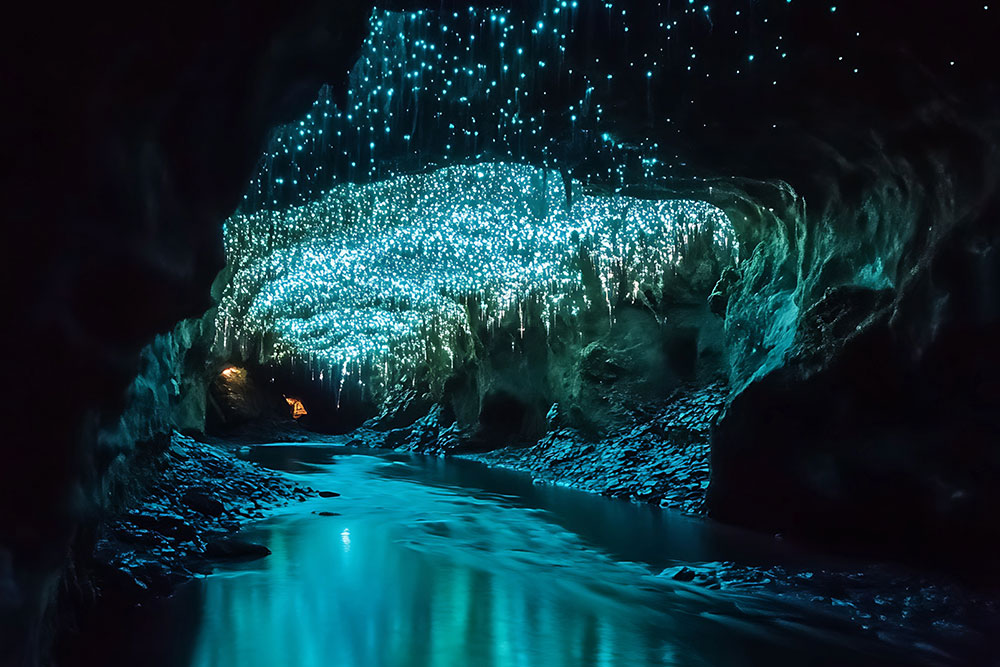
Waitomo and western Waikato pack an incredible amount of variety into a relatively small area. This region is famous for its glowworm caves, but the above-ground landscapes are just as impressive — limestone arches, powerful waterfalls, and classic rolling Waikato countryside.
The beauty of this area is how easy it is to explore. Many highlights are only a few minutes from the car: Mangapohue Natural Bridge, the powerful Marokopa Falls, or the short walk to Piripiri Caves. Each spot feels entirely different, showcasing the best of Waikato’s limestone and karst country without requiring long hikes.
Compact, scenic, and full of surprises, this region is a must on any North Island itinerary.
#22 – Waitanguru Falls
- Start & Finish: Mangotaki Rd
- Distance: 450m return
- Elevation Gain: 15m
- Time: 15-20min
- Difficulty: Easy
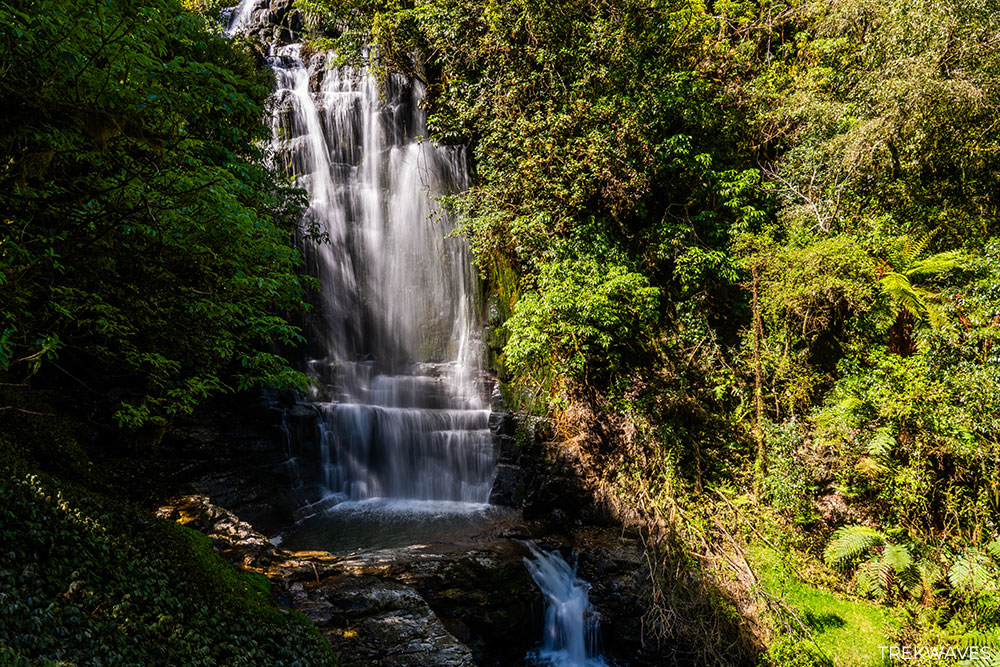
Located west of Piopio on Mangotaki Road, Waitanguru Falls is an easy and rewarding stop for anyone exploring western Waikato.
The return walk takes only about 15 minutes, following a simple, well-maintained track and staircase that brings you to a viewing platform.
The waterfall itself drops roughly 15 metres in a soft, curtain-like flow over the rock face. It’s not one of the region’s headline attractions, but it has a peaceful charm and feels like a real local gem.
#21 – Marokopa Falls
- Start & Finish: Te Anga Rd
- Distance: 800m return
- Elevation Gain: 25m
- Time: 20-30min
- Difficulty: Easy
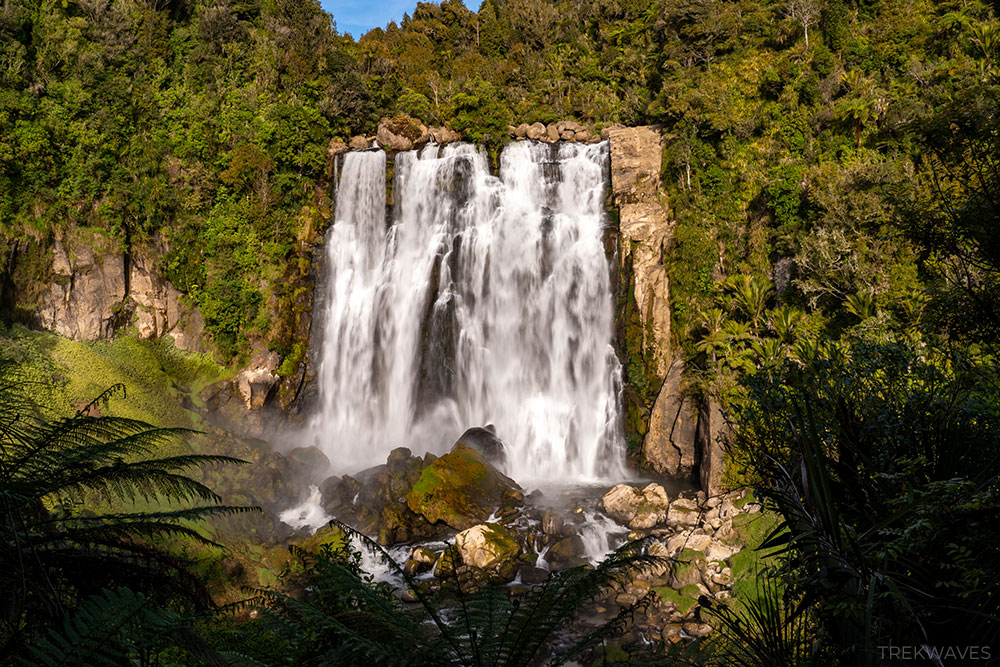
Mrokopa Falls, located west of the famous Waitomo Caves, is one of the most impressive waterfalls in the region. The walk is short and simple, about 15 minutes return, and it takes you through native forest straight to a viewing platform, which is the only place to see the waterfall (I haven’t seen any trail to the base of the falls).
Marokopa Falls is not the tallest waterfall in the North Island, but it is definitely the widest one I saw during our whole three week trip.
If you are already visiting the Waitomo Caves and want to explore a bit further west, Marokopa Falls is a stop that is definitely worth including.
#20 – Piripiri Caves
- Start & Finish: Te Anga Rd
- Distance: 300m return
- Elevation Gain: 10m
- Time: 10-15min
- Difficulty: Easy
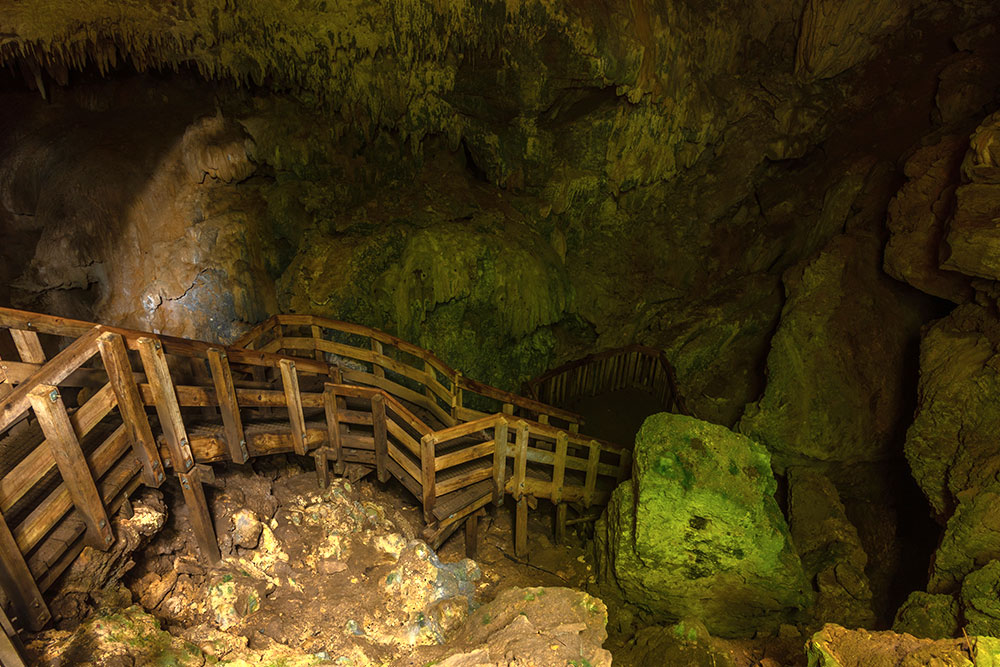
Not too far from Marokopa Falls you’ll find the Piripiri Cave Walk — a very short but atmospheric walk through through native bush, past limestone outcrops, and then down some stairs to the cave.
Inside the cave, it gets dark quickly — so make sure to bring a torch. The stairs can be muddy and slippery, so decent shoes are definitely a good idea.
The cave’s ceiling is made of limestone, and there are even fossilised oyster beds if you pause and look closely.
It is a quiet, atmospheric place — perfect for a quick detour when you are already driving out from Waitomo.
#19 – Mangapohue Natural Bridge
- Start & Finish: Te Anga Rd
- Distance: 600m return
- Elevation Gain: 36m
- Time: 20min
- Difficulty: Easy
If you’re travelling along Te Anga Road, make sure you stop at the Mangapohue Natural Bridge — and consider coming back after dark to see the glow-worms.
The short walk is stunning even during the day, guiding you through a narrow limestone gorge where a stream flows between sheer rock walls.
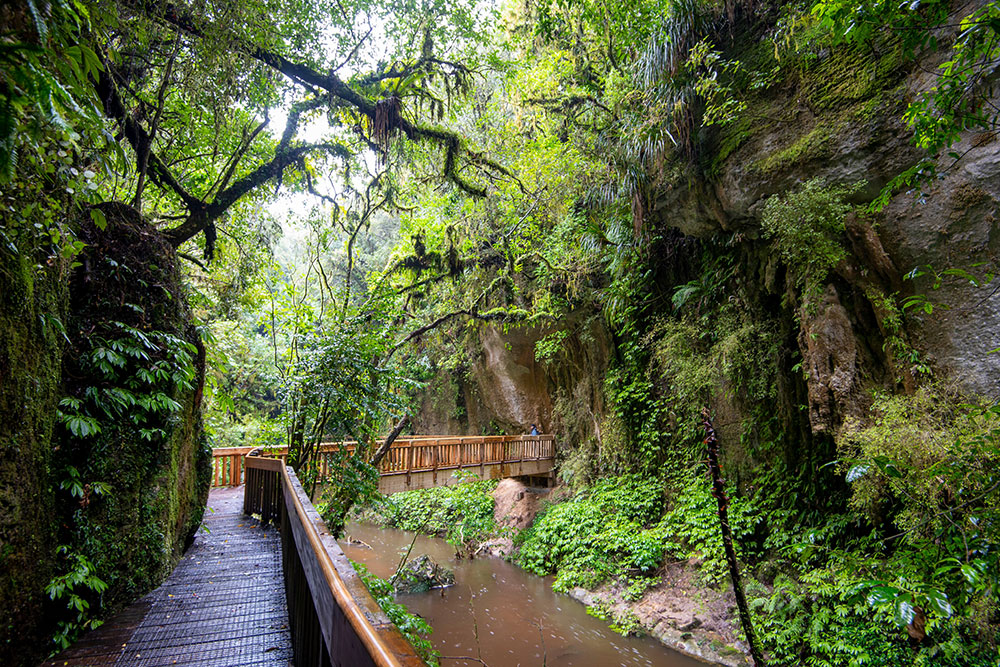
The bridge itself is formed from an ancient cave — the river cuts through, creating a tunnel you can walk over and peer down into. The water flows beneath and around the rock, making the whole place feel both peaceful and dramatic.
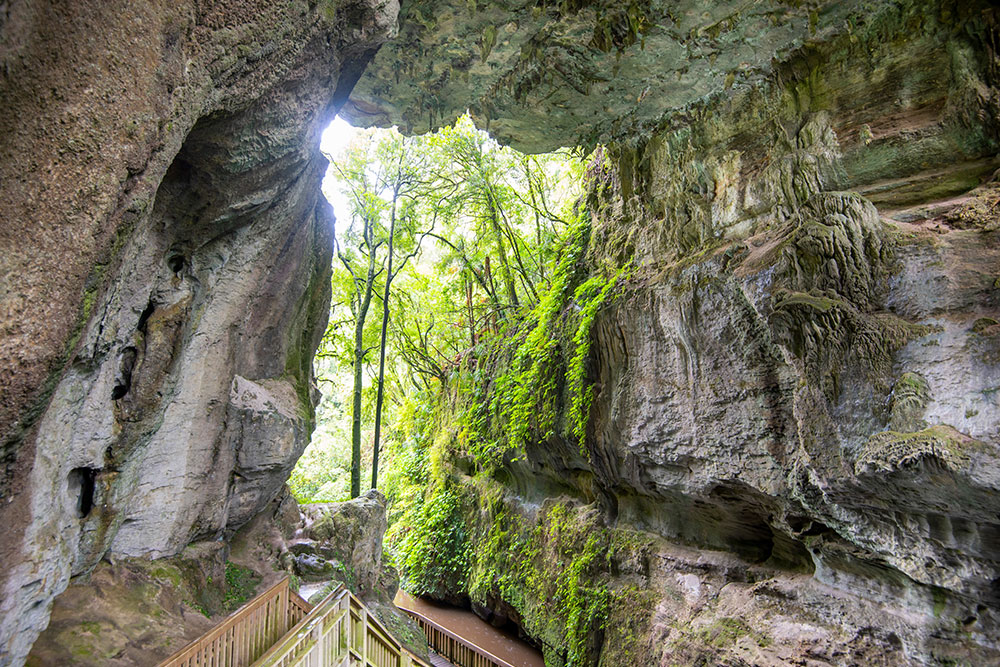
When darkness finally arrived, the whole canyon lit up. The glow worms are everywhere, not just overhead.
Both sides of the canyon walls are dotted with lights, and you can stand very close to them!

REGION 3: Coromandel Peninsula
The Coromandel is one of the most scenic corners of the North Island, known for its volcanic peaks, white-sand beaches, and forested ranges.
There are plenty of great walks here, and you could easily spend a lot more time exploring than we did.
With only a short window to visit, we focused on a few highlights — the hikes below are the ones we managed to explore, and each offers a great snapshot of what makes the Coromandel so special.
#18 – Mount Paku
- Start & Finish: 188-226 Paku Drive
- Distance: 1km return
- Elevation Gain: 72m
- Time: 45min – 1hr
- Difficulty: Easy / Moderate
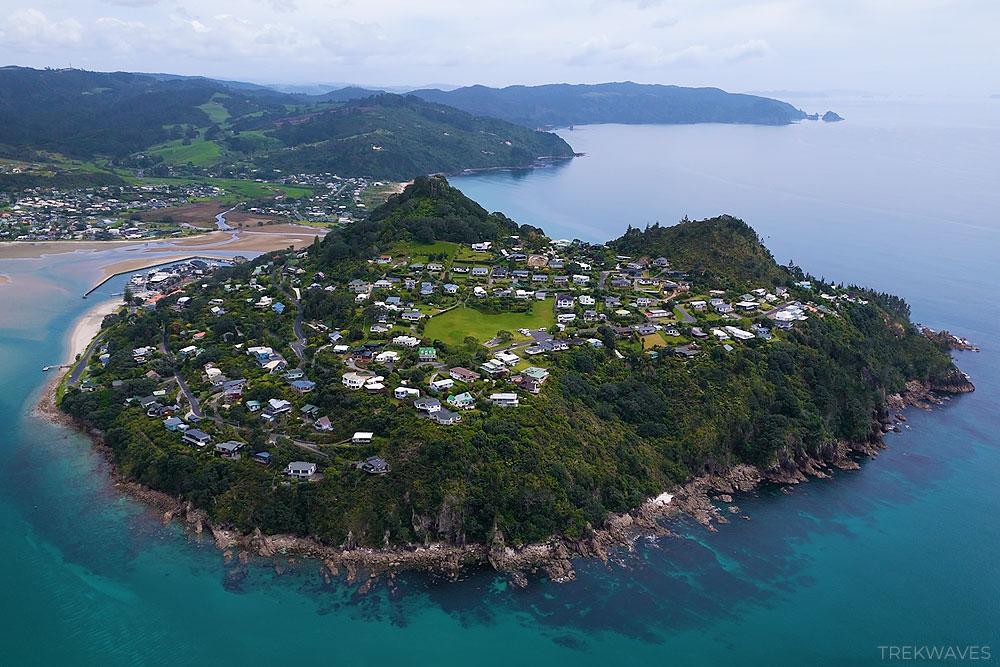
Mount Paku is a quick and rewarding summit walk overlooking Tairua, offering some of the best panoramic views on the Coromandel coast.
Once a standalone volcanic island, it later became connected to the mainland as rising seas filled the old valleys. Today, its rhyolite dome remains, and you can still imagine its original volcanic shape when viewing it from the beach.
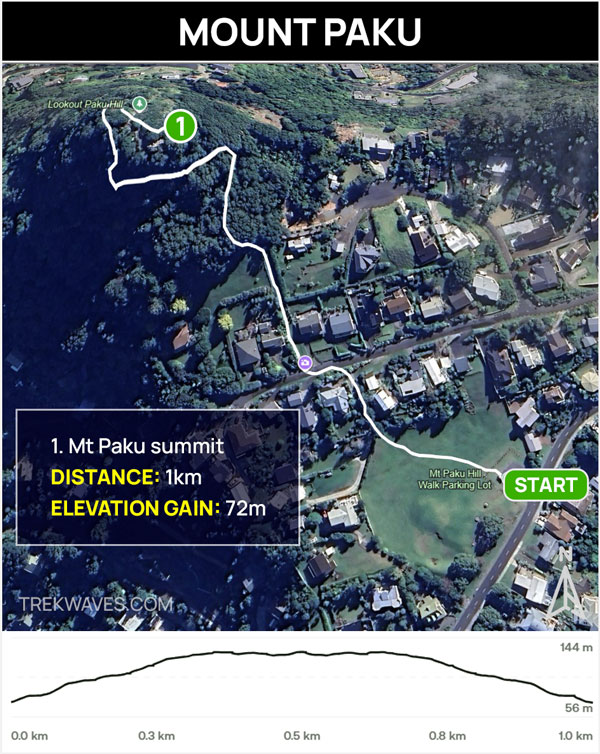
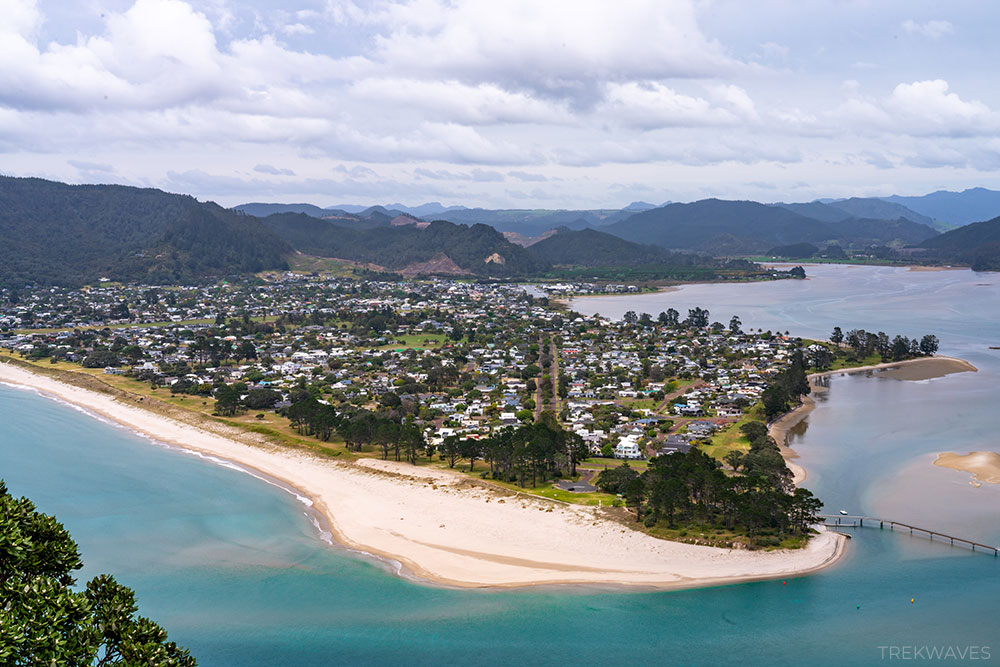
The walk to the top takes around twenty minutes, and the views are outstanding — Pauanui Beach, Tairua Harbour, the long sweep of coastline, and the small islands scattered across the bay.
It surely is a great sunrise or sunset spot and a fantastic short walk to add to any Coromandel itinerary.
#17 – Cathedral Cove
- Start & Finish: Hahei Beach (or Grange Rd)
- Distance: 3.6km return
- Elevation Gain: 100m
- Time: 2-2.5hr
- Difficulty: Easy
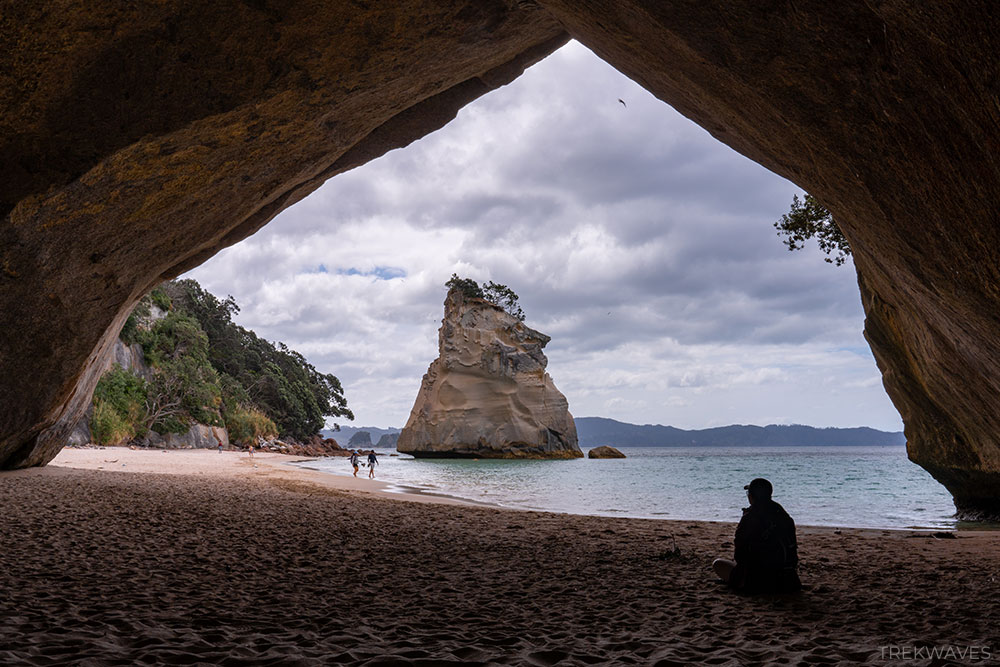
If you’re starting from the Grange Road shuttle car park, the Cathedral Cove Track is an easy 3.6 km return walk and an absolute must-do on the Coromandel Peninsula.
The trail begins with a lookout giving you sweeping coastal views over the cliffs and offshore islands.
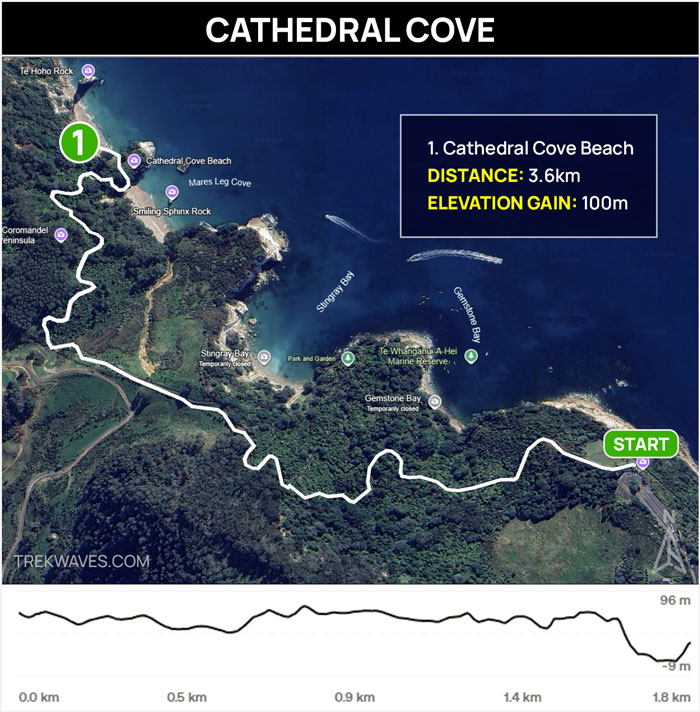
The track gradually winds along the headland before descending to Cathedral Cove, one of New Zealand’s most iconic coastal landmarks.
The towering arch and dramatic rock formations were shaped by volcanic activity around 8 million years ago — the cliffs here are made of ignimbrite, a hardened mix of volcanic ash and pumice.
Over time, the ocean carved its way through the softer layers, creating the impressive sea cave and the famous archway that now frames the cove.
It’s a short walk with a huge reward, and a perfect addition to any Coromandel itinerary.
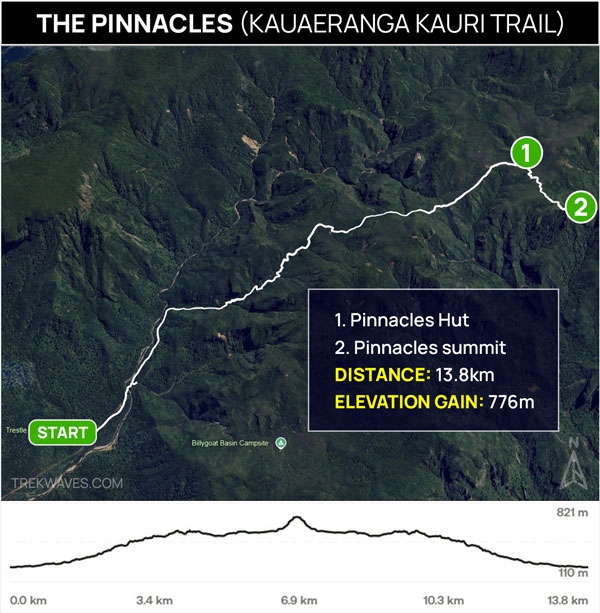
#16 – The Pinnacles (Kauaeranga Kauri Trail)
- Start & Finish: Trestle View Campsite
- Distance: 13.8km return
- Elevation Gain: 776m
- Time: 1-2 days
- Difficulty: Hard
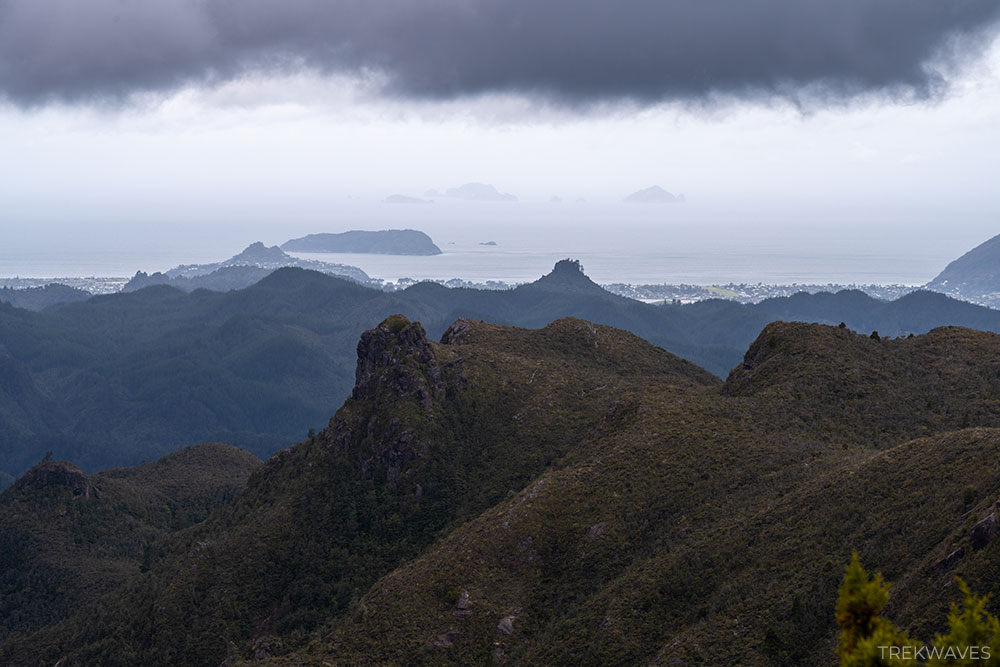
The Pinnacles Track is one of the most iconic hikes on the Coromandel Peninsula, and while many people complete it as an overnight trip, it’s entirely achievable in a single day with an early start.
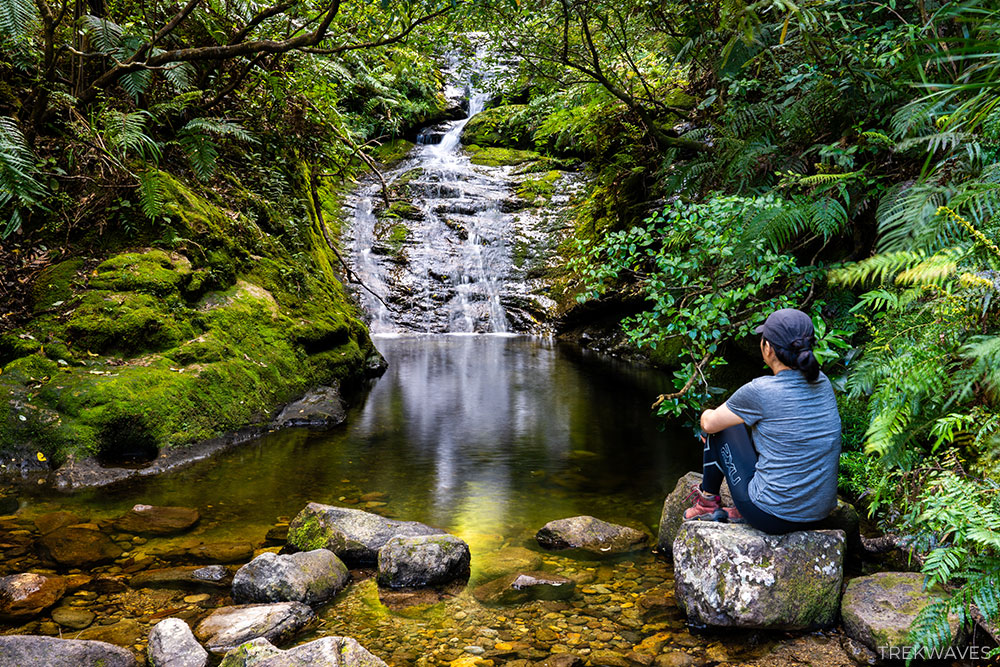
The trail climbs steadily through lush native forest, following historic packhorse routes once used during the kauri logging era.
Expect long stair sections, swing bridges, and small waterfalls as you make your way up toward the ridge.
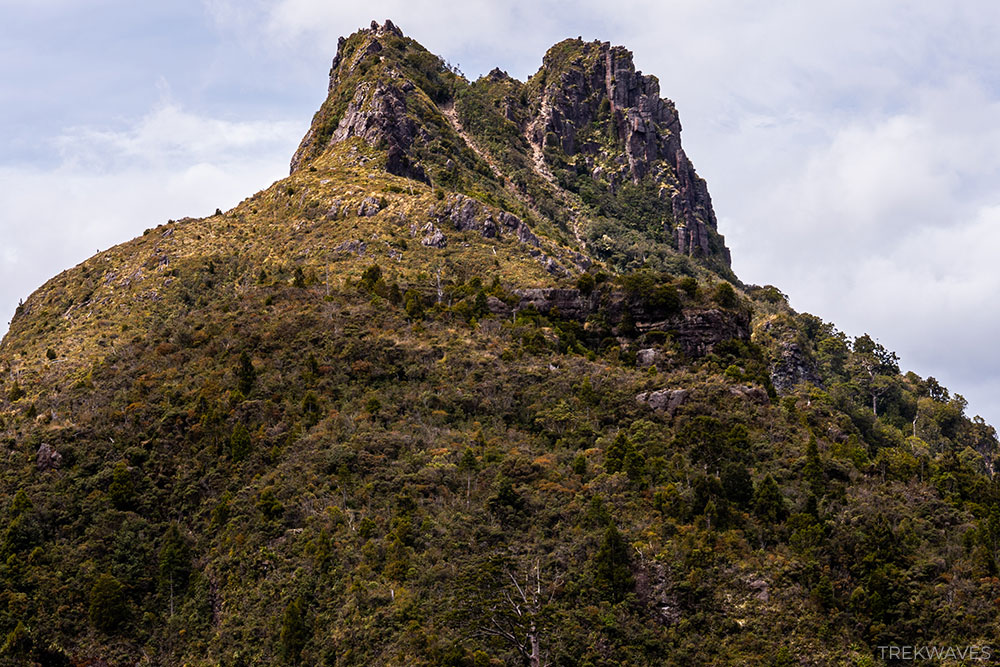
After reaching the hut, the final push to the summit is short but steep, with rock scrambles that can get slippery in wet weather — so it’s best tackled while conditions are dry.
The reward at the top is huge: panoramic views stretching across the Coromandel Range, with rugged volcanic peaks and deep valleys shaped by millions of years of erosion.
REGION 4: Rotorua
Rotorua is one of the North Island’s most unique destinations — a place where geothermal landscapes, crater lakes and Māori culture all come together in one compact, easy-to-explore region.
Steam vents rise from the ground, vibrant pools bubble and hiss, and entire valleys are shaped by ancient volcanic activity.
Rotorua is easily a place you could spend several days, especially if you want to mix walks with cultural experiences, thermal relaxation, or a bit of adventure.
From quiet nature tracks to must-see geothermal wonders, this region offers some of the most unforgettable landscapes in the North Island.
#15 – Te Auheke
- Start & Finish: Okataina Carpark
- Distance: 1.6km loop
- Elevation Gain: 80m
- Time: 45mins
- Difficulty: Easy
Te Auheke Track is a short and really peaceful loop walk through thick forest near Lake Ōkataina.
We originally planned to do this trail after sunset to see the glow worms, but the car park rules require all vehicles to be gone by 7:45pm, so we visited in daylight only.
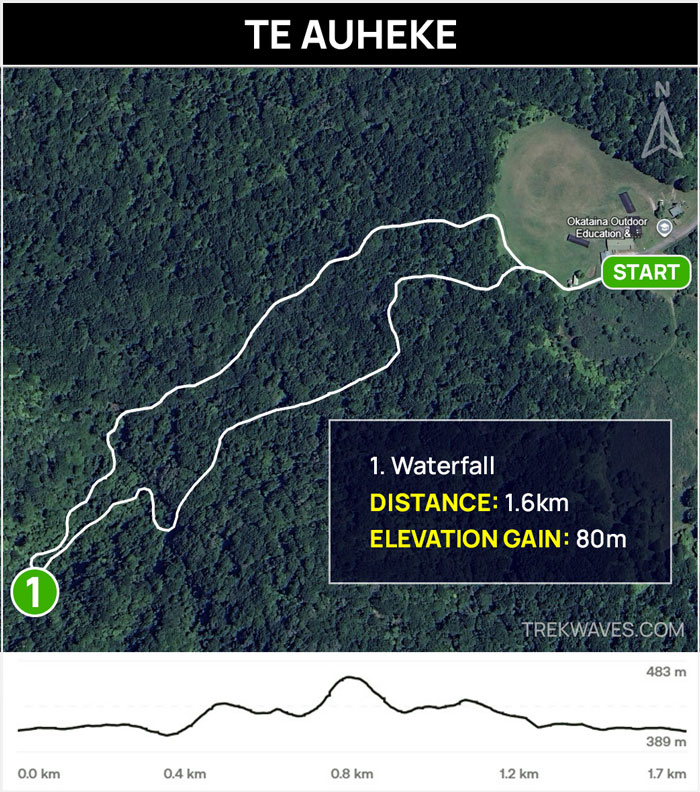
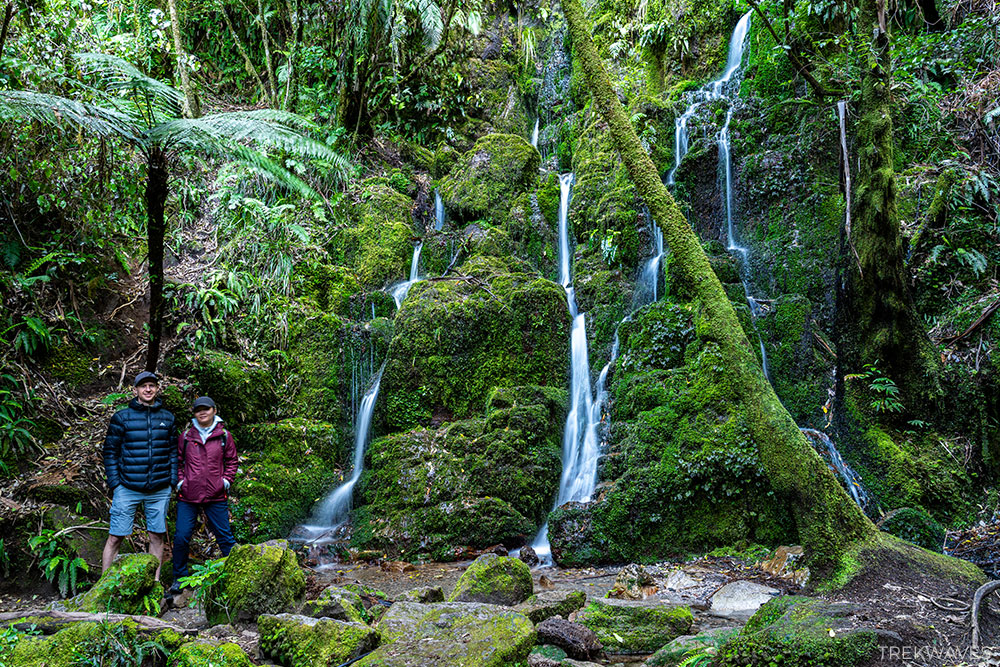
The track is short and easy, leading through dense native forest with towering trees, ferns, and that deep-green atmosphere you only get in New Zealand’s ancient rainforests.
The waterfall itself is a wide, multi-tiered cascade, dropping around 10 metres over dark, moss-covered rock and framed by thick vegetation on all sides.
#14 – Redwood Memorial Grove
- Start & Finish: Whakarewarewa Forest Carpark
- Distance: 1.9km loop
- Elevation Gain: 58m
- Time: 45mins
- Difficulty: Easy
Starting near the entrance to the Redwoods Treewalk, the Redwood Memorial Grove Walk offers an easy, immersive way to experience the beauty of Rotorua’s famous redwood forest.
While the Redwoods Treewalk can feel quite busy during the day, many visitors recommend going at night, when the elevated platforms glow with lantern-like lights beneath the towering trunks.
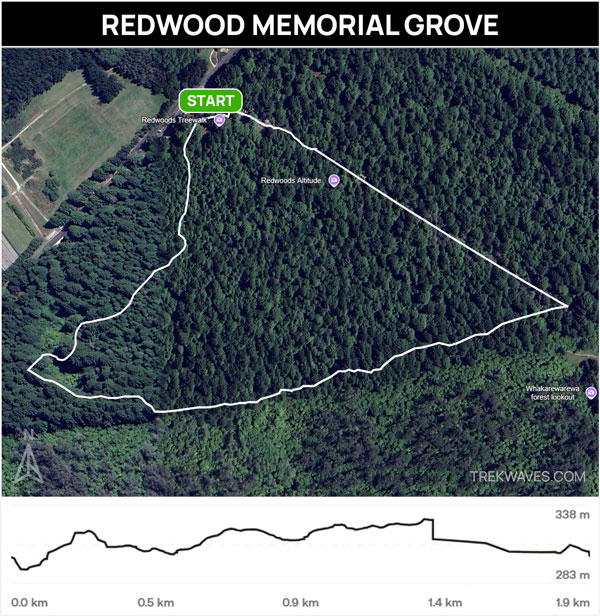
Memorial Grove Trail leads you through peaceful forest, past some of the tallest trees in the park. Along the way, we stopped by Redwood Altitude and continued on to the Tokorangi-Pā Track, which brings in a touch of local history, before looping back to where we started.
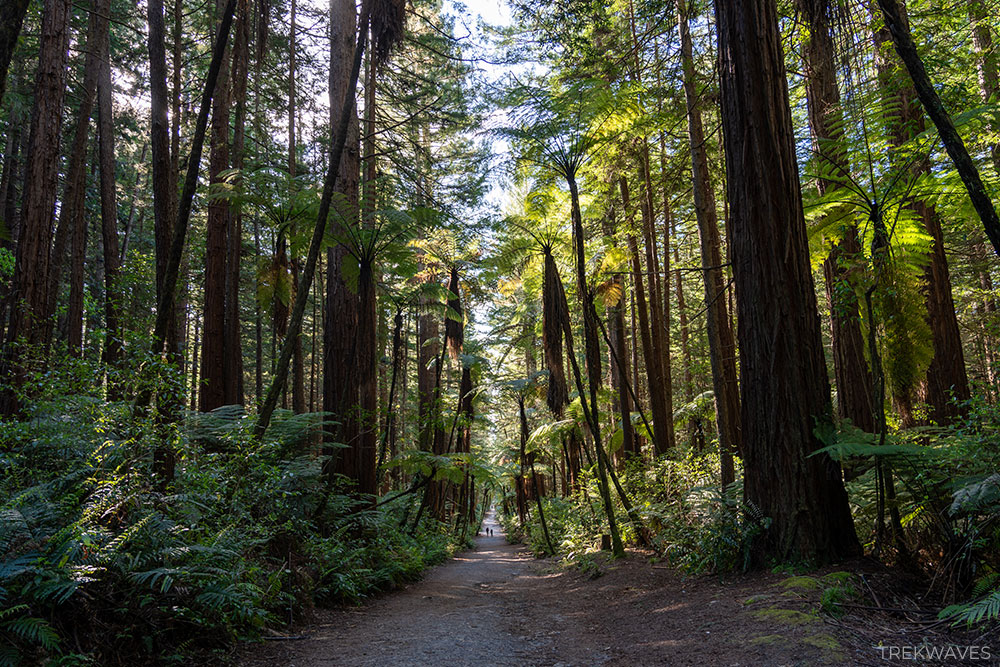
The track has a calm, spiritual feel — these trees have been here for generations and some of the tallest trees in the forest reach around 72m in height.
The forest floor is carpeted in ferns, the redwoods tower overhead, and the light filtering through the branches gives everything a soft, green glow.
#13 – Putaruru Blue Spring (Te Waihou Walkway)
- Start & Finish: Leslie Road Carpark
- Distance: 2.7km return
- Elevation Gain: 62m
- Time: 1hr
- Difficulty: Easy
Blue Spring, or the Te Waihou Walkway, is about a 40 minute drive west from Rotorua, and we visited it on one of the mornings before our Kaituna rafting trip in the early afternoon.
We started from the popular Leslie Road car park, which is definitely the busier option and usually full of visitors.
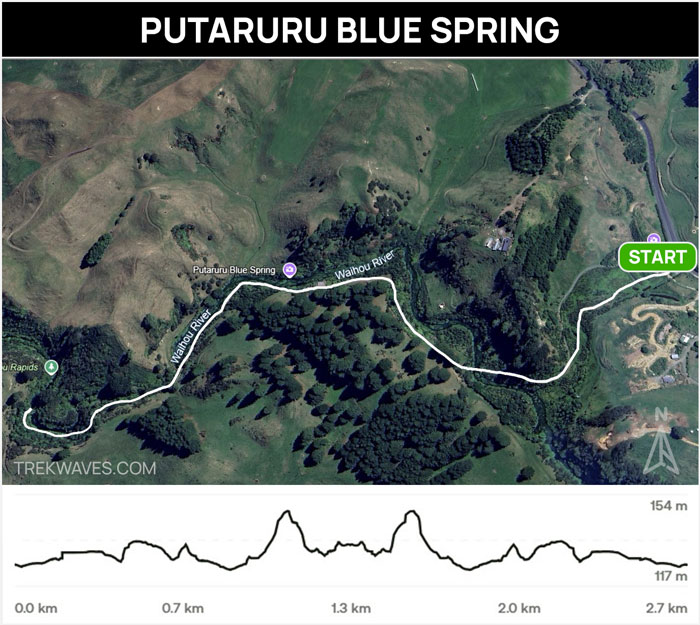
The trail follows the river and you can walk as far as you like — there is no need to continue all the way to the Whites Road car park unless you want the longer version.
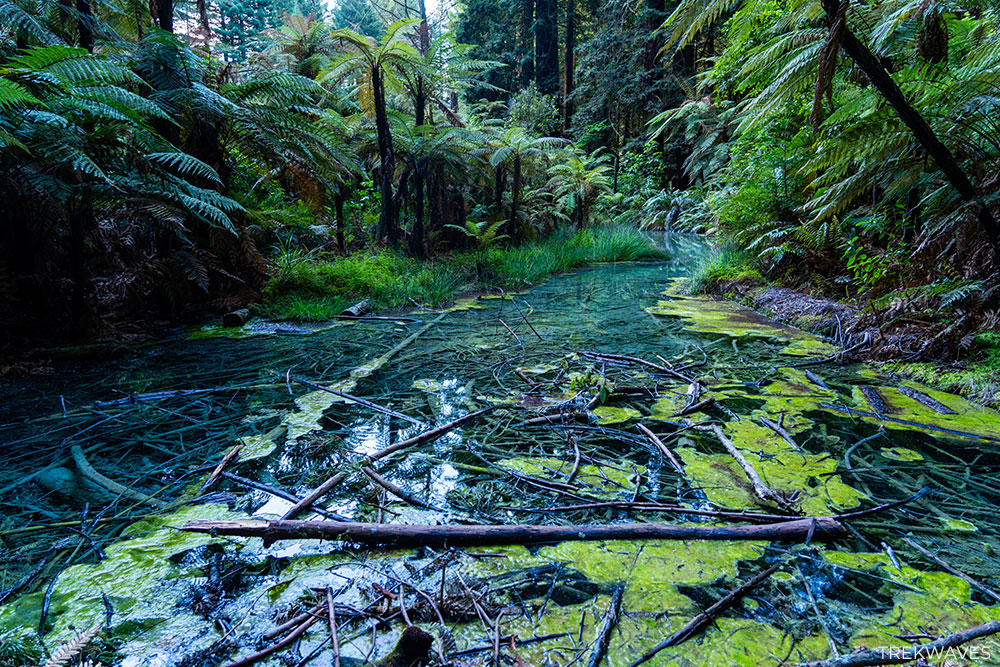
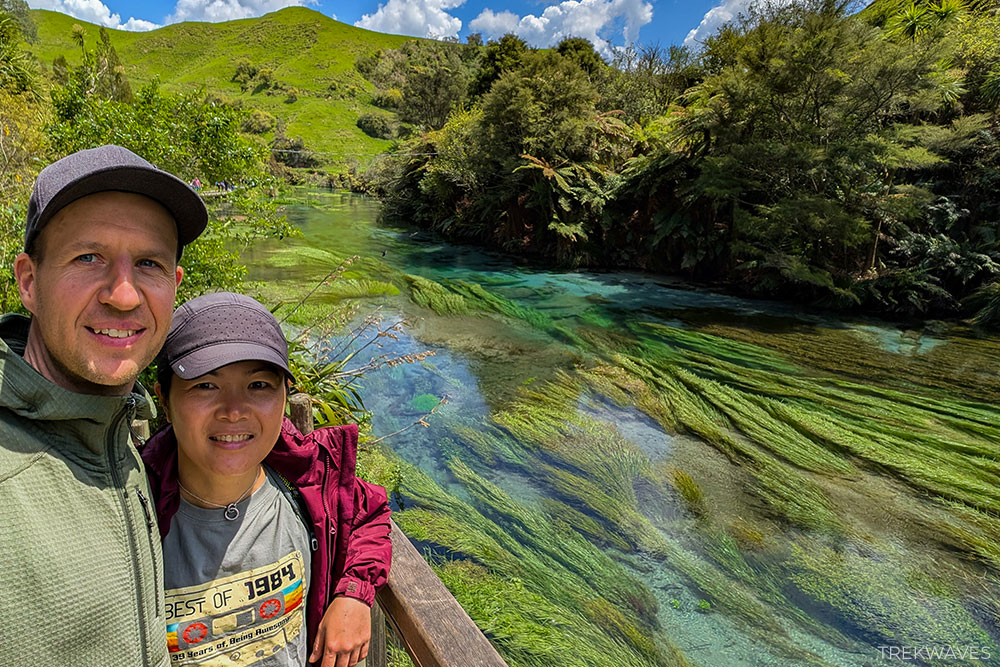
For us, it was enough to stroll beside the river, enjoy the views and take it at a relaxed pace. The water here is incredibly clear with that unreal blue colour that makes the place so famous.
#12 – Huka Falls
- Start & Finish: Huka Falls Carpark
- Distance: 200m return
- Elevation Gain: 10m
- Time: 10-15mins
- Difficulty: Easy
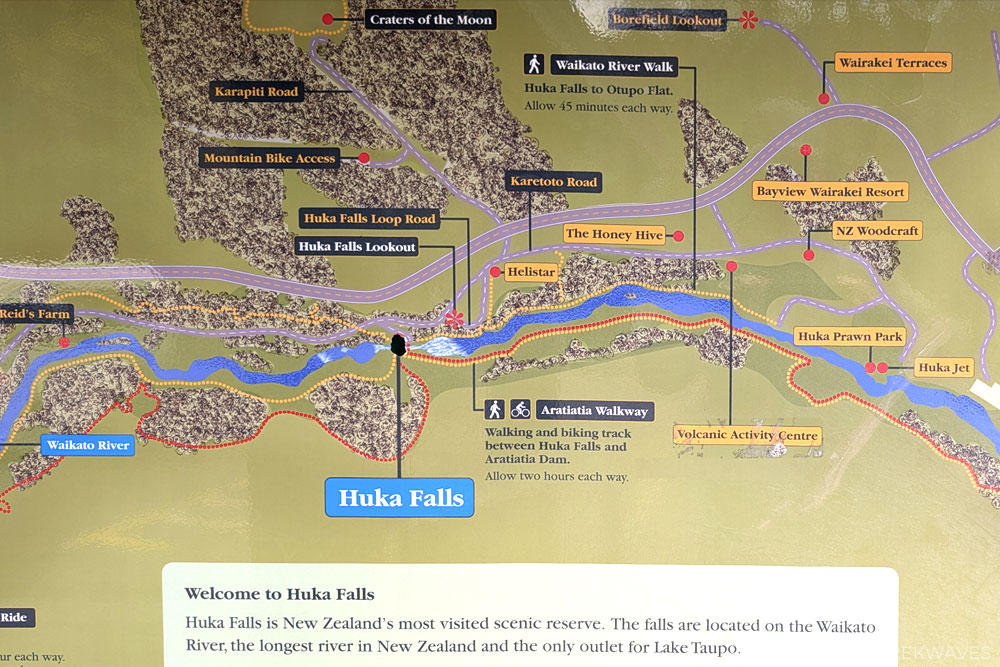
Huka Falls is a fantastic quick stop when you’re leaving Rotorua and heading south toward Tongariro. It’s one of the most powerful and thrilling natural sights in the region and very easy to access.
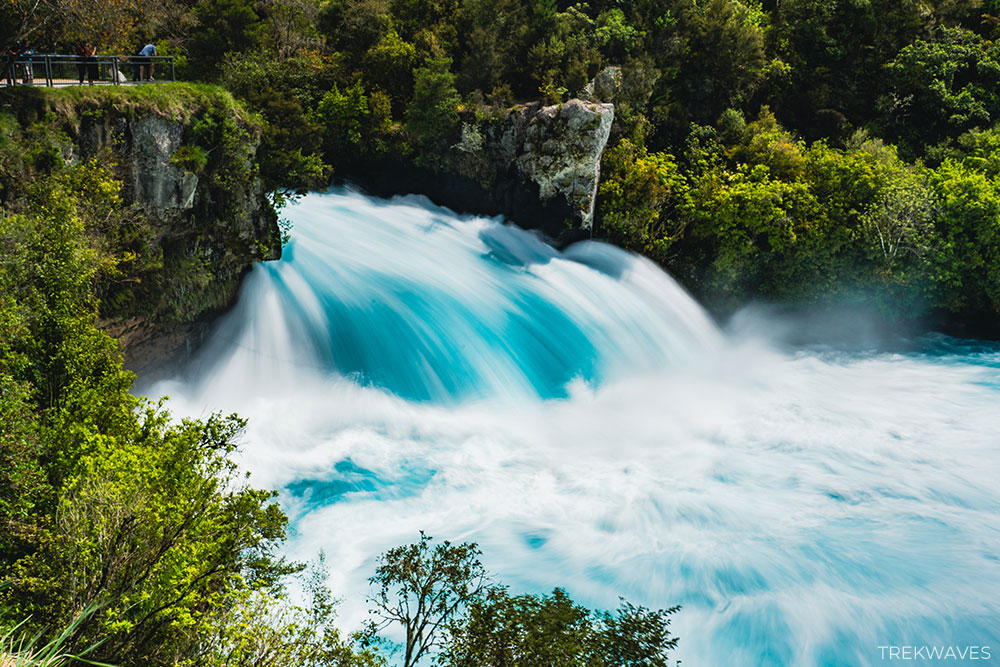
The main viewing platform is just a short walk from the car park, and from there you stand right above the canyon where the river squeezes through and explodes into foam.
If you want a slightly different perspective, there’s another lookout a little higher up. From there, you can see the falls from above and take in how the river twists and churns before it hits the drop. It’s a great way to appreciate both the scale and the force of Huka Falls.
#11 – Mount Tarawera
- Start & Finish: Shuttle from Te Puia Carpark
- Distance: 2.9km loop
- Elevation Gain: 218m
- Time: 2-3hr
- Difficulty: Moderate
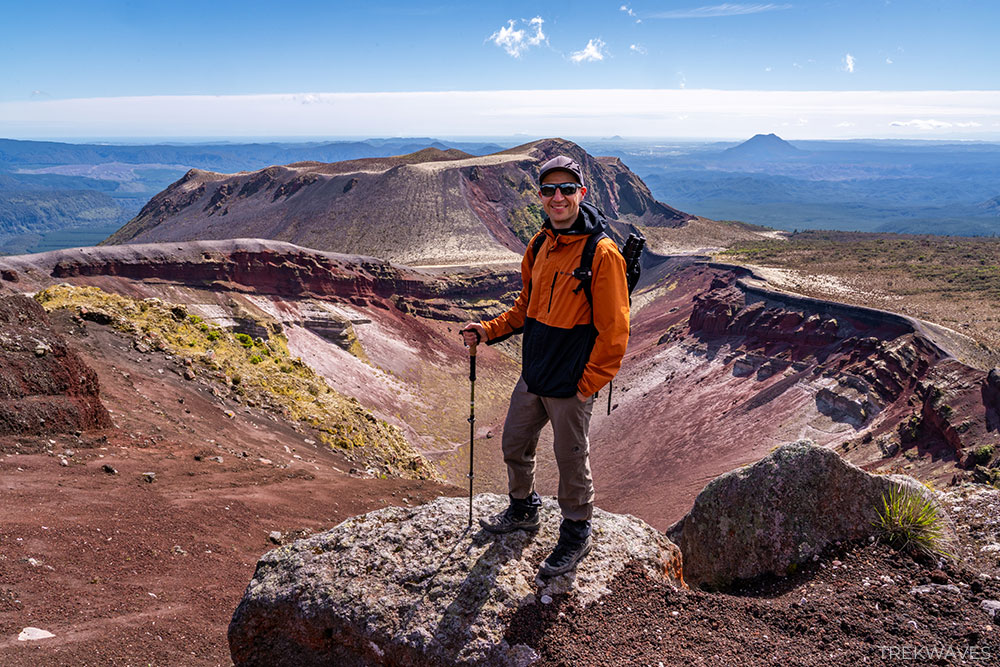
Hiking Mt Tarawera was one of the most unique experiences we had in Rotorua — and the only way to reach the summit is with Kaitiaki guided tour, as independent access isn’t allowed.
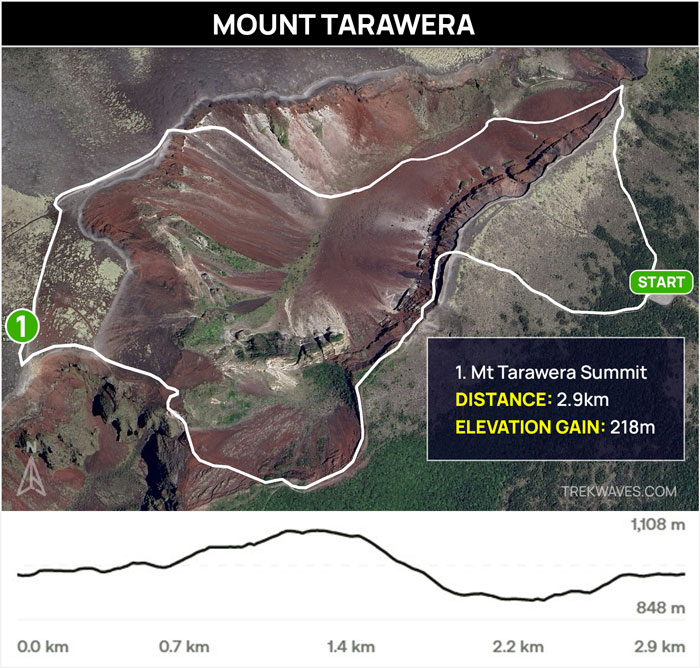
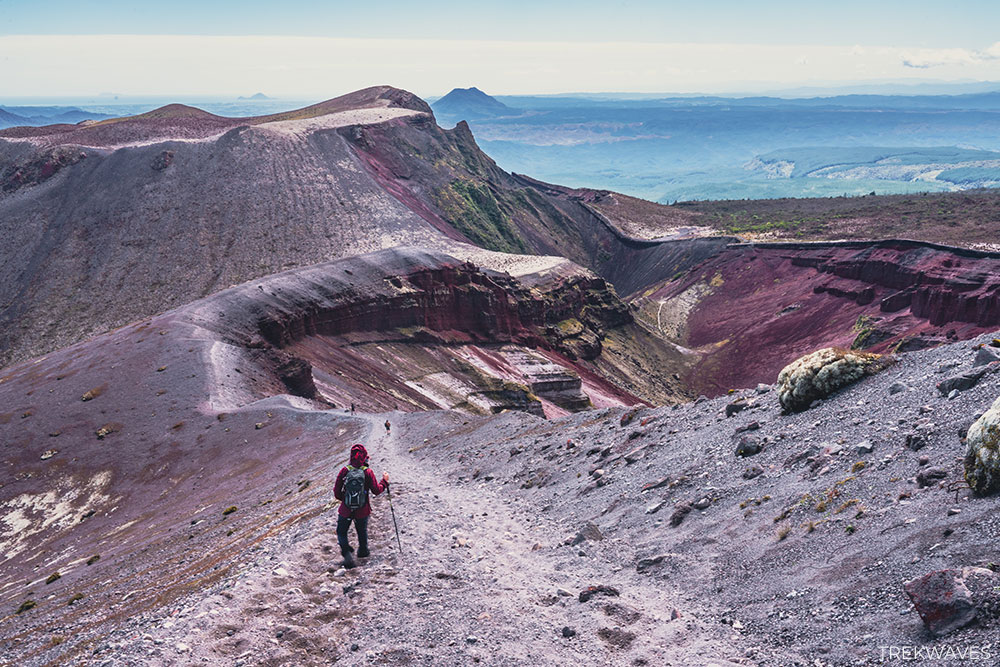
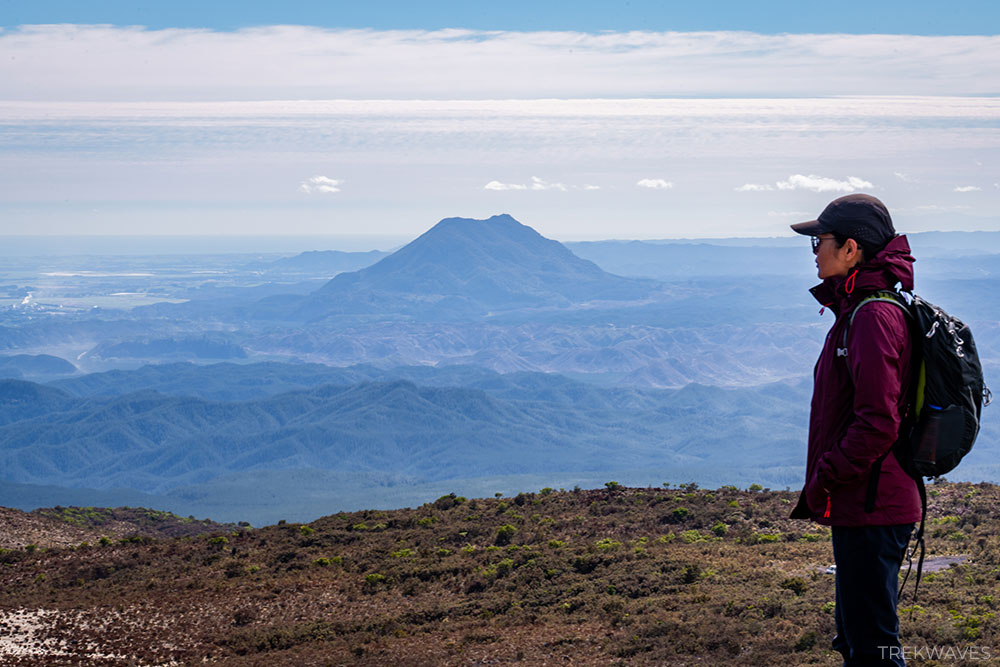
Once you’re on the mountain, the landscape speaks for itself. The trail crosses dramatic volcanic ridgelines and colourful craters carved out by the 1886 eruption, with wide-open views stretching across the lakes and surrounding ranges.
One of the most memorable parts of the walk is the descent into the crater, where you run or slide down loose volcanic scree — a pure hit of adrenaline and surprisingly fun.
For scenery, adventure, and cultural insight in one package, Mt Tarawera is easily one of the best hikes in the region.
BONUS Stop #3 – Wai-O-Tapu Thermal Wonderland
Walking through Waiotapu Thermal Wonderland was one of the most unique geothermal experiences we had in New Zealand.
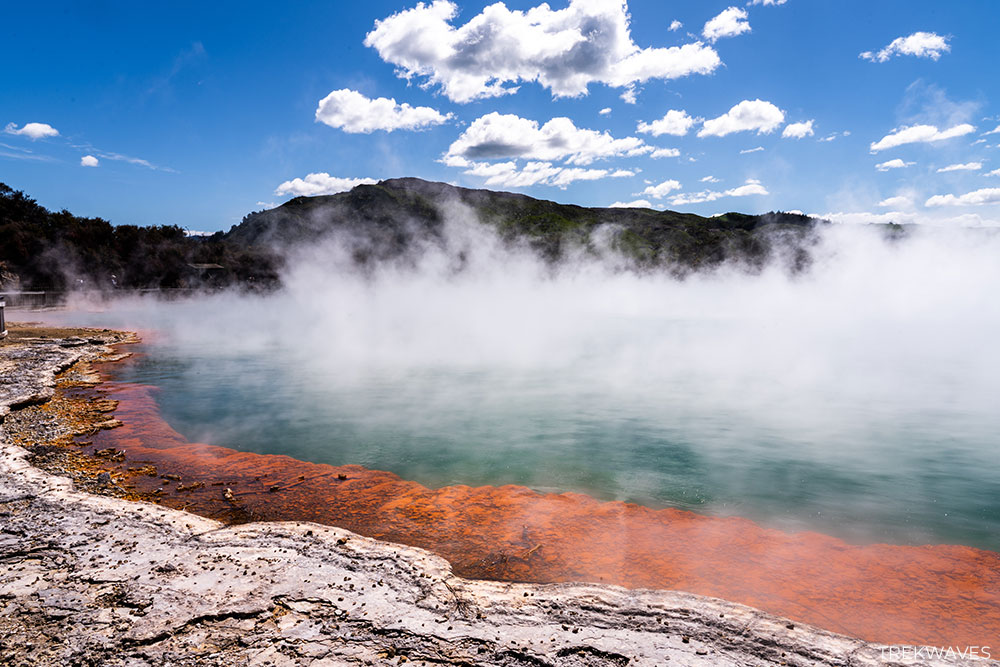
While there are multiple geothermal parks around Rotorua, Waiotapu really stood out for me — it felt less commercial, and I was really drawn to the famous Champagne Pool.
We did the full walk, taking one of the longer loops all the way to the end, and it was totally worth it. The walking trails are well maintained and lead past steaming mud pools, colorful hot springs and deep craters.
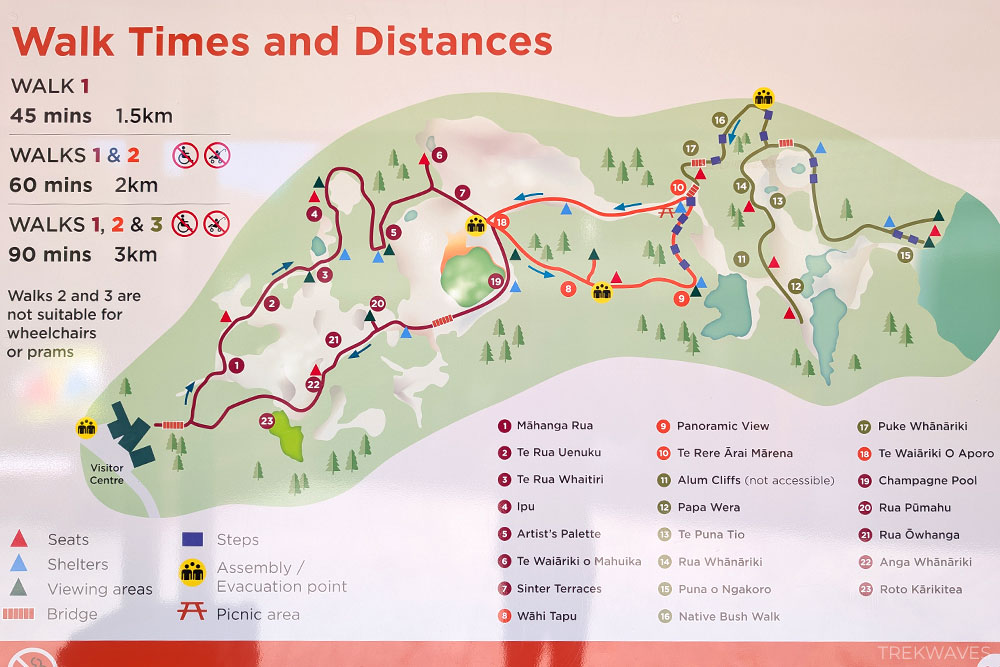
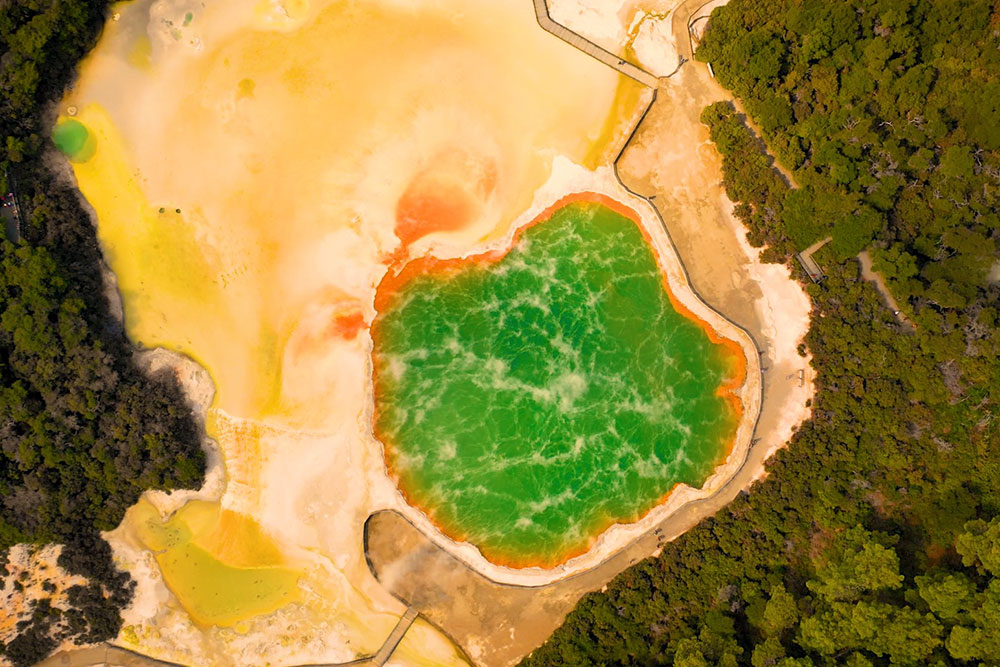
When we reached Champagne Pool, it did not disappoint. The rim is bright orange thanks to mineral deposits, and the water bubbles from carbon dioxide gases — that’s where it gets the name “Champagne” Pool.
Along the rest of the walk, we saw other geothermal features: crystal‑green pools, steaming vents, and even collapsed craters. The final part of our walk took us to Lake Ngakoro, which is this surreal green lake formed in a volcanic crater.
REGION 5: Taranaki
Taranaki is one of the most striking regions on the North Island, defined by the perfect volcanic cone of Mount Taranaki rising above dense green forest.
It’s a dream destination for hikers, offering everything from short rainforest walks to full-day alpine adventures.
The region’s trails take you through lush kamahi forests, moss-covered goblin-like landscapes, river valleys, waterfalls, and high ridges with unbeatable views of the mountain.
This region isn’t just about the mountain — Taranaki’s coastline delivers some of the most dramatic views in the North Island. Side trips to the White Cliffs or the Three Sisters are well worth it.
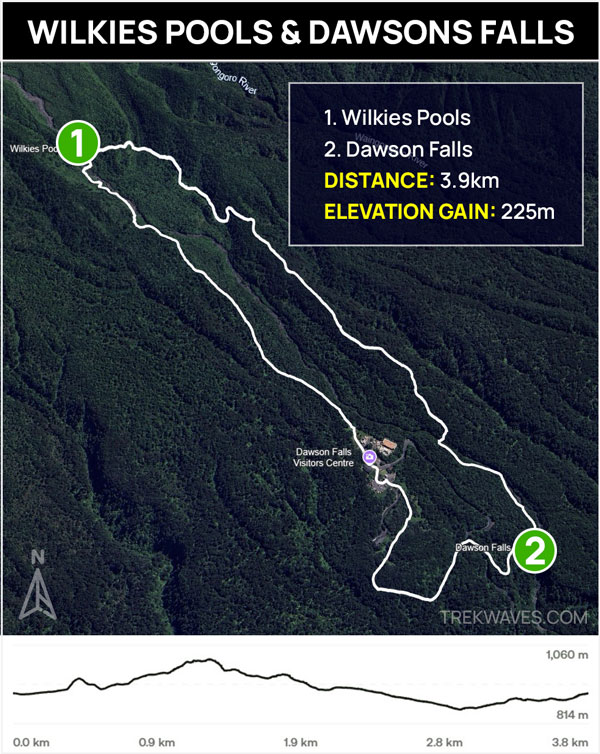
#10 – Wilkies Pools & Dawsons Falls
- Start & Finish: Dawsons Falls Visitor Centre Carpark
- Distance: 3.9km loop
- Elevation Gain: 225m
- Time: 2-3hr
- Difficulty: Easy / Moderate
The Dawson Falls area is one of the best places to experience the magical “goblin forest” of Egmont National Park. From the Dawson Falls Visitor Centre car park, the Wilkies Pools Track leads you straight into a world of twisted kamahi trees, moss-draped branches, and dense green undergrowth.
The forest along the Kapuni Stream twists and bends into unusual shapes, shaped by the mountain’s harsh conditions, giving the trail a truly mysterious atmosphere
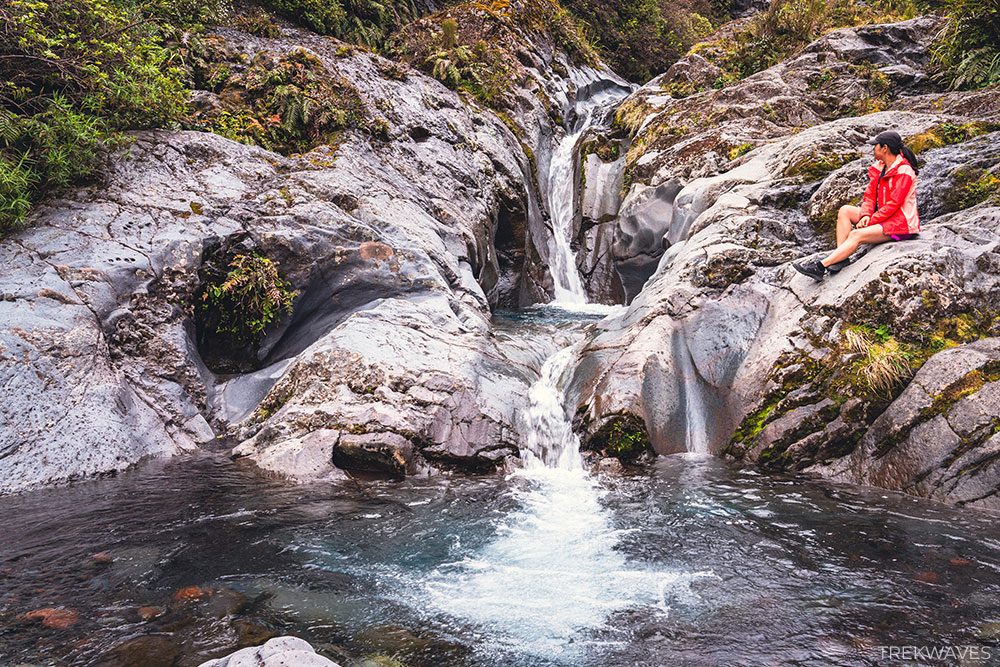
Wilkies Pools are a series of smooth lava basins carved by ancient eruptions and polished over time by flowing water.
The pools are crystal clear and the water is very cold. If you climb a little higher above the main pool, you’ll find a small waterfall and a few other rock basins that many visitors overlook.
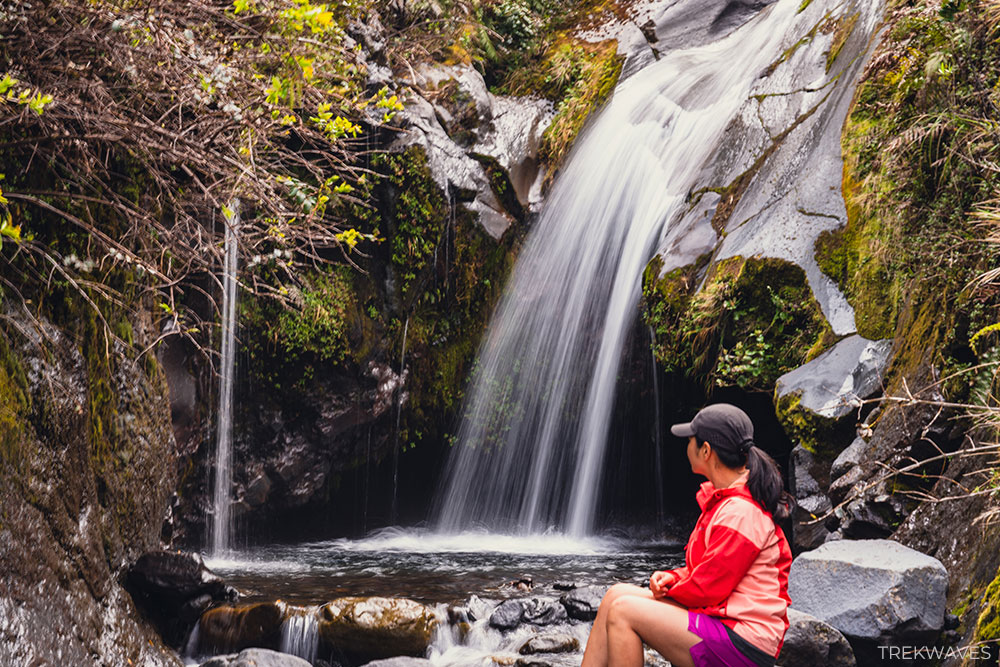
From the pools, the track continues through the labyrinth of moss-covered forest toward Dawson Falls.
Dawson Falls is a stunning sight, with water plunging into the gorge below, creating a constant mist that drifts through the trees.
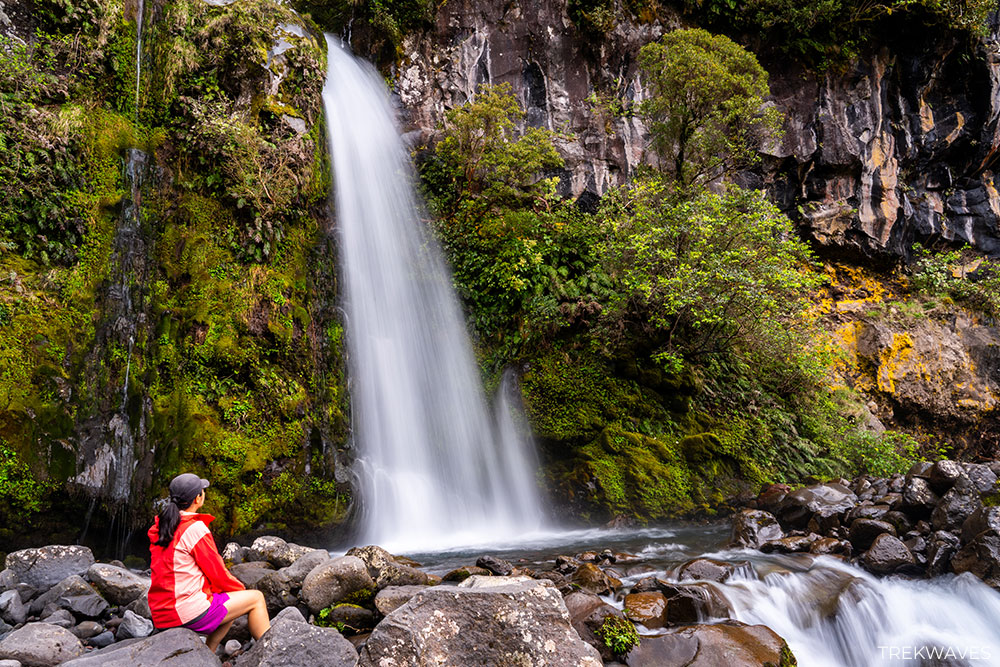
It’s an easy, rewarding loop that showcases some of the most distinctive landscapes on the lower slopes of Mount Taranaki.
#9 – Manganui Gorge Track
- Start & Finish: Stratford Plateau Carpark
- Distance: 2.4km return
- Elevation Gain: 117m
- Time: 1.5hr
- Difficulty: Easy / Moderate
The Stratford Plateau is one of the most scenic access points in Egmont National Park, and the walk from the plateau car park offers a stunning look at Mount Taranaki’s alpine landscapes.
On clear days, the views stretch all the way across the island to the volcanoes of Tongariro National Park.
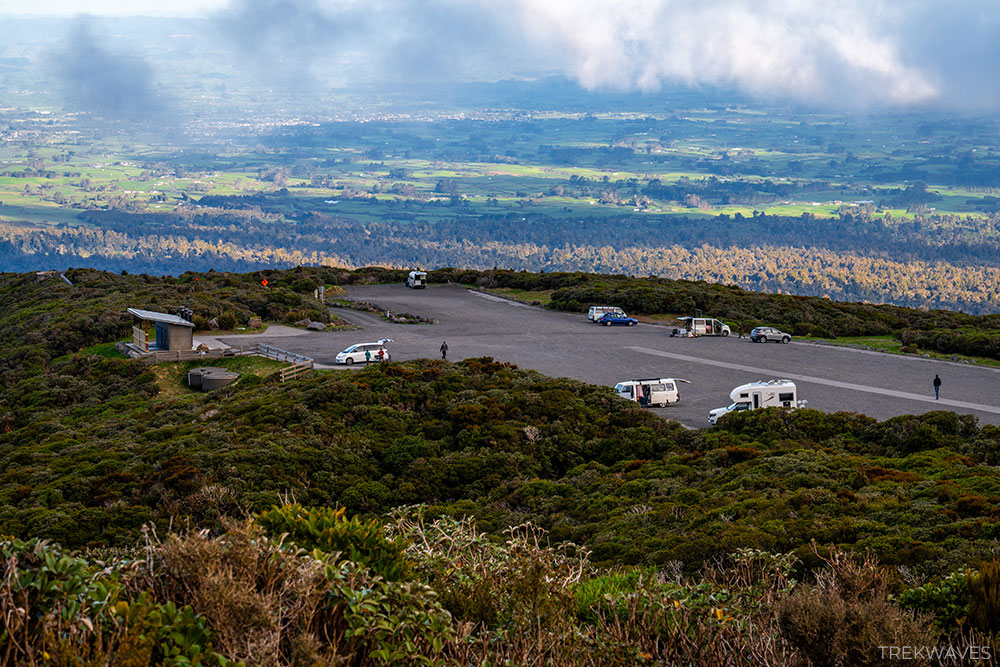
From the car park, the track climbs steadily through subalpine vegetation before leading you through a short tunnel and onto a spectacular suspension bridge.
Spanning 100 metres and hanging around 50 metres above the gorge floor, the bridge is a highlight in itself.
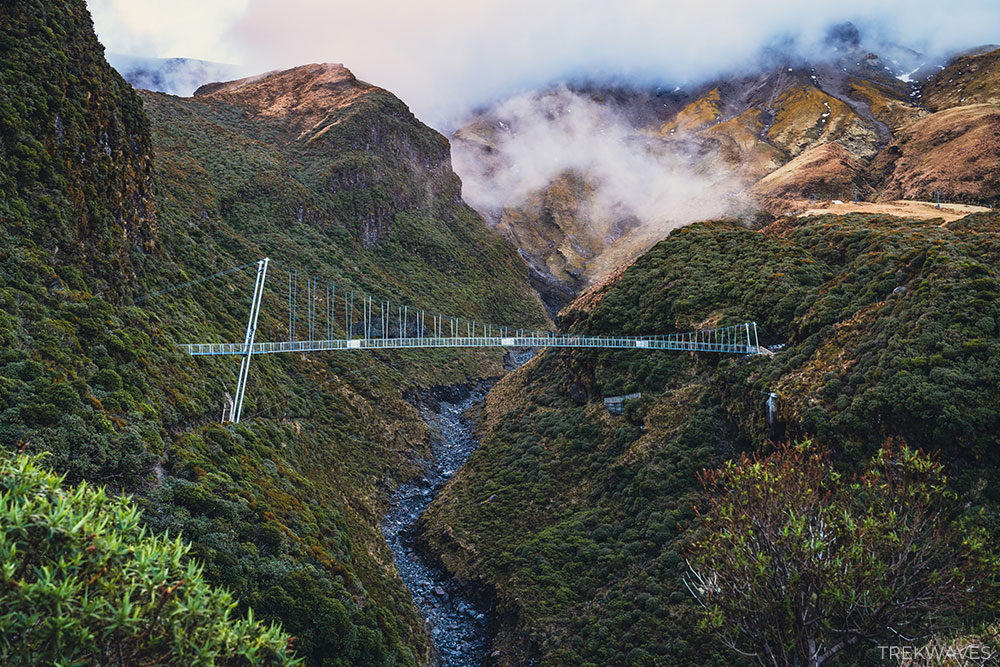
Beyond the bridge the trail continues toward the Manganui Ski Area and the Stratford Mountain Club’s historic Manganui Lodge, a long-standing hub for local skiing since the 1930s.
#8 – Pouakai Tarns via Mangorei Track
- Start & Finish: Mangorei Road Carpark
- Distance: 12.4km return
- Elevation Gain: 777m
- Time: Half day
- Difficulty: Moderate / Hard (lots of steps)
The Mangorei Track is one of the most memorable walks in Egmont National Park — partly for the views, and partly for the effort it takes to reach them.
The trail climbs steadily through regenerating forest dominated by mountain cedar and kamahi, with long sections of steps and boardwalks.
The scenery stays fairly similar for much of the ascent, and it’s easily one of the more monotonous tracks on the North Island.
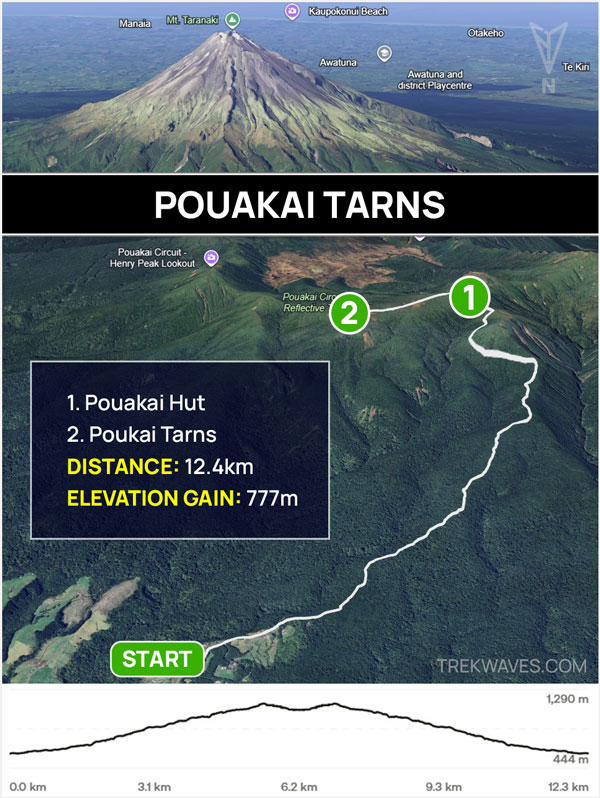
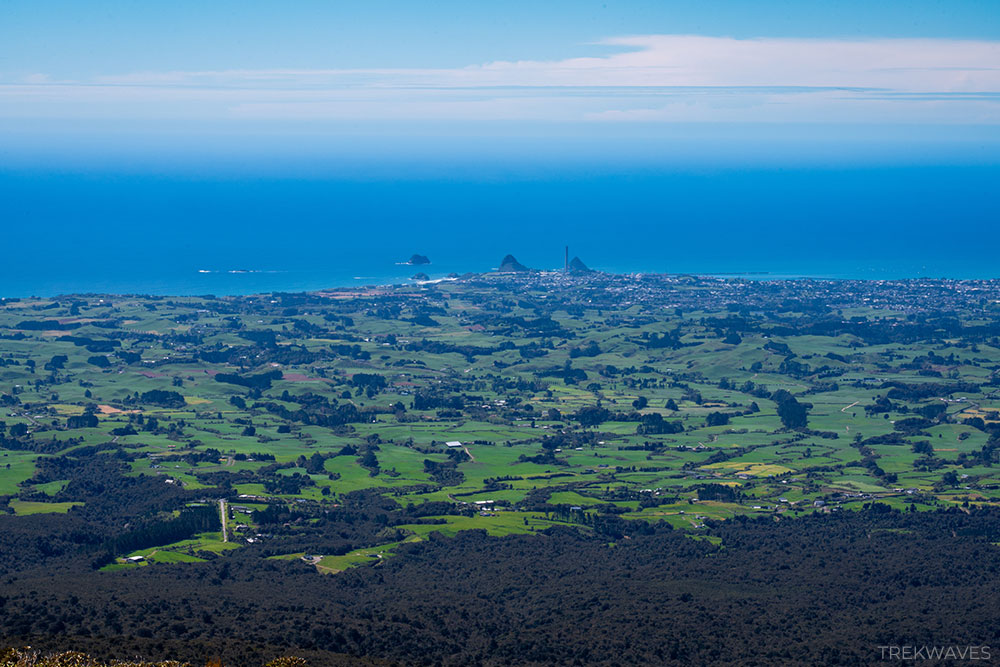
But the moment you break out of the trees near Pouākai Hut, everything changes. The views suddenly open up over the coastline, and from the hut you can see all the way to New Plymouth, with Paritutu Rock sitting proudly on the horizon.
It’s an incredible spot for a lunch break.
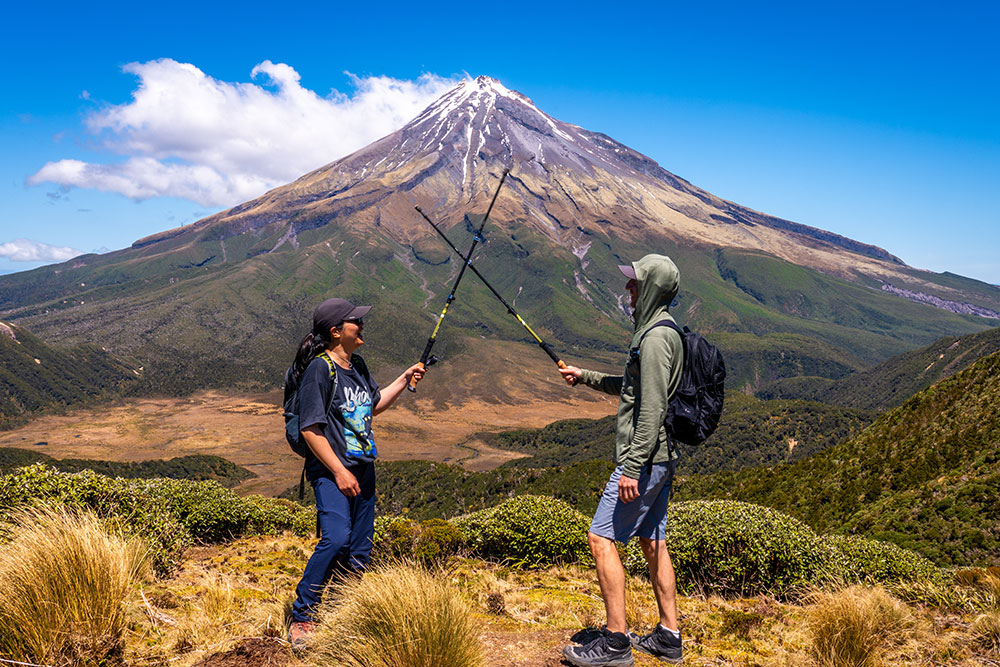
From the hut, it’s only a short walk to the first viewpoint, where Mount Taranaki finally appears in full, unobstructed glory.
Continue another 15 minutes and you reach the iconic Pouākai Tarns — famous for their glassy, mirror-like reflections of the mountain on calm days. It’s one of the most striking sights in the park and the ultimate reward after the long climb.
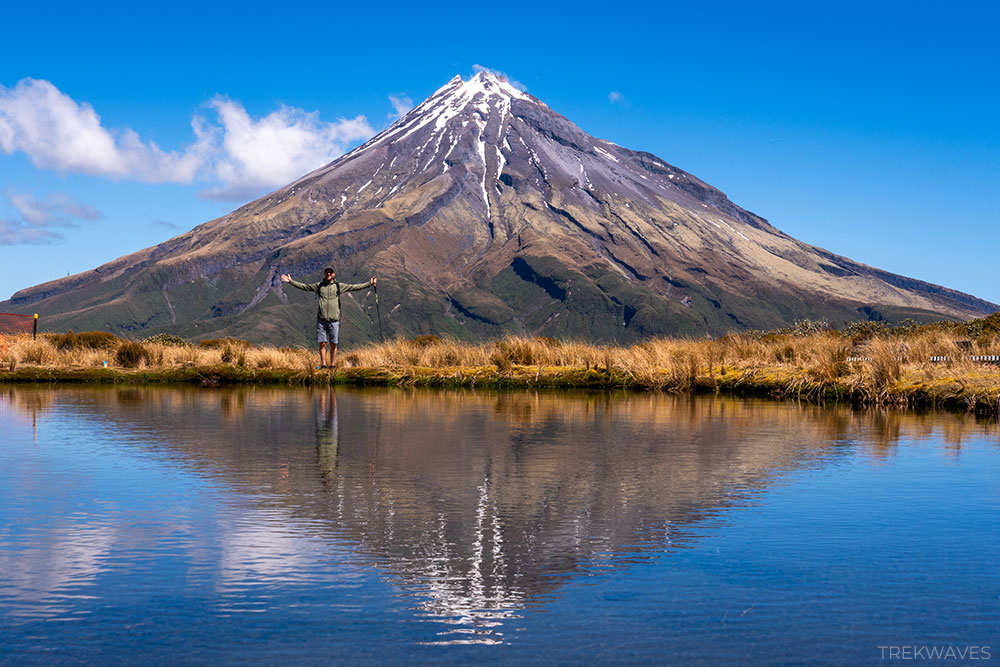
The Mangorei Track may feel like a grind, but those final views make every metre of boardwalk worthwhile!
BONUS STOP #4 – White Cliffs Walkway
Whitecliffs Walkway is a great little stop if you’re leaving the Taranaki region. It’s about 11 kilometres off the main road near Urenui, so it’s an easy detour, and the white sandstone cliffs are definitely worth seeing even if you don’t have time for the full trail.
You do need to time your visit with low tide, because part of the route follows the beach and there’s no safe exit once you commit.
Unfortunately, during our visit the water level was very high, so we weren’t able to walk the beach — we only captured a few aerial shots to show you the white cliffs from above.
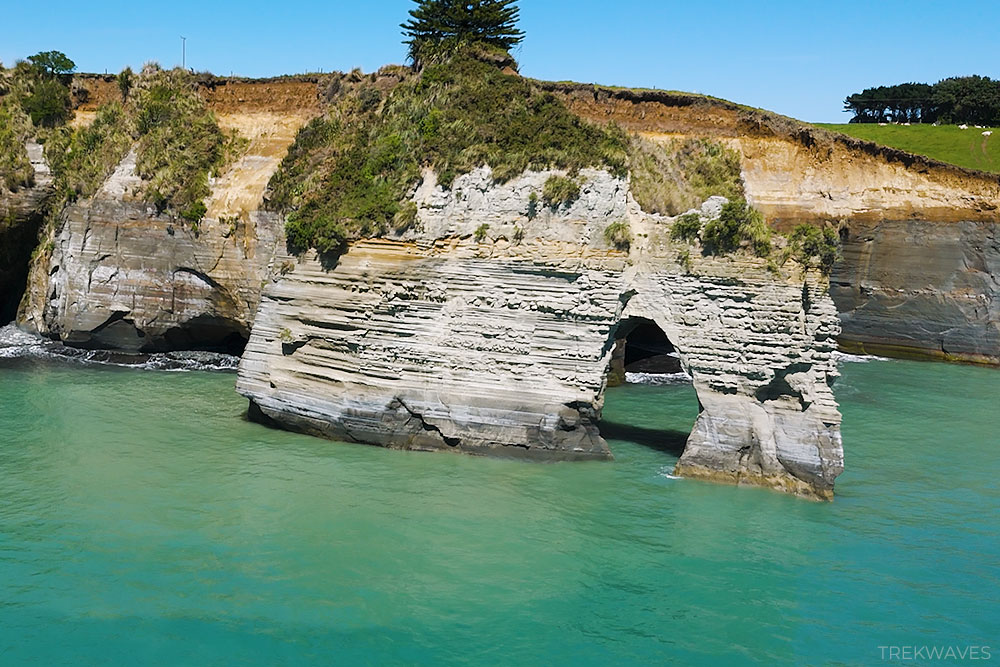
BONUS STOP #5 – Three Sisters & Elephant Rock
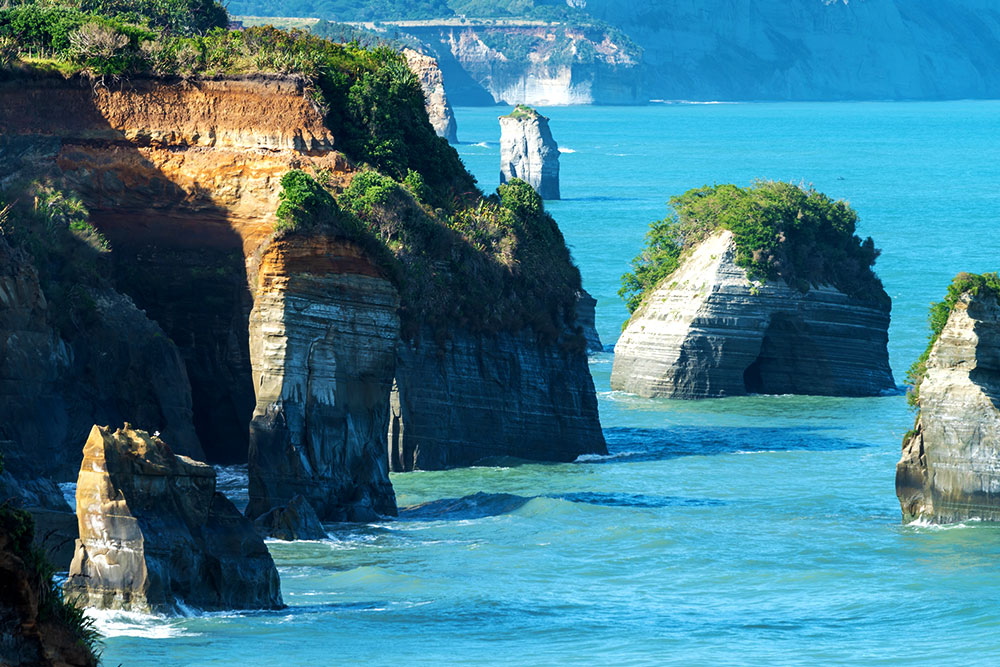
As we drove north along the Taranaki coast, we made a quick stop at Three Sisters and Elephant Rock. The tide was high, so we didn’t walk to see the cliffs up close, but it turned into a really good lunch spot.
The coastal rock here is made of white sandstone, eroded over time by wind and waves into these rugged forms. When the tide is low, you can actually walk to these rock formations, but on a high tide like ours, we just admired from above — and captured a few aerial shots.
REGION 6: Tongariro National Park
Tongariro National Park is the dramatic volcanic heart of the North Island — a landscape shaped by fire, ice, and thousands of years of eruptions.
It’s home to 3 active volcanoes (Ruapehu, Ngauruhoe, and Tongariro), rugged lava fields, steaming vents, alpine deserts, and some of the most iconic views in New Zealand.
This region has an almost otherworldly feel, and it easily became the highlight of our entire North Island journey.
Whether you’re exploring short walks like Tawhai Falls and Meads Wall, or taking on full-day adventures such as Tama Lakes or the world-famous Tongariro Alpine Crossing, every trail delivers something unforgettable.
#7 – Tawhai Falls
- Start & Finish: Tawhai Falls Carpark
- Distance: 800m return
- Elevation Gain: 22m
- Time: 15-20min
- Difficulty: Easy
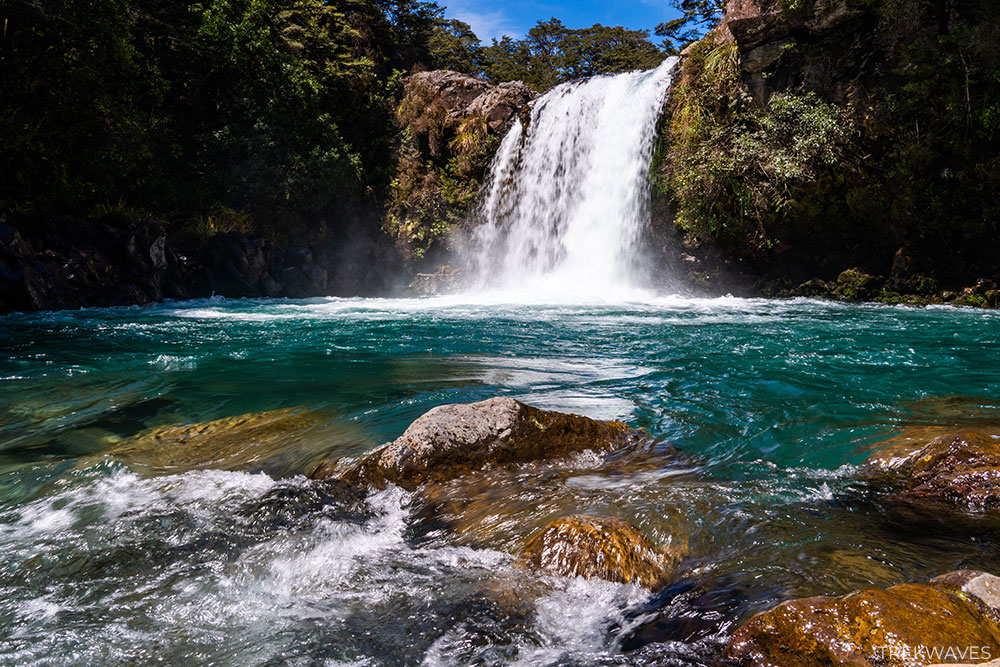
Just a short drive from Whakapapa Village, Tawhai Falls is one of the easiest and most rewarding quick walks in Tongariro National Park. The trail begins only a few minutes down the road — around 4km from the Visitor Centre — and the walk itself takes just 10–15 minutes.
Tawhai Falls is better known to Lord of the Rings fans as Gollum’s Pool — the filming spot from The Two Towers where Faramir’s men spy on Gollum fishing.
The waterfall spills over old lava rocks, and the whole scene feels straight out of Middle-earth.
#6 – Meads Wall
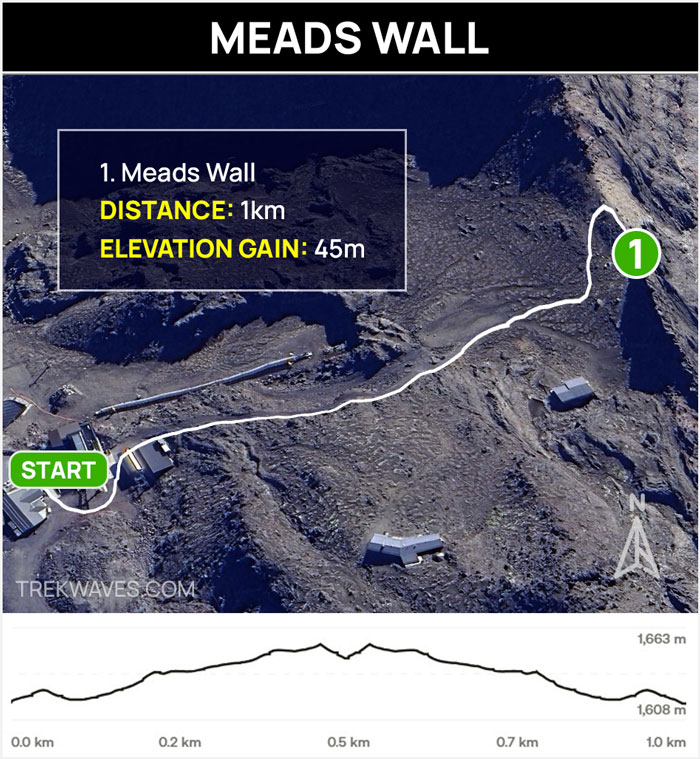
- Start & Finish: Sky Waka Gondola
- Distance: 1km return
- Elevation Gain: 45m
- Time: 45min
- Difficulty: Easy
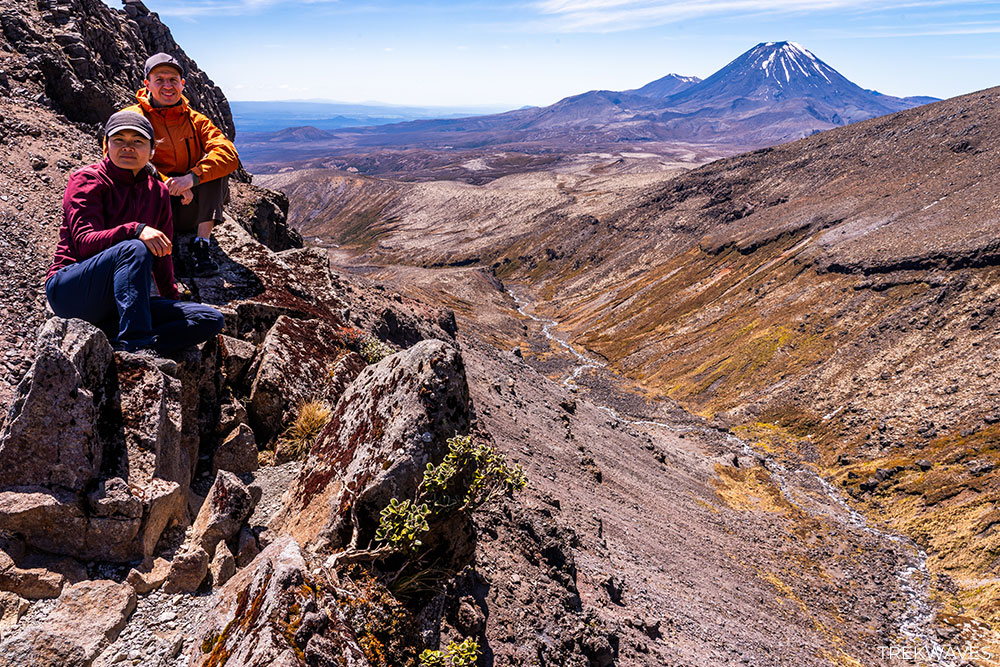
Meads Wall is one of the most dramatic and cinematic viewpoints in Tongariro National Park. The trail starts in Iwikau Village, just behind the Sky Waka Gondola, and follows a short, easy path across rugged alpine terrain.
Even though it’s only a few minutes from the carpark, the landscape instantly feels wild and exposed, with huge lava fields stretching out in front of you.
This spot is instantly recognisable to any Lord of the Rings fan. Meads Wall doubled as Emyn Muil, the harsh, broken landscape that Frodo and Sam struggle through at the start of their journey with Gollum.
The volcanic cliffs here match the exact look from the films. From the viewpoint you also get that classic shot of Mt Ngauruhoe, famously known as Mount Doom, looming over the horizon.
#5 – Mangawhero Falls
- Start & Finish: Ohakune Mountain Rd
- Distance: 200m return
- Elevation Gain: 5m
- Time: 10min
- Difficulty: Easy
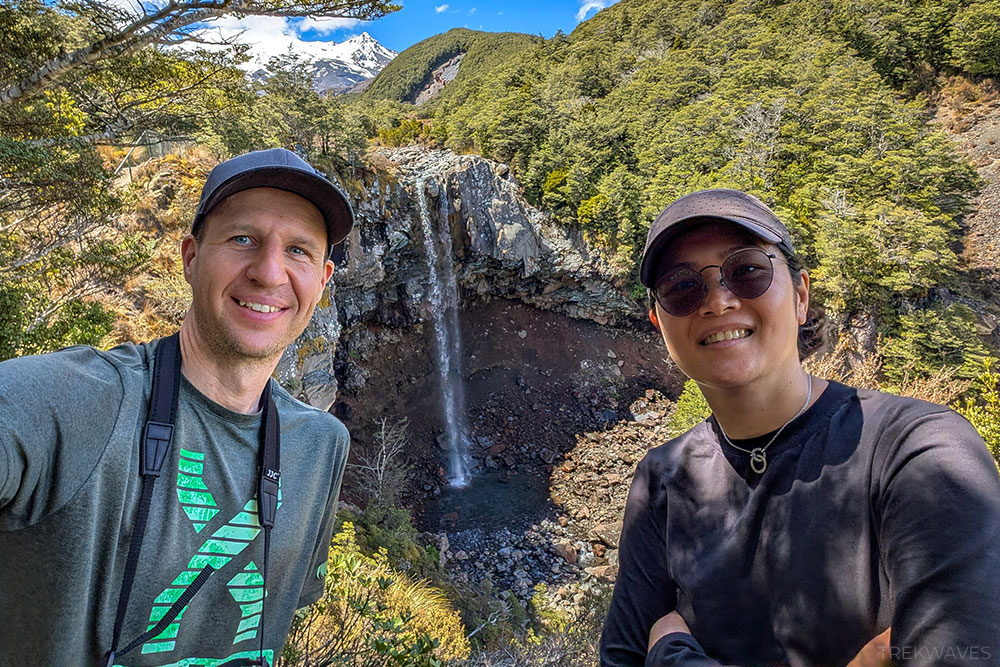
Mangawhero Falls is located along the Ohakune Mountain Road, about 13 km up from the town.
The trail starts right near the road and within a couple of minutes you are standing at a lookout with a perfect view of the waterfall.
Mangawhero Falls drops into a beautiful round basin and the rock layers around the waterfall are shaped by old lava flows from Ruapehu, slowly carved out by the Mangawhero River over thousands of years.
Mangawhero Falls was used as part of the Forbidden Pool scene in Lord of the Rings (The Two Towers), where Gollum is catching fish before Frodo and Faramir appear. The final moment in the film combines the real waterfall with some CGI, but knowing this waterfall was featured in the film gives the place an extra bit of magic.
#4 – Waitonga Falls
- Start & Finish: Ohakune Mountain Rd
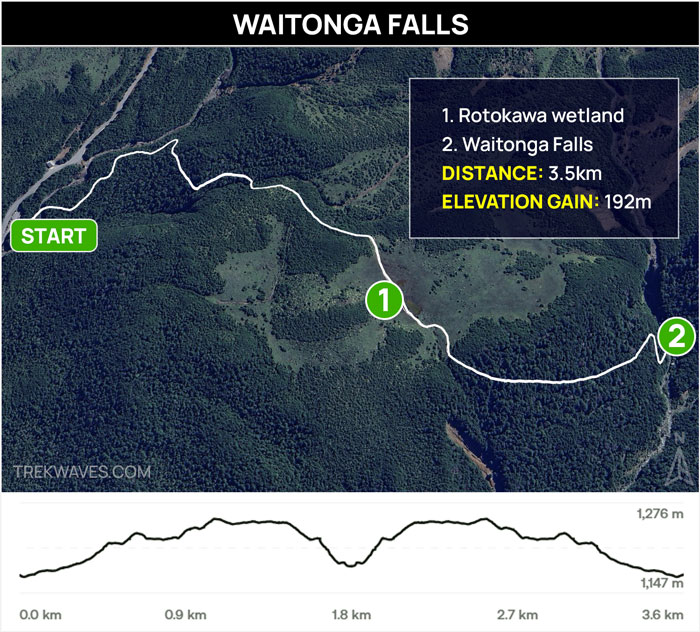
- Distance: 3.5km return
- Elevation Gain: 192m
- Time: 2hr
- Difficulty: Moderate
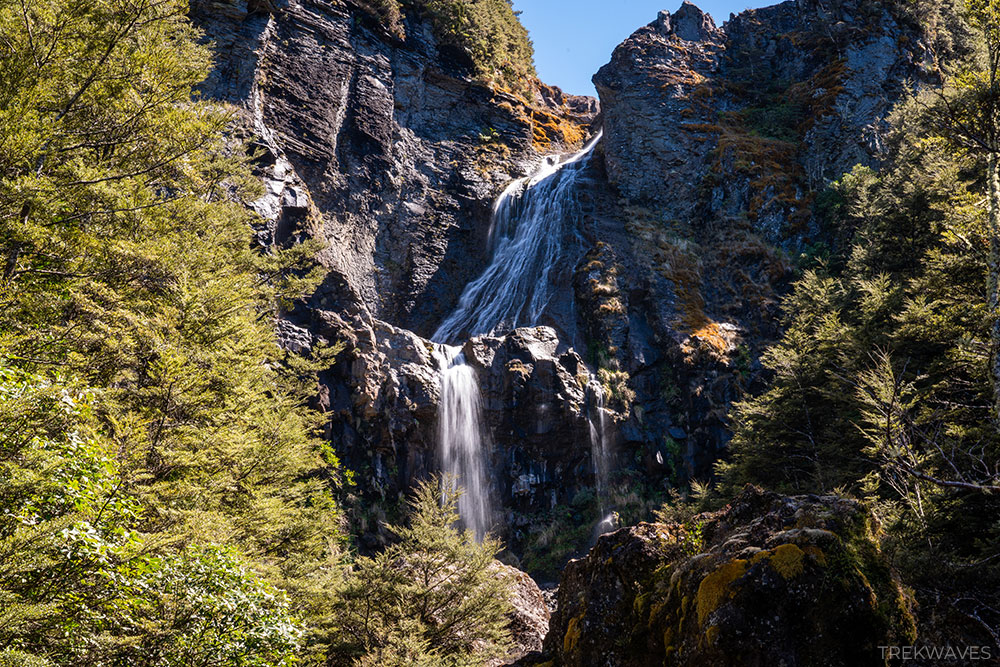
The next hike on the list is Waitonga Falls, one of the biggest highlights along Ohakune Mountain Road.
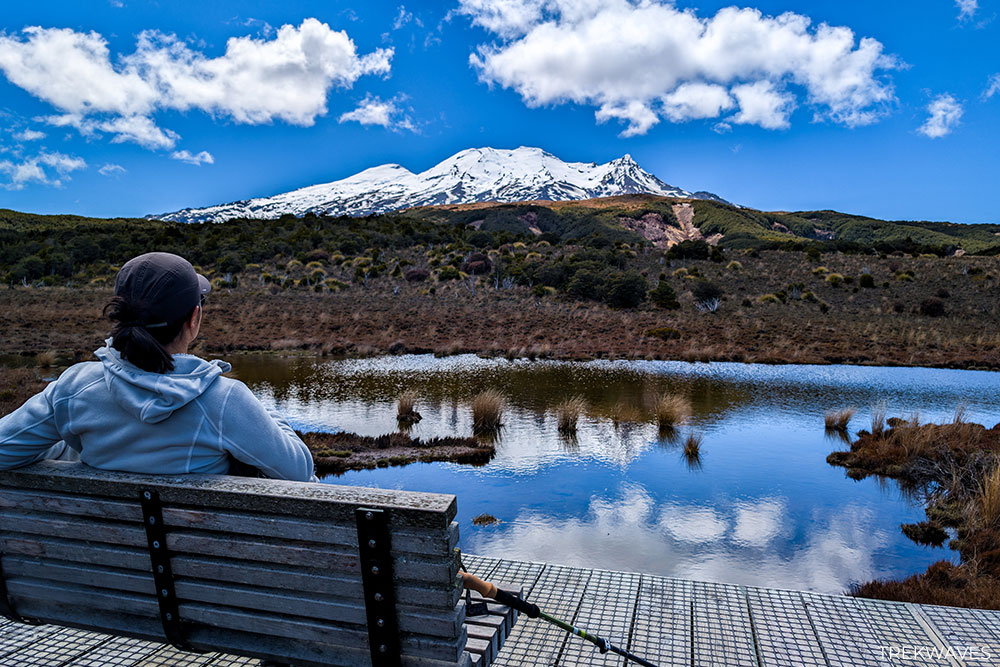
The track starts by weaving through beautiful forest before opening out onto an elevated boardwalk across the Rotokawa wetland.
On a clear day the whole area acts like a mirror with Mount Ruapehu reflected in the pools below and it feels like a completely different landscape compared to the dense forested areas nearby.
Part of this track overlaps with the Round the Mountain multi day route, so it has that slightly more remote feel to it.
The official viewpoint at the end of the trail sits a small distance away from the waterfall but it gives a good look at the upper sections as the water drops down the cliff.
There is also an unmarked and very steep route that lets you reach the base.
#3 – Silica Rapids Loop
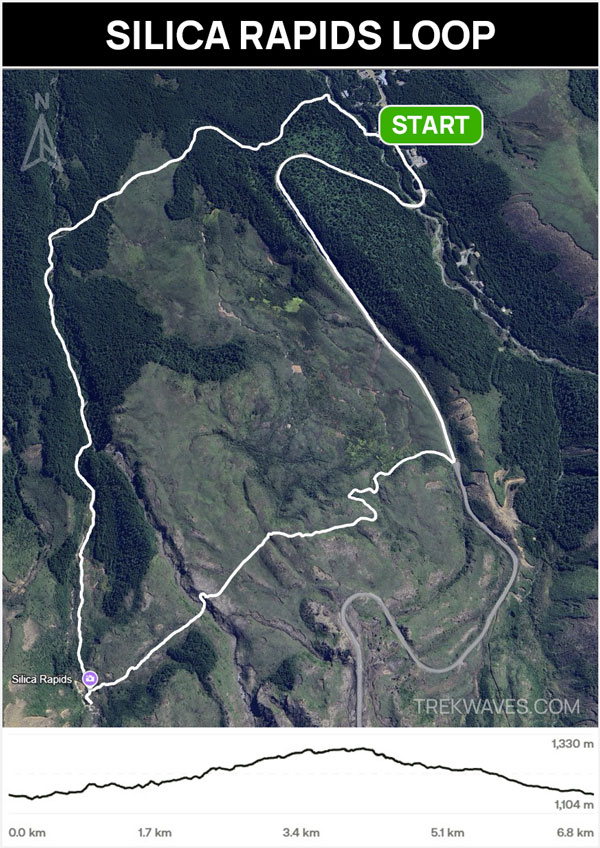
- Start & Finish: Whakapapa Village
- Distance: 6.8km loop
- Elevation Gain: 206m
- Time: 3hr
- Difficulty: Moderate
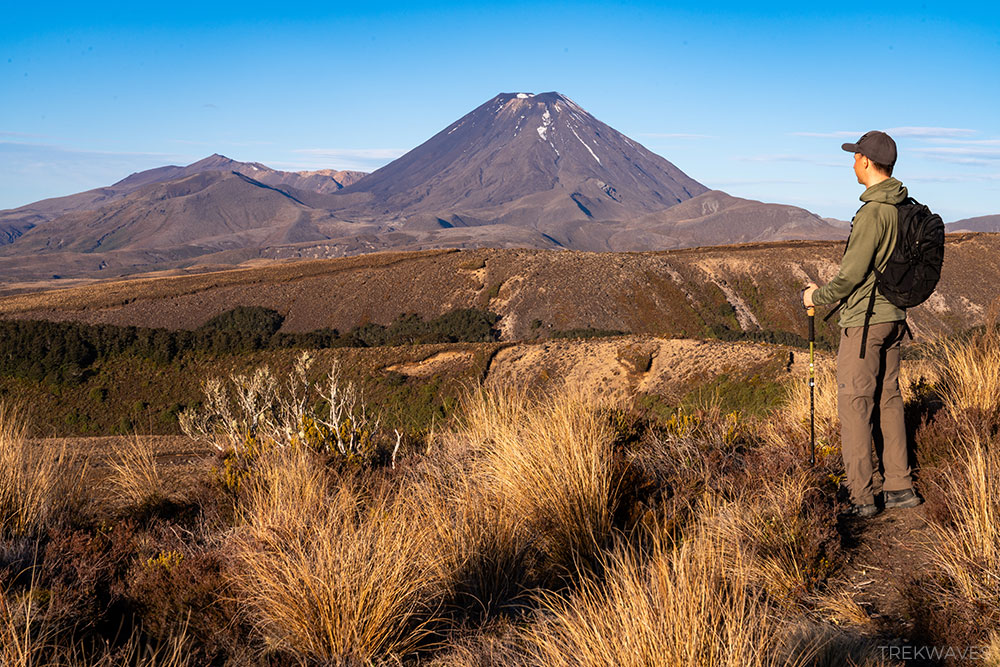
One of the walks I enjoyed most near Whakapapa Village was the Silica Rapids Loop. I headed out late in the evening, just as the sun was dropping behind the mountains — perfect timing, because the trail was almost empty and the warm light settled beautifully over Mt Ruapehu and Mt Ngauruhoe.
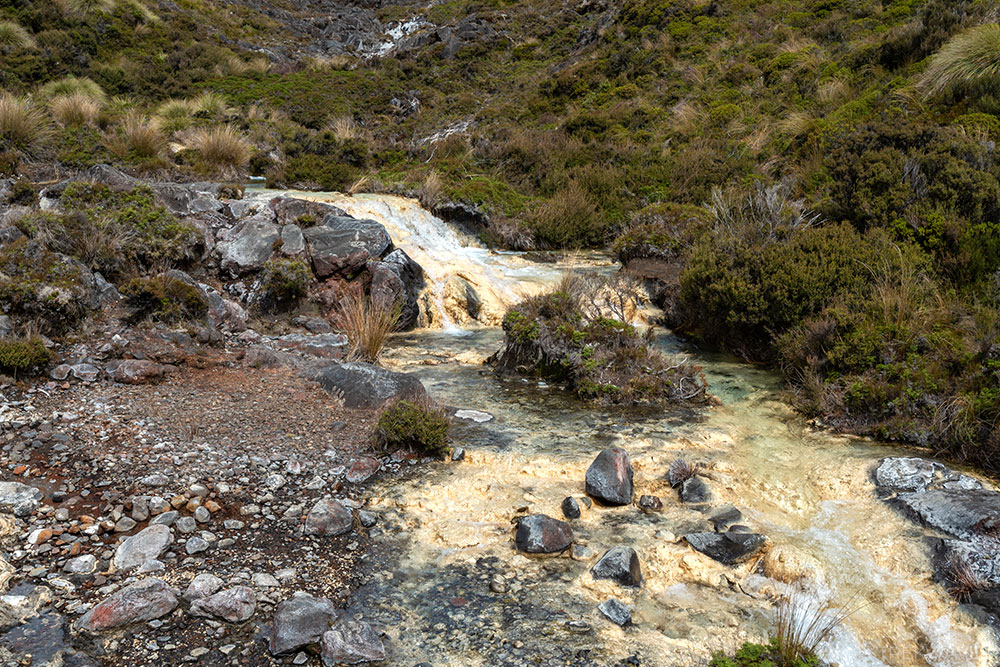
The path leads you through dense mountain beech forest, beside a stream that glitters with rich, golden deposits. Those colors come from iron-oxide clay that washes into the water from surrounding swamps.
Higher up, the Waikare Stream spreads into creamy-white terraces — the Silica Rapids. The effect comes from mineral-rich water seeping out of ancient lava cliffs.
From the rapids, the trail climbs up onto an old lava flow, covered in tussock and subalpine shrubs.
On a clear evening, it’s a beautiful blend of geology, forest and volcanic scenery — easily one of the most rewarding short walks in the area.
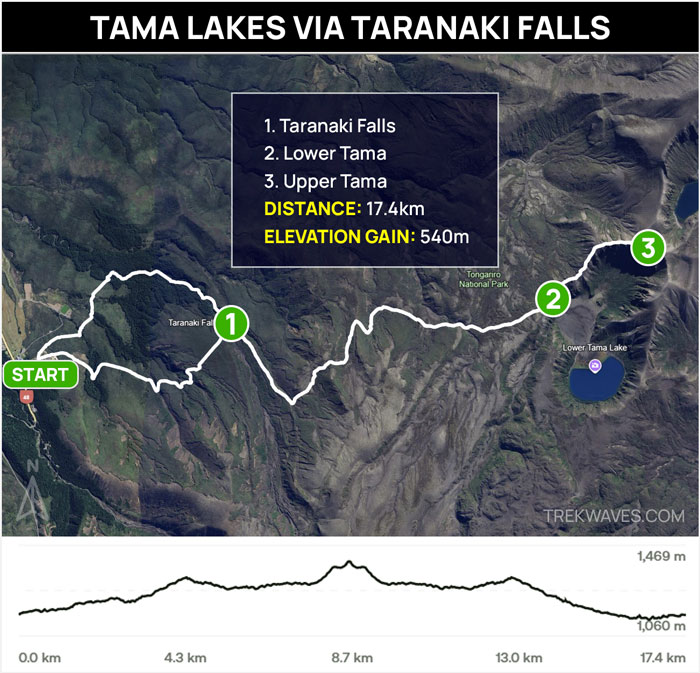
#2 – Tama Lakes via Taranaki Falls
- Start & Finish: Whakapapa Village
- Distance: 17.4km return
- Elevation Gain: 540m
- Time: 5-6hr
- Difficulty: Moderate / Hard
The Tama Lakes Track via Taranaki Falls is one of the most spectacular walks in Tongariro National Park.
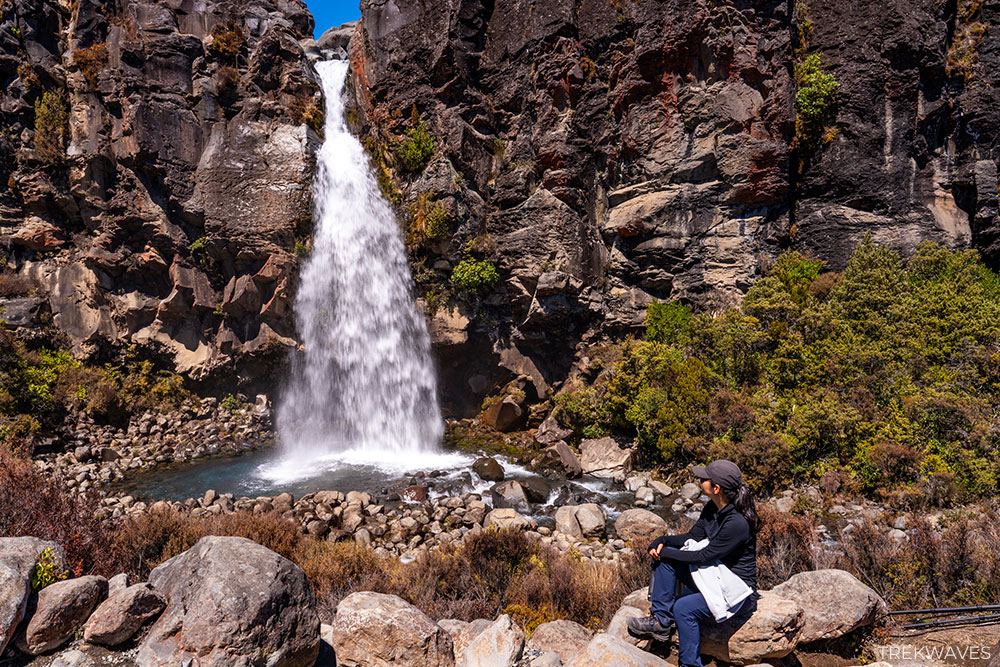
Starting from Whakapapa Village, the trail climbs through forest before opening onto the powerful 20-metre Taranaki Falls — a curtain of water spilling over an ancient andesite lava flow formed about 14,600 years ago.
Beyond the waterfall, the track becomes more exposed as it crosses open volcanic terrain. It’s a long, undulating stretch with no tree cover, but the wide views of tussock plains and Mt Ruapehu make it a rewarding part of the walk.
Lower Tama Lake is the first major highlight — a large explosion crater filled with striking blue water, surrounded by steep crater walls.
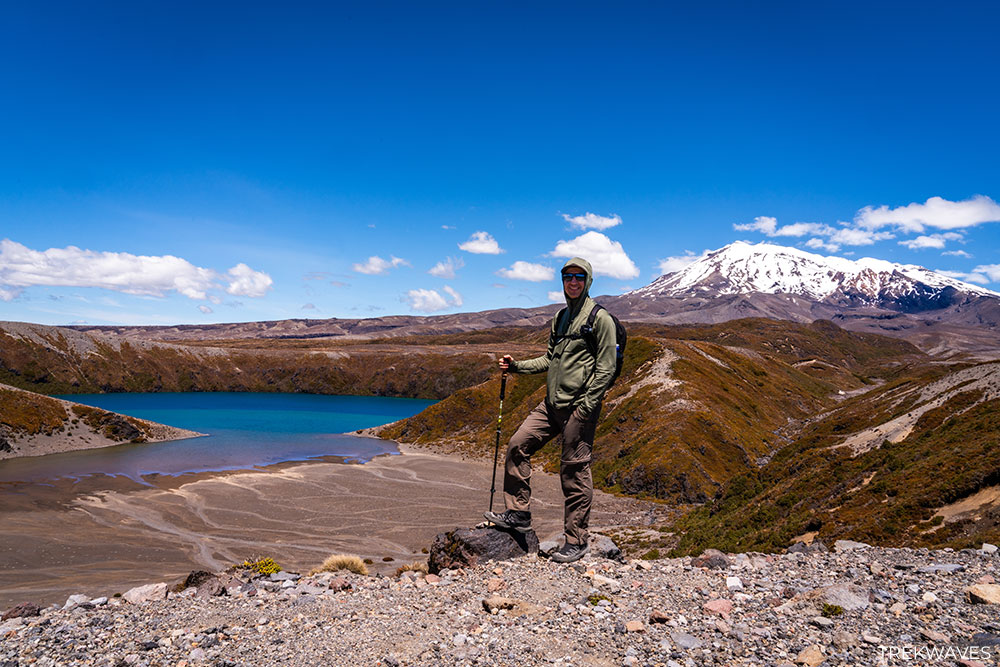
From there, the trail climbs again, weaving through scattered volcanic rock and wind-shaped ridges until you reach the upper viewpoint.
This final section is the most scenic, and once you reach the top, you’re rewarded with the unforgettable sight of Upper Tama Lake — a steep-sided explosion crater filled with deep blue water, perfectly aligned with Mt Ngauruhoe on the horizon.
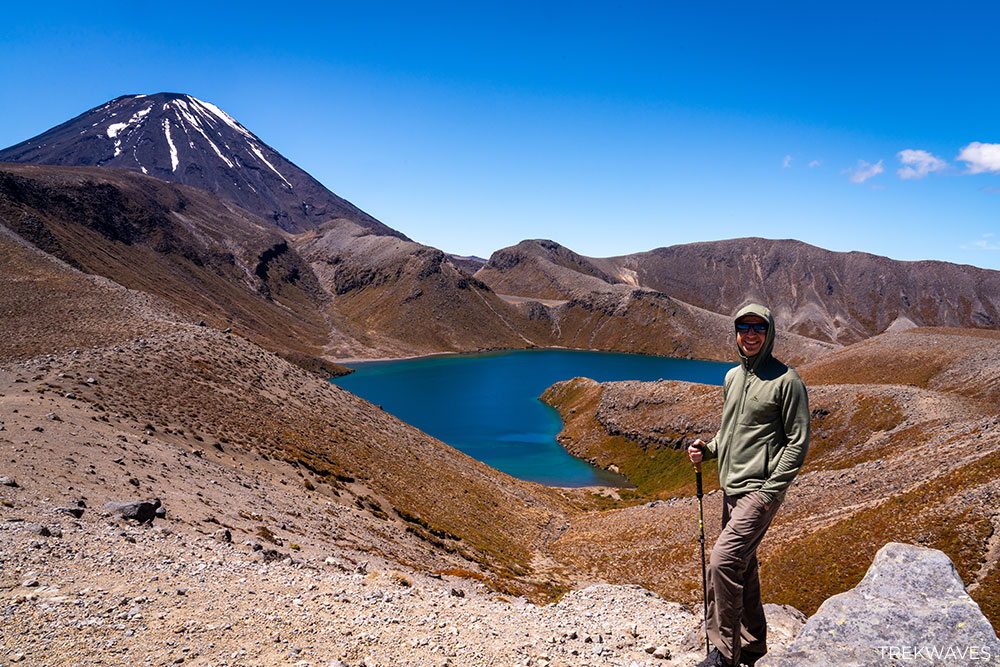
Turn around, and you get a completely different view: Lower Tama Lake framed by the broad, snow-dusted slopes of Mt Ruapehu.
It’s one of the finest vistas in the region, and making it all the way to the end of the track is absolutely worth every step.
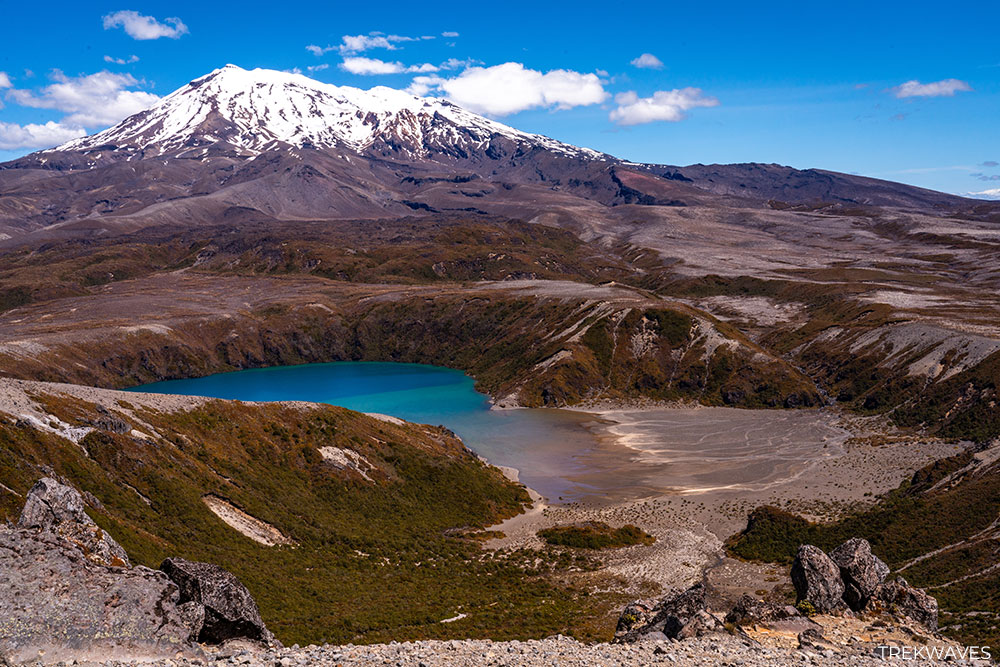
#1 – Tongariro Alpine Crossing
- Start: Mangatepopo Carpark
- Finish: Tongariro Shuttle Carpark
- Distance: 20km one way
- Elevation Gain: 853m
- Time: 1 day
- Difficulty: Hard
The Tongariro Alpine Crossing is often called one of the best day hikes in the world — and it instantly became the highlight of our North Island trip.
We took the first shuttle and were lucky with perfect weather conditions: clear skies, no wind, and pockets of snow still clinging to the peaks.
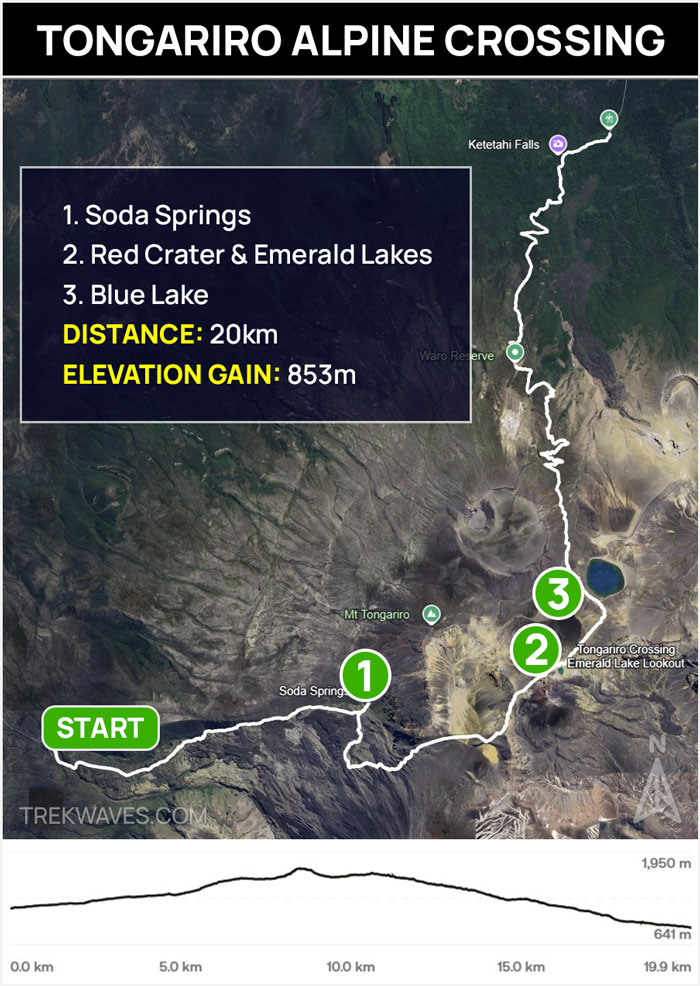
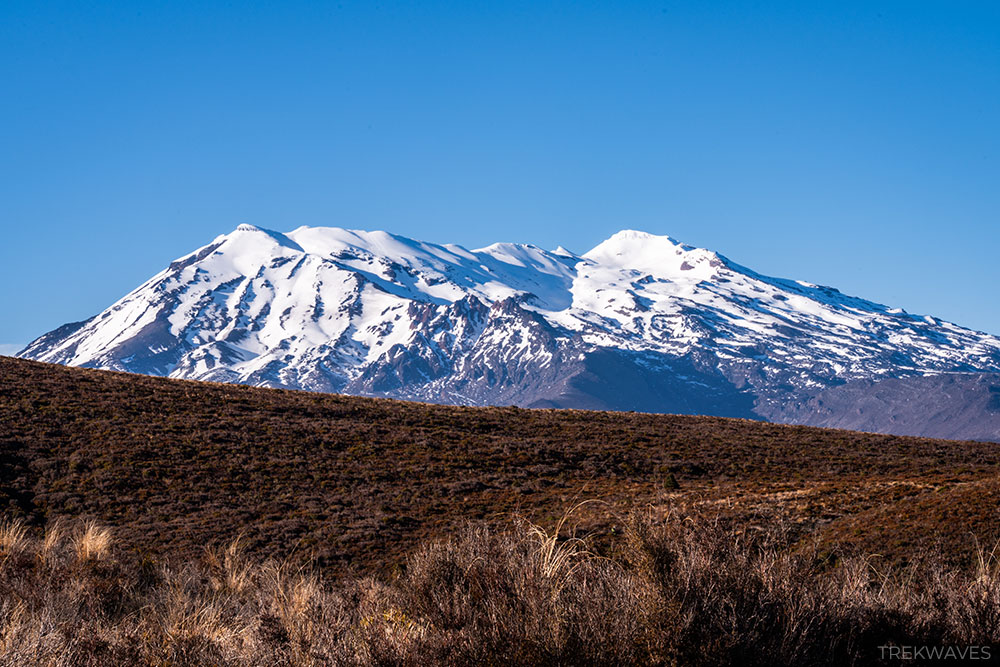
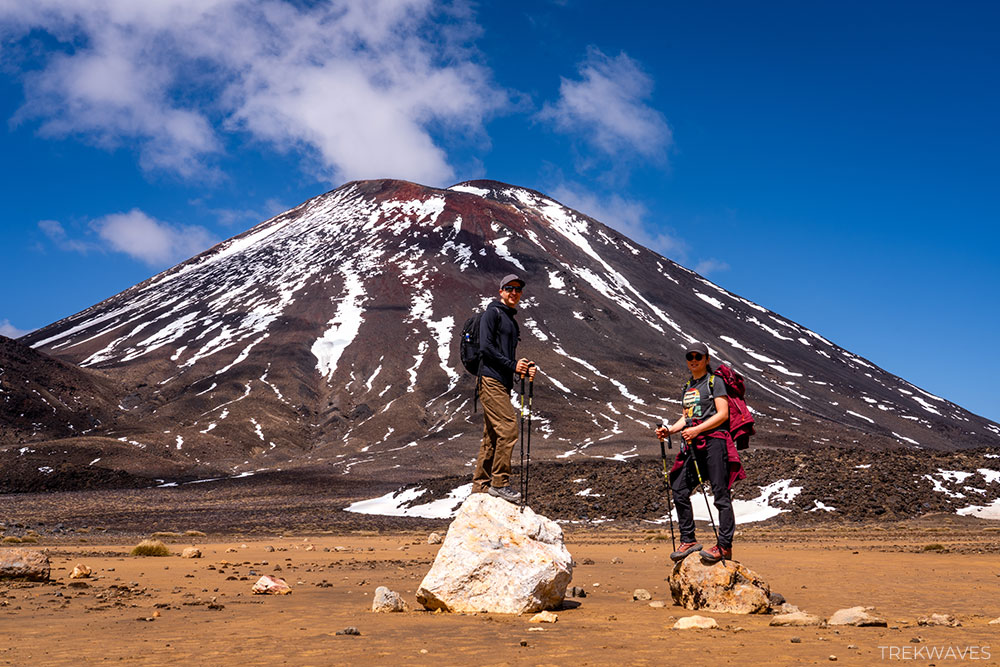
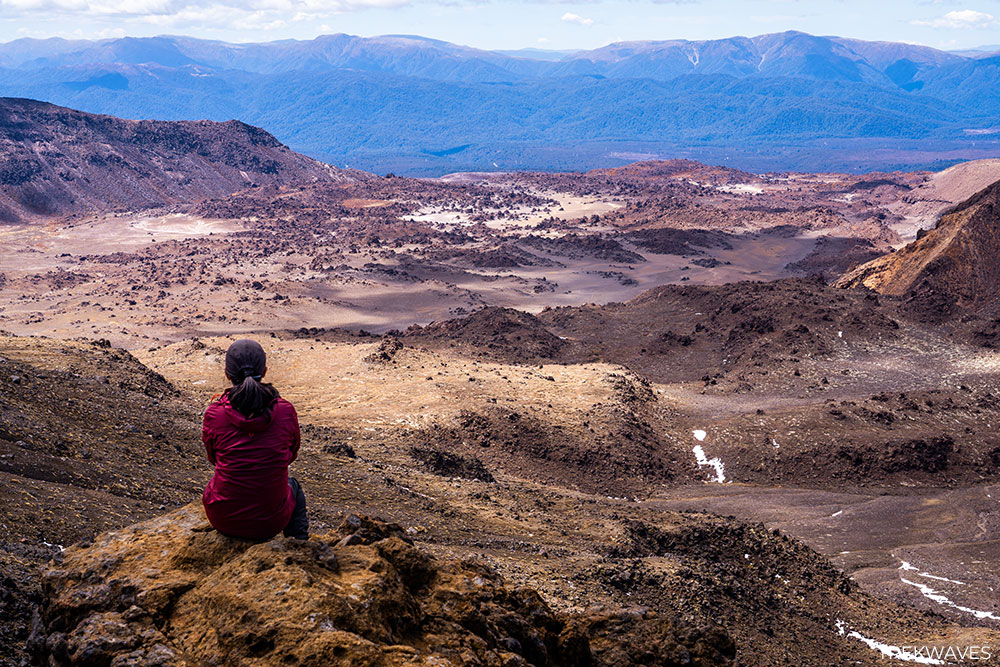
The track starts gently through the Mangatepopo Valley, with Mt Ngauruhoe dominating the view. As you climb the Devil’s Staircase, the landscape shifts fast — from wetlands to old lava flows, ash fields, and massive volcanic walls.
Crossing the South Crater feels like stepping into another world: a huge, flat volcanic basin surrounded by steep ridgelines.
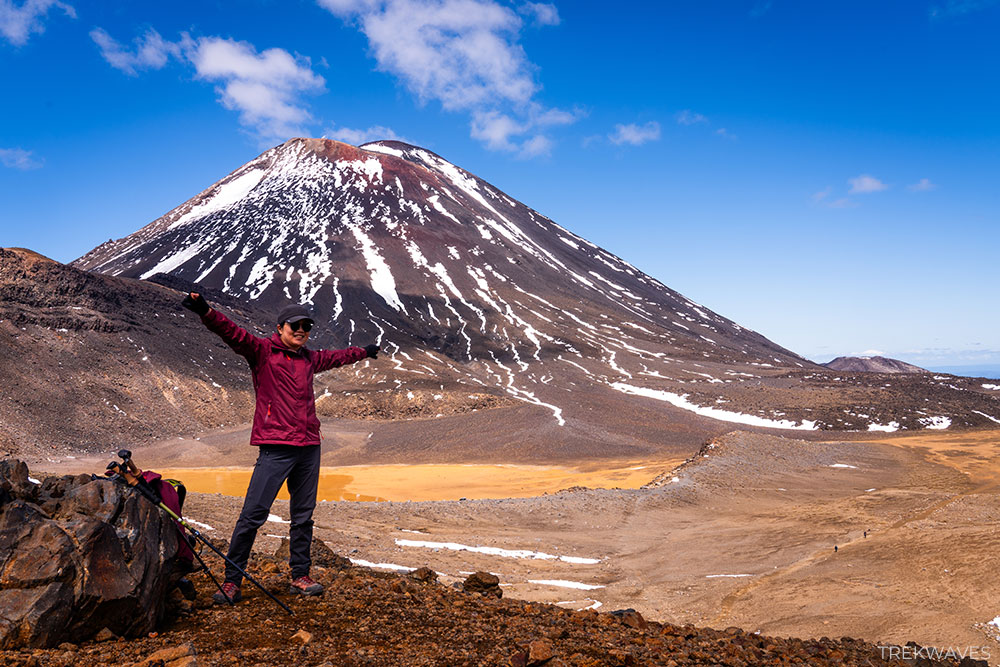
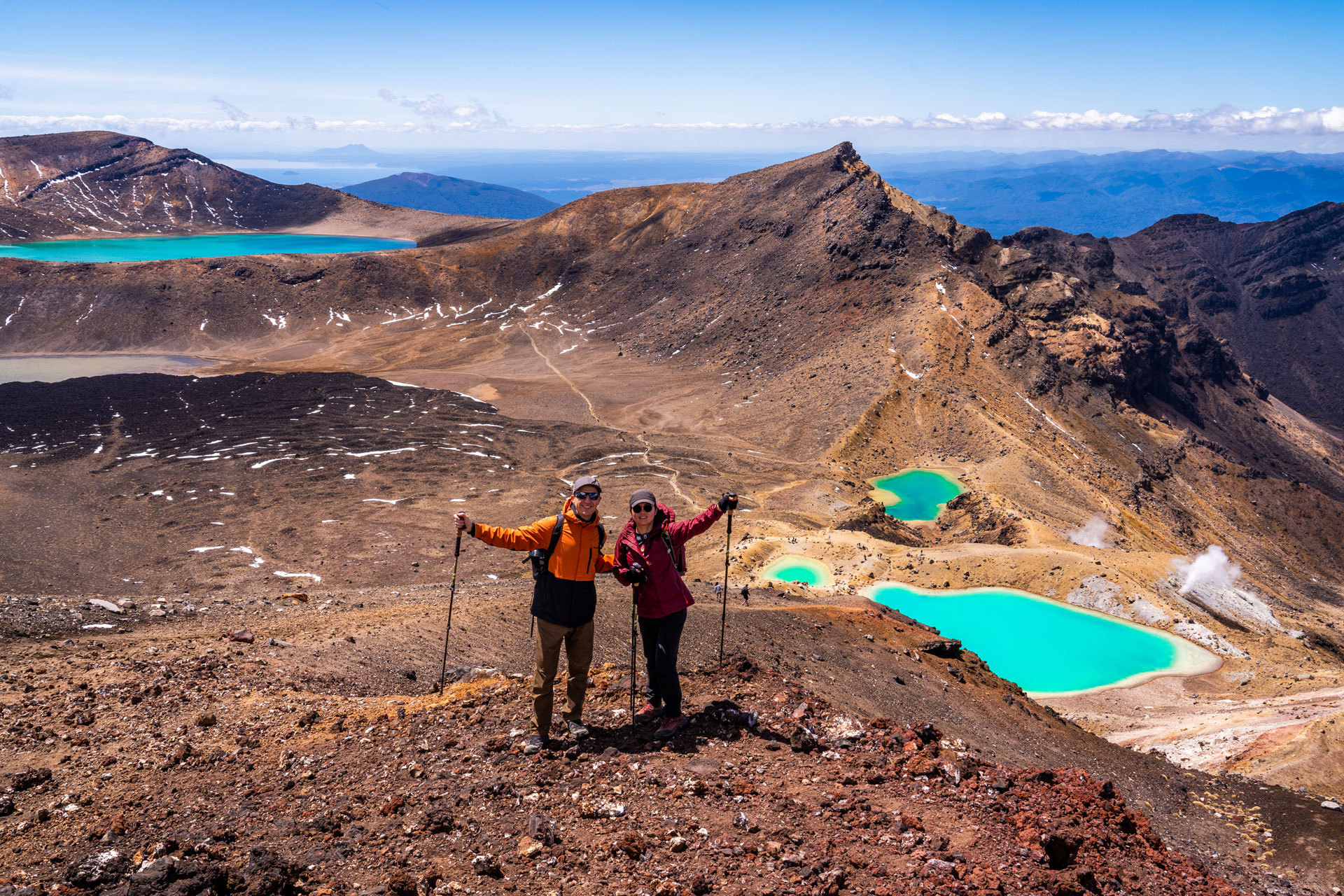
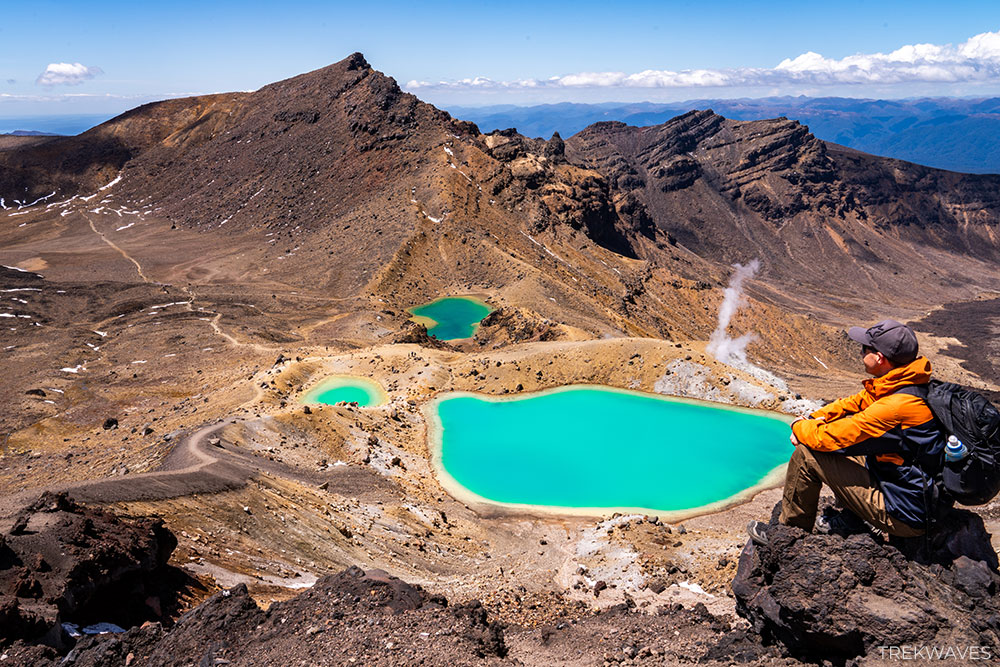
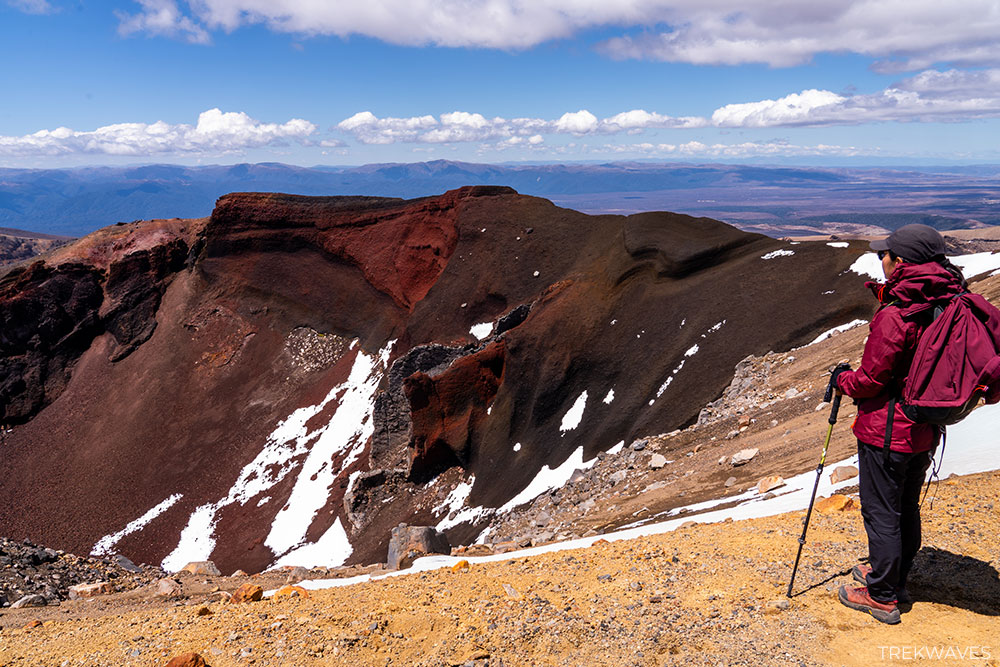
From there, the final push to Red Crater is steep but spectacular. Reaching the rim is the moment everyone talks about — the deep red crater, the surreal volcanic slopes, and the bright turquoise Emerald Lakes glowing below.
It’s one of the most iconic sights in New Zealand!
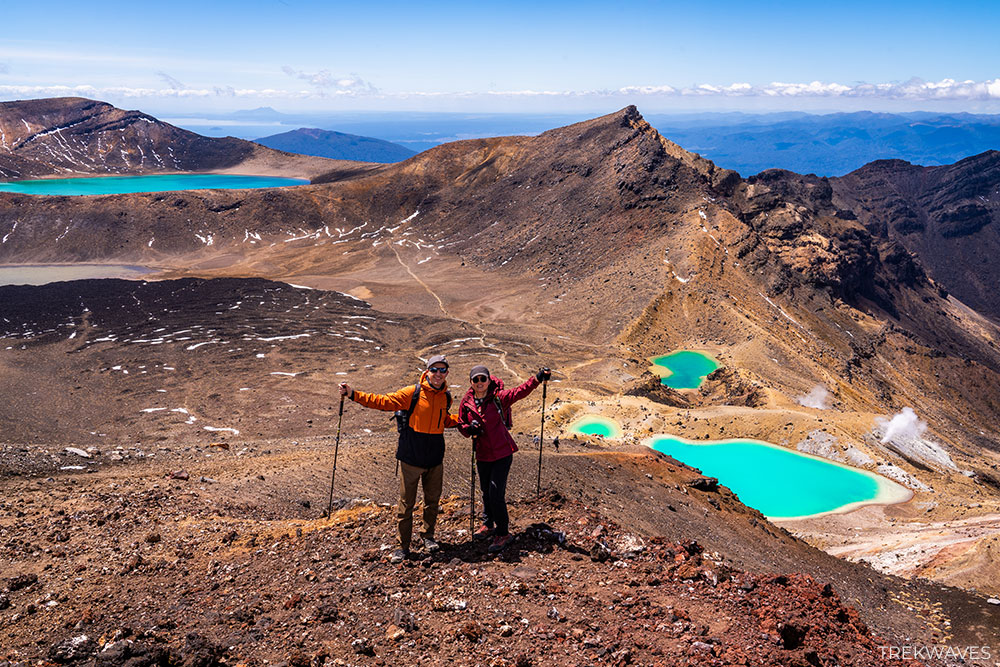
After leaving the crater rim, you slide down a short stretch of scree to the Emerald Lakes and continue across the basin toward the Blue Lake.
The surreal mix of colours and mineral-rich water makes it feel like you’ve stepped onto another planet — and it’s the perfect spot for another well-earned break.
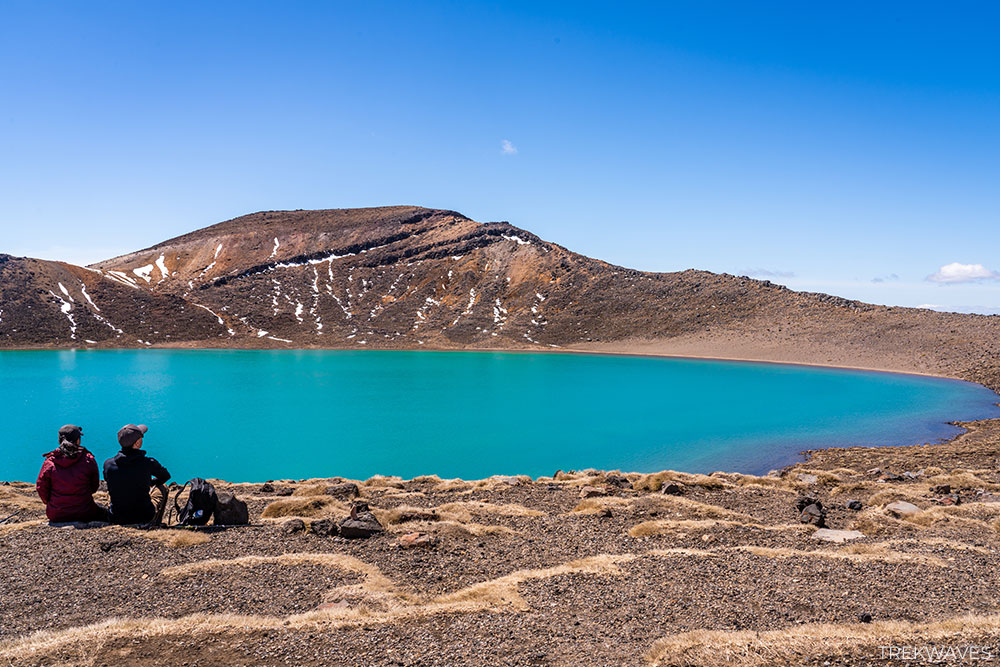
After the Blue Lake, the trail transforms completely. The long descent toward Ketetahi passes wide open slopes with sweeping views of Lake Rotoaira and Taupō, before easing into cool, fern-filled native forest near the end.
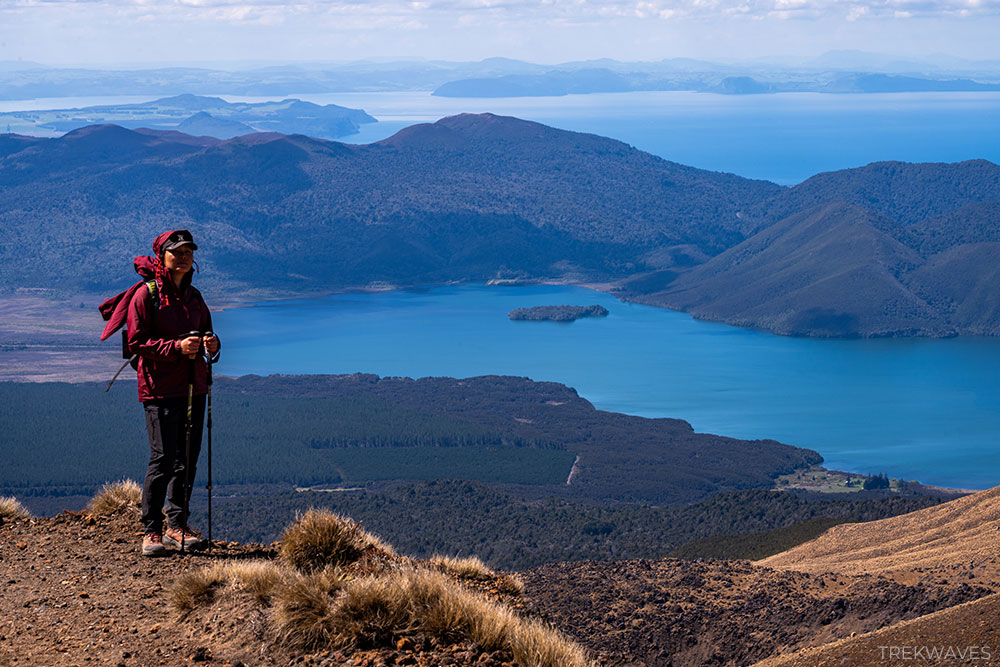
By the time we reached the finish, it felt like we’d walked through three completely different landscapes — volcanic desert, high alpine ridges, and lush forest.
With the calm weather, snow-dusted peaks and unreal colours, the Crossing easily became one of the best hikes I’ve ever done!
If you’re visiting North New Zealand, Tongariro Alpine Crossing is an absolute must-do, and completely deserving of its world-class reputation.
Final Thoughts
The North Island of New Zealand spoiled us with everything from incredible volcanic landscapes to stunning waterfalls and coastlines that felt straight out of a storybook.
These were the hikes that left the biggest impression on us, and I hope this guide helps you to plan your own adventure.
If you’ve hiked in the North Island before, drop your favourite trails in the comments — I’d love to hear which ones stood out for you.
Found it Helpful? Pin it for Later!